

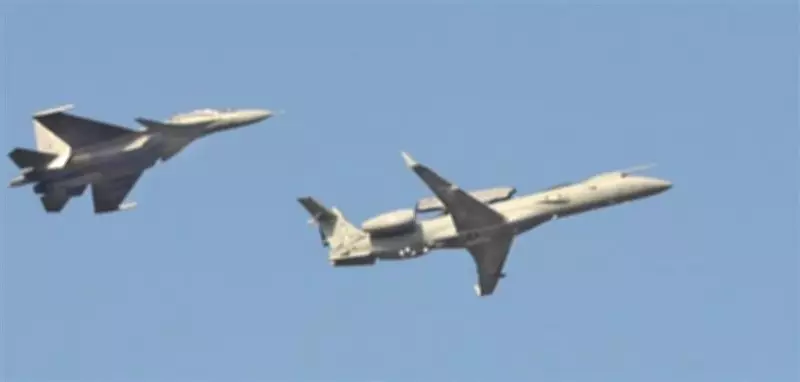
The Defence Research and Development Organisation (DRDO) will formally award the Final Operational Clearance (FOC) to the Netra Airborne Early Warning and Control (AEW&C) system on June 25, 2026, approximately ten years after the first aircraft was inducted into service. The announcement was made by DRDO on Friday, stating that a ceremony is planned at the Centre for Airborne Systems (CABS) in Bengaluru.
Significance of Final Operational Clearance
The FOC certifies that a military aircraft is fully combat-ready, structurally sound, and equipped with all required operational capabilities. It follows the Initial Operational Clearance (IOC), an operational phase where a limited number of aircraft are inducted into service and further modifications are suggested and implemented. DRDO described the FOC as a major milestone for an indigenous system of systems like the Netra AEW&C.
Current Fleet and Operational History
The Indian Air Force (IAF) currently operates three Netra Mark-1 systems based on the Embraer-145 airframe. These aircraft are stationed at Bhisiana Air Force Station near Bathinda, Punjab, with No. 200 Squadron. Inducted in 2015, the Netra aircraft have been deployed in several critical operations: during the airstrikes on terror camps at Balakote in Pakistan's Khyber Pakhtunkhwa area in 2019, during the India-China border stand-off in 2020, and during Operation Sindoor in 2025. They are complemented by three Beriev A-50 Airborne Warning and Control Systems based on the Russian IL-76 platform.

Role and Capabilities
AEW&C aircraft are a critical element of network-centric operations. Equipped with advanced radars and sensors, they act as an eye in the sky, monitoring hostile platforms from long ranges, guiding friendly aircraft during operations, and relaying battlefield data to command centres. The Netra system enhances the IAF's situational awareness and command and control capabilities.
Development Journey
In 2003, the IAF and DRDO conducted a joint study for developing an AEW&C system. After government approval, DRDO's Centre for Airborne Systems (CABS) was designated as the nodal agency for design, system integration, and testing. Four other DRDO laboratories were actively involved: the Electronics and Radar Development Establishment developed the primary radar, the Defence Electronics Application Laboratory handled communication systems and data links, the Defence Avionics Research Establishment provided the self-protection suite and electronic warfare measures, and the Defence Electronics Research Laboratory contributed communication support.
Three ERJ-145 aircraft were procured from Brazil and extensively modified with features like in-flight refueling, satellite communication capability, upgraded avionics and electrical systems, and various aerodynamic and structural changes. The first fully modified aircraft made its maiden flight in December 2011 at Embraer's facilities in Brazil and was delivered to DRDO in August 2012. The first Netra aircraft was handed over to the IAF in February 2017 and received IOC in October 2017 after trials at Bhisiana Air Force Station. The second and third aircraft were delivered in 2019 and 2023 respectively.
Future Upgrades
The central government has approved the development of six additional Netra AEW&C systems of the Mark-1A variant. These will feature an enhanced mission suite, upgraded sensors, and a longer-range radar for effective detection of low-observability aircraft such as drones and stealth jets, along with improved human-machine interface and tighter integration into IAF systems. Plans are also underway for the Netra Mark-2 variant, which will involve a larger aircraft, a more powerful radar with a detection range exceeding 500 kilometres, and improved all-round situational awareness. Six Airbus A-321 aircraft have been procured by the IAF from Air India for this project.






