

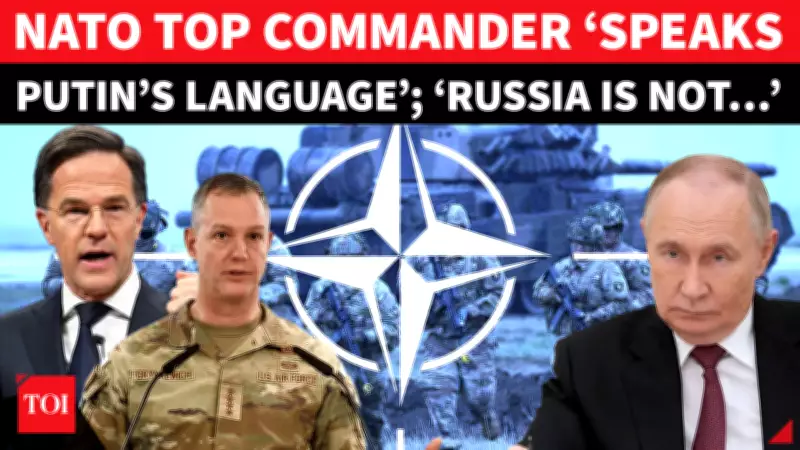
A stunning statement from NATO's top military commander is challenging one of the biggest narratives surrounding the Russia-Ukraine conflict. NATO Supreme Allied Commander Europe General Alexus Grynkewich says intelligence assessments show Russia is not planning to attack NATO, directly contradicting warnings from several Western leaders and officials who have argued that Europe could be Moscow's next target.
The comments echo Russian President Vladimir Putin's repeated insistence that Moscow has no intention of invading NATO territory. Meanwhile, military leaders and politicians across Europe continue to push for increased defense spending, rearmament, and preparations for a potential future confrontation with Russia.
Reactions and Implications
General Grynkewich's remarks have surprised many within the alliance, as they align closely with Putin's long-standing denials of aggressive intentions toward NATO. This has raised questions about the accuracy of intelligence assessments and the motivations behind Western alarmism.

Some analysts suggest that the general's statement could undermine efforts to boost defense budgets across Europe. Several NATO member states have been advocating for higher military spending, citing the perceived threat from Russia. However, if the top military commander believes there is no imminent danger, it may be harder to justify such increases.
Contrasting Views
Despite Grynkewich's assessment, many Western leaders remain cautious. They point to Russia's military buildup near Ukraine and its aggressive rhetoric as evidence of potential expansionism. The debate highlights a divide within NATO between those who see Russia as an immediate threat and those who view the danger as exaggerated.
In response to the general's comments, a spokesperson for the U.S. Department of Defense stated that while they respect Grynkewich's judgment, the United States continues to monitor Russian activities closely and remains committed to defending NATO allies.
Putin's Position
Russian President Putin has consistently denied any plans to attack NATO countries. He has accused the West of using the Ukraine conflict as a pretext to expand the alliance and increase military presence near Russia's borders. The general's remarks may lend credibility to Putin's stance, potentially complicating diplomatic efforts.
As the situation evolves, the international community will be watching closely to see how this internal NATO disagreement affects policy decisions. The coming weeks may bring further clarification or controversy as leaders grapple with the implications of Grynkewich's statement.






