Uttar Pradesh Deputy CM Advocates for Student-Centric Education Reform
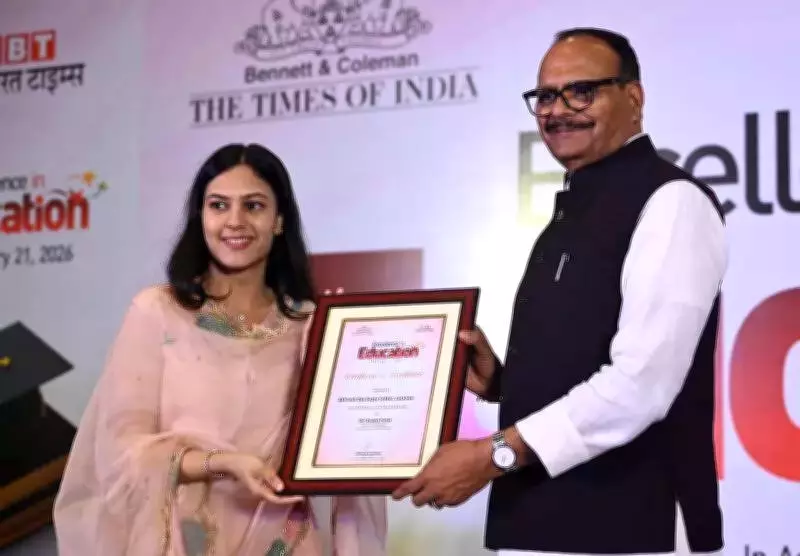
In a significant address at the "Excellence in Education" programme organized by The Times of India and Navbharat Times in association with Gravity Classes, Uttar Pradesh Deputy Chief Minister Brajesh Pathak delivered a powerful message on Saturday. He urged educators and parents across Lucknow and the state to fundamentally rethink their approach to student development.
Moving Beyond Societal Pressure and Marks Obsession
Pathak emphasized the need to liberate children from the constant pressure of achieving what society defines as conventional success. "Let children grow in their own direction and stop pressuring them to achieve what society defines as big success," he stated firmly. "Support their interests and allow them to build their own path. Institutions must move beyond the obsession with packages and placements."
The Deputy CM argued that education should not be reduced to a mere race for marks or salary figures. He highlighted how societal expectations have evolved dramatically, noting that while securing a first division was once considered a major achievement, today even scoring 95% often leaves students dissatisfied if they don't top the list.

Historical Examples of Success Beyond Academic Metrics
To illustrate his point, Pathak drew upon historical figures who achieved greatness without traditional academic validation. "Aryabhata did not have a marksheet, yet his work on 'zero' and mathematics shaped scientific thought for centuries," he reminded the audience. Similarly, he noted that Chanakya was not defined by grades, but by the profound knowledge of statecraft in the Arthashastra, which continues to guide political and economic ideas to this day.
Pathak stressed that not every student needs to be a topper, posing a rhetorical question: "If everyone becomes a topper, who will become a writer, poet, musician or sportsperson?" He argued that such narrow societal norms create unnecessary stress and limit the diverse potential of young minds.
Addressing Educational Inequality and Policy Implementation
The Deputy Chief Minister also addressed the visible gap between elite institutions and those serving economically weaker sections. "Larger institutions must reflect on how to bridge this divide so that students from poor backgrounds receive the same quality education and opportunities as their privileged counterparts," he asserted, calling for concrete action to ensure educational equity.
Referring to the National Education Policy 2020, Pathak highlighted its emphasis on mother tongue instruction in early education. He explained that children understand concepts better and express themselves more clearly when taught in their own language, supporting the policy's approach to foundational learning.
Pathak's remarks come at a time when educational systems worldwide are reevaluating traditional metrics of success. His call for a more holistic, interest-based approach to student development represents a significant shift in educational philosophy for Uttar Pradesh and potentially serves as a model for broader national reform.