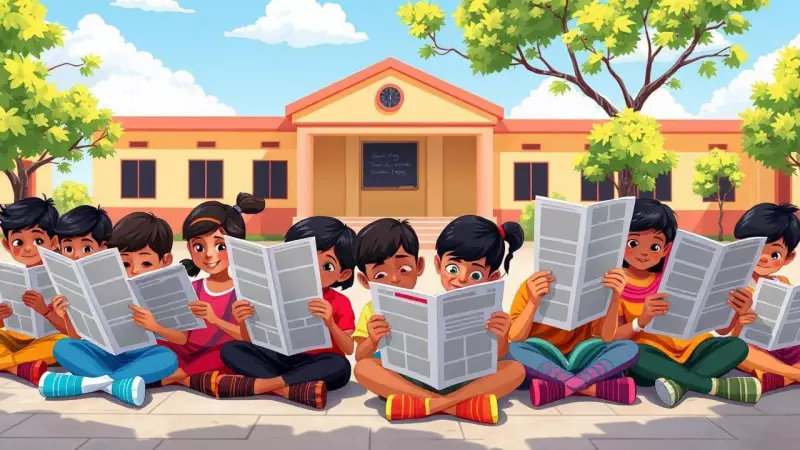
In a significant move aimed at shaping young minds, the Uttar Pradesh government has issued a directive making newspaper reading a compulsory daily activity for all students in state-run secondary and basic schools. The order, designed to cultivate robust reading habits and diminish reliance on screens, seeks to foster critical and logical thinking abilities among students.
The Official Directive and Its Core Mandate
The instruction was formally issued by Additional Chief Secretary (Basic and Secondary Education) Partha Sarthi Sen Sharma on December 23. It mandates that both English and Hindi newspapers should become an integral part of the daily school culture. This latest order builds upon a previous one from November 2024, which explored methods to instill a reading culture among the student community.
Explicitly discouraging excessive screen time, the directive advocates for the reading of "physical" newspapers, asserting that this practice will aid students in enhancing their focus and concentration levels.

Implementation: A 10-Minute Daily Slot for News
As per the detailed order, schools are required to allocate a dedicated 10-minute slot during the daily morning assembly specifically for 'news reading'. Under this system, students will take turns on a rotational basis to read out the key points from editorial articles and highlight major positive news stories covering national, international, and sports events.
When questioned about the directive, Sen Sharma clarified to the Times of India that "These are directions as well as advice, to be followed by state-run schools, but others can also follow if they find sense." This indicates that while government schools must comply, private institutions are encouraged to adopt the practice voluntarily.
Multifold Benefits: From GK to Empathy
The government order elaborates on the extensive benefits expected from this initiative:
- Enhanced General Knowledge: It will strengthen students' understanding of current affairs, providing a crucial advantage for future competitive examinations.
- Language Proficiency: Regular reading is projected to improve vocabulary and writing style, exposing students to diverse articles and editorials.
- Critical Thinking: Exposure to varied perspectives helps develop analytical skills and the ability to discern fact from fiction, a vital tool in the age of fake news.
- Local and Global Connection: Newspapers make students aware of local community events and public projects, helping them see the link between local, national, and global issues.
- Developing Empathy: Human-interest stories and news on social issues help students understand others' challenges, fostering empathy and responsible citizenship.
- Brain Training: Puzzles like Sudoku and crosswords train the brain for logical reasoning and problem-solving.
- Broadened Horizons: While students often focus on favourite subjects, newspapers expose them to a wider range of topics including science, culture, and sports.
By integrating this simple yet powerful tool into the daily routine, the Uttar Pradesh government aims to create a more informed, empathetic, and intellectually agile generation of students, steering them away from excessive digital consumption and towards substantive reading.