UPSC Key Highlights: Menstrual Hygiene, Manufacturing, and Budget 2026 Analysis
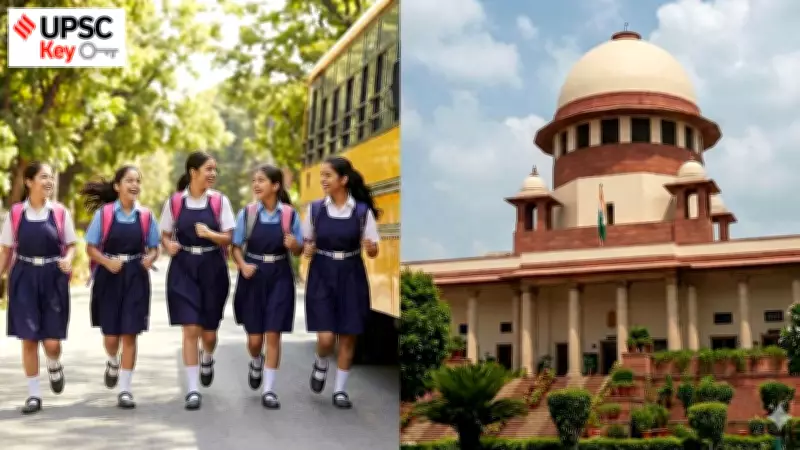
In a landmark verdict, the Supreme Court of India has recognized access to menstrual hygiene as a fundamental right under Article 21 of the Constitution, marking a significant development for civil services aspirants. This decision, alongside critical updates on the manufacturing sector, India-EU Free Trade Agreement, and Budget 2026, forms the core of The Indian Express UPSC Key for January 31, 2026. Authored by Khushboo Kumari, this comprehensive guide delves into topics crucial for both Prelims and Mains examinations, offering insights into current affairs and their relevance to the UPSC syllabus.
Supreme Court Verdict on Menstrual Hygiene as a Fundamental Right
The Supreme Court bench, comprising Justices J B Pardiwala and R Mahadevan, ruled that menstrual health is integral to the right to life, directing all States and Union Territories to implement Menstrual Hygiene Management measures in schools. This verdict addresses the stigma and humiliation faced by menstruating girl children due to inaccessibility of MHM resources.
Key Directions and Implications:

- Schools must provide gender-segregated toilets and free sanitary napkins, complying with ASTM D-6954 standards for oxo-biodegradable products.
- Compliance is mandated within three months, with non-compliance risking de-recognition of private schools and accountability for public institutions under the Right to Education Act.
- The court emphasized that lack of MHM measures leads to absenteeism, learning gaps, and impaired access to opportunities, linking it to reproductive health and education rights.
- District Education Officers are tasked with annual inspections of school infrastructure, including toilet facilities and menstrual waste disposal.
- The NCERT and SCERT are directed to incorporate gender-responsive curricula on menstruation and puberty to combat stigma.
UPSC Relevance: This topic aligns with Prelims syllabus on Indian Polity and Governance, and Mains General Studies-II covering Constitution, fundamental rights, and public policy. Key points include the expansion of Article 21, writs like mandamus, and roles of NCPCR/SCPCR. Previous year questions on writs and women's issues underscore its importance.
India-EU FTA and Manufacturing Sector Revival
Union Commerce and Industry Minister Piyush Goyal highlighted that the India-EU Free Trade Agreement transcends trade, encompassing strategic, defence, and financial partnerships. This deal aims to ramp up manufacturing through technology transfer and investments, positioning India to leverage global supply chain diversification.
Key Takeaways:
- The FTA is expected to unlock $75 billion in exports, including $33 billion in labour-intensive sectors, with bilateral trade at $136.54 billion in 2024-25.
- It reinforces a rules-based international order, addressing WTO challenges and offering predictability for businesses.
- Editorial insights note that the agreement safeguards India's agricultural interests while the EU maintains its Carbon Border Adjustment Mechanism stance.
- Challenges include compliance with standards, simplifying trade regimes, and ensuring access to inputs to gain global market share.
UPSC Relevance: Covered under Prelims current events and Mains GS-II/III on bilateral agreements and economic liberalization. Topics include FTA advantages, multilateralism, and geopolitical context, with previous questions on EU policies and NATO.
Manufacturing Leap and Economic Survey Insights
The Economic Survey 2025-26 raises India's potential growth rate to 7%, driven by reforms like PLI schemes and logistics improvements. The manufacturing sector is gaining momentum, with electronics and pharmaceuticals showing significant growth, supported by initiatives such as the National Manufacturing Mission.
Key Developments:

- Manufacturing policy focuses on lowering entry barriers, infrastructure investment, and ease of doing business, with clusters in Tier-2/3 cities offering advantages.
- Logistics costs have declined to 7.97% of GDP, aided by PM Gati Shakti and National Logistics Policy, though further reduction is needed.
- MSMEs face finance gaps, but formalization and supply-chain integration are strengthening their role.
- The National Manufacturing Mission will target clean tech manufacturing to counter China's dominance in sectors like batteries and solar cells.
UPSC Relevance: Part of Prelims current events and Mains GS-III on economic planning and employment. Key points include industrial clusters, logistics, and government schemes, with previous questions on Gati-Shakti Yojana.
Budget 2026: Macroeconomic Concerns and Fiscal Strategies
Finance Minister Nirmala Sitharaman's Budget 2026 addresses three main macroeconomic worries: weak nominal GDP growth, low tax buoyancy, and subdued private corporate investments. The budget outlines government spending, revenue sources, and fiscal deficit management.
Key Analysis:
- Nominal GDP growth is crucial for tax revenue projections, with real GDP growth often overstated in discussions.
- Tax buoyancy issues may lead to revenue shortfalls, impacting government expenditure plans.
- Private investment has fallen post-pandemic despite corporate tax cuts and PLI schemes, necessitating new incentives.
- The budget's components include revenue and capital sections, with fiscal deficit reflecting borrowing needs.
UPSC Relevance: Covered in Prelims current events and Mains GS-III on government budgeting. Topics include fiscal deficit, GDP calculation, and tax policies, with previous questions on revenue and capital budgets.
Additional Insights and Prelims Answer Key
The Economic Survey also discusses behavioral aspects in public transport, linking system design and enforcement to orderly conduct. In other news, the Smithsonian Museum plans to return bronze sculptures to India, highlighting cultural heritage issues. Prelims answer key for related questions is provided, emphasizing the importance of current affairs for exam preparation.
Conclusion: This UPSC Key edition integrates judicial, economic, and policy developments, offering aspirants a holistic view of essential topics. From fundamental rights to manufacturing and fiscal policies, these insights are vital for mastering the UPSC syllabus and excelling in competitive examinations.