UPSC Essentials: Mains Answer Practice for GS 2 – Week 139
Strengthen your conceptual clarity and answer-writing skills for the UPSC Civil Services Mains Exam with this structured practice session. This initiative covers essential topics from both static and dynamic parts of the syllabus, designed as a valuable addition to your preparation. Do not miss the points to ponder and share your answers in the comment section below.
Question 1: Reviving Maritime Traditions for Strategic Ties
Ancient maritime networks, cultural exchanges, and civilisational ties are increasingly being used as instruments of modern foreign politics. Discuss how reviving ancient maritime traditions and cultural diplomacy may improve strategic ties and serve state interests in the changing Indo-Pacific and Indian Ocean geopolitical order.
Relevance: This question integrates India’s maritime diplomacy, Indo-Pacific strategy, and soft power projection through civilisational outreach. It aligns with UPSC’s interdisciplinary approach, covering GS 2 themes such as foreign policy, strategic partnerships, and regional dynamics.

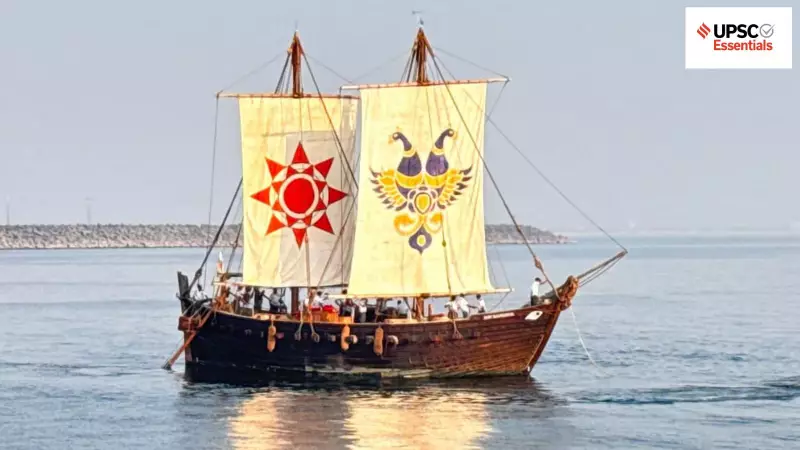
Introduction: In contemporary geopolitics, ancient maritime networks and cultural exchanges are being leveraged as strategic tools to build trust, enhance soft power, and safeguard economic interests. The commissioning of vessels like INSV Kaundinya, which rekindles India’s historic shipbuilding traditions, exemplifies this trend.
Key Points to Incorporate:
- India’s shipbuilding expertise, with innovations like the Kattumaran (catamaran), highlights a rich nautical heritage that can be revived for modern diplomacy.
- The voyage of INSV Kaundinya from Porbandar to Muscat underscores millennia-old maritime and cultural links between India and Oman, fostering partnerships that predate modern nation-states.
- Historical interactions in Southeast Asia, facilitated by merchants and priests, have left lasting impacts through intangible elements like fables and dances, as well as tangible artefacts such as icons and beads.
- In the current geopolitical landscape, the Indian Ocean has re-emerged as a critical theatre, with China’s naval expansion and energy security concerns elevating the importance of reliable regional allies like Oman.
Conclusion: Reviving maritime traditions can strengthen strategic ties by leveraging historical goodwill and cultural connections, thereby serving state interests in a competitive Indo-Pacific region.
Question 2: Separation of Powers in Democracies
Discuss the significance of the doctrine of separation of powers and the system of checks and balances in preventing concentration and misuse of authority in constitutional democracies.
Relevance: This question addresses core constitutional principles essential for democratic governance, including institutional accountability, judicial review, and limits on executive and legislative powers in India.
Introduction: The doctrine of separation of powers is fundamental to constitutional democracies, ensuring that authority is distributed among legislative, executive, and judicial branches to prevent accumulation and protect citizens from potential abuses.
Key Points to Incorporate:
- The system of checks and balances complements separation of powers by enabling each branch to monitor and restrain the others, maintaining equilibrium in governance.
- India’s parliamentary system, influenced by both British and American models, vests the judiciary with judicial review authority to oversee legislative and executive actions.
- Constitutional provisions such as Article 50 (separating judiciary from executive) and Articles 121, 211 (limiting legislative discussion of judicial conduct) reinforce these principles.
- Landmark cases like Kesavananda Bharati have established that parliamentary amending powers cannot alter the basic structure of the constitution, underscoring the judiciary’s role as a guardian.
Conclusion: The doctrine of separation of powers, coupled with checks and balances, is crucial for preventing misuse of authority and upholding democratic values in constitutional frameworks.

Points to Ponder: Reflect on the role of the Gulf Cooperation Council in regional partnerships and India’s strategic influence in the Indian Ocean Region. Additionally, consider how energy security shapes foreign policy and the evolving relations with Central Asian Republics.