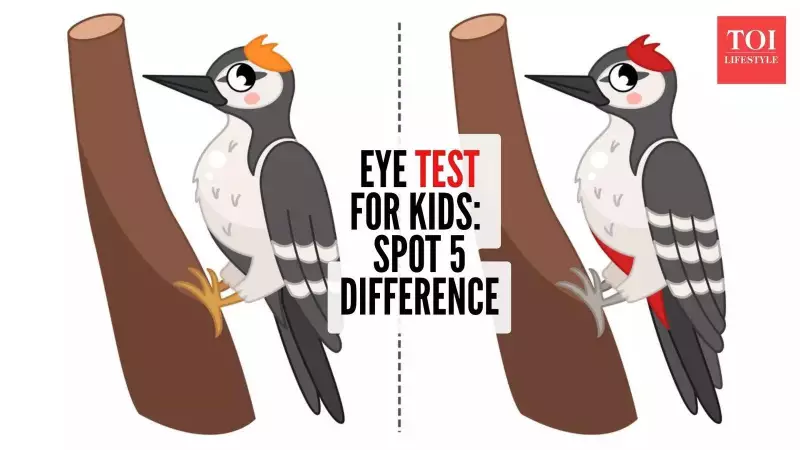
The picture presents two adorable woodpeckers perched on tree trunks. At first glance, they appear nearly identical. A closer look reveals several small but distinct differences between them.
Why This Activity Matters for Children
Finding these differences goes beyond simple entertainment. It actively helps children develop crucial skills. The exercise builds focus, enhances patience, and strengthens thinking abilities. These benefits support academic learning and everyday problem-solving.
Examining the Woodpecker Image
Both birds face the same direction while clinging to brown tree trunks. They feature black and white bodies, long pointed beaks, and alert eyes. The peaceful scene creates a friendly atmosphere suitable for young viewers. The real educational value emerges when children start noticing the minute details.

Four Key Differences to Discover
Difference 1: Head Coloration
The woodpecker on the left displays an orange patch on its head. The bird on the right shows a red patch instead. This color variation teaches children to distinguish between shades and remember visual information.
Difference 2: Foot Color
The left bird grips the tree with yellow feet. The right bird uses grey feet for holding on. This demonstrates that similar objects can have different colors and characteristics.
Difference 3: Wing Patterns
The wing patterns differ between the two birds. One woodpecker has fewer white lines on its wings. The other displays additional white stripes. This aspect trains young minds to compare patterns rather than just colors.
Difference 4: Tail and Body Markings
The right woodpecker possesses a longer and darker tail. It also features an extra red marking near its leg. These differences encourage children to scan the entire image carefully, not just focus on facial features.
Educational Benefits of Spot-the-Difference Games
Such activities provide multiple advantages for developing minds:
- Sharpens observation skills through detailed visual examination
- Improves attention span by requiring sustained focus
- Teaches careful examination before reaching conclusions
- Supports reading comprehension through pattern recognition
- Enhances problem-solving abilities in natural learning contexts
Regular practice with these visual puzzles helps children develop habits that benefit classroom learning and daily life. The skills transfer to reading, mathematics, and scientific observation.
About the TOI Lifestyle Desk
The TOI Lifestyle Desk comprises dedicated journalists who explore the nation's pulse to deliver engaging lifestyle content. The team goes beyond surface-level reporting to uncover extraordinary stories. They serve as a lifestyle companion offering daily inspiration and information across fashion, travel, food, wellness, and enrichment activities.