Australia Raises Visa Bar for Indian Students
For years, Australia has been a top choice for Indian students dreaming of studying overseas. It offered prestige without the unpredictability of the US, affordability compared to the UK, and stability when Canada seemed stretched. It was where ambition found opportunity. Now, that picture is changing.
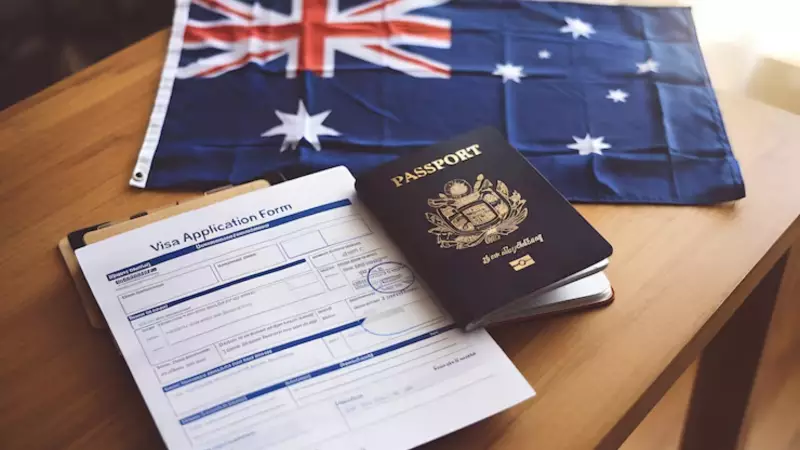
Starting January 8, 2026, Australia has placed India in its highest student visa risk category. Under the Simplified Student Visa Framework (SSVF), India moves from Evidence Level 2 to Evidence Level 3. This groups India with Nepal, Bangladesh, and Bhutan, subjecting Indian applicants to the strictest scrutiny for international students.
Australian officials say this shift addresses "emerging integrity risks" rather than targeting Indian students themselves. They insist genuine applicants remain welcome. Yet for thousands of Indian families planning to send children to Australia this year, the impact is direct and personal. They face longer processing times, deeper background checks, and much less margin for error.

What Changes Under the New Visa Rules
The reclassification transforms the visa process immediately. Under Evidence Level 3, applications undergo manual verification, extensive background checks, and sometimes interviews.
Manisha Zaveri, Joint Managing Director at Career Mosaic, confirms the change. "India now falls under the highest-risk visa category for Australia, resulting in a more investigative visa application process," she says. "Student applications will face deeper scrutiny, similar to the process in the US."
However, Piyush Kumar, Regional Director for South Asia, Canada, and Latin America at IDP Education, urges students not to see this as exclusion. "Australia's decision doesn't alter the process for genuine students who are prepared and transparent," he explains. "The fundamentals remain the same: show the right academic background, sufficient financial capacity, and a clear reason for studying in Australia. What changes is the level of scrutiny, not the opportunity."
Why Intent and Academic Fit Matter More Now
Beyond documents, visa officers will focus closely on whether a student's academic choices make sense. Course selection, institutional fit, and career intent become central to application judgments.
Zaveri highlights the growing importance of the Genuine Temporary Entrant (GTE) statement. "The GTE statement is now critical," she notes. "A generic or AI-generated statement won't suffice. Students must clearly explain their university and course choice, ensuring it aligns with career aspirations." She adds that many genuine students struggle here, often using templates or failing to personalize their statements, making them less convincing.
Kumar explains that enhanced scrutiny tests coherence. "Applicants may face in-depth checks, longer processing times, and sometimes interviews," he says. "These steps ensure that what a student studies and where they go fits their grades and career goals."
Who Faces Higher Risk and Who Doesn't
Despite India's reclassification, experts stress that not all applicants face equal assessment. Profile strength still defines outcomes.
Zaveri makes this distinction clear. "The higher-risk classification doesn't affect all Indian students equally," she states. She notes that institutional quality and course relevance can reduce friction. "Students applying to higher-ranked universities (Level 1 providers) may face less scrutiny. Choosing a course aligned with Australia's skill migration priority list—like healthcare, IT, or engineering—can significantly strengthen the application."
Students with prior overseas education or work-linked programs may also benefit. "Those with study experience in countries with transparent academic systems may face reduced scrutiny, as their background adds credibility," Zaveri adds.

Why India Was Flagged and What It Signals
Kumar attributes the shift to market-level concerns, not student capability. "India's inclusion in the higher-risk group is mainly due to an increase in fraudulent and non-genuine applications from the market," he says. He quickly adds context. "However, it doesn't reflect on the quality, capability, or intentions of most Indian students."
Australia's reliance on Indian enrollments remains strong. "Australia continues to value Indian students, as shown in initiatives like ECTA, which offers extended post-study work opportunities," Kumar points out. "As the second-largest international student community in Australia, Indian students remain a vital part of the education ecosystem."
Longer Timelines and Financial Discipline Become Key
With deeper verification expected, students targeting upcoming intakes must plan much earlier.
Kumar advises building realistic buffers. "Given enhanced scrutiny, students aiming for February 2027 or July 2026 intakes should apply at least 4-6 months in advance," he recommends. "University admissions and visa filing now require the biggest buffer."
On finances, Kumar stresses preparation over panic. "Planning, not panic, is key to every successful visa application," he explains. "Financial fitness and access to genuine funds help protect Australia's student visa system by ensuring students are ready for studies and living costs."
For middle-class families, the pathway stays viable. "As long as your study abroad financial planning shows consistency, transparency, and logical reasoning, there's no need to fear higher scrutiny," he assures. "Between scholarships, education loans, and consistent savings, middle-class Indians can afford education and living expenses in Australia."
A Higher Bar, Not a Closed Door
Zaveri concludes that Australia remains a viable destination, but preparation is now essential. "This higher visa risk classification doesn't mean Indian students should reconsider Australia as a first choice in 2026," she says. "Increased scrutiny requires better and more thorough preparation, not a shift in country strategy."
For Indian students, the message is clear. Australia is still open, but only to those who arrive with clarity, credibility, and careful planning.