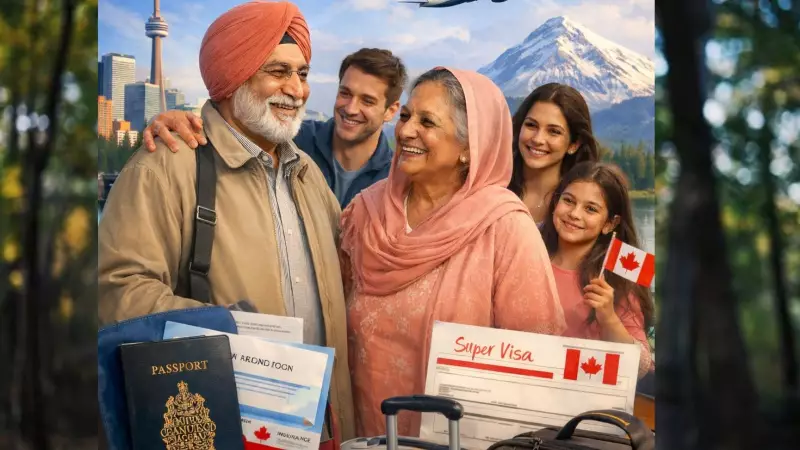
In a significant update for Indian families seeking to reunite with their elders in Canada, the popular Parents and Grandparents Program (PGP) will remain closed to new applications throughout 2026. However, the Canadian government has confirmed that the Super Visa pathway will continue to serve as a vital alternative for parents and grandparents.
PGP Draws on Hold, Super Visa Steps Up
The Immigration, Refugees and Citizenship Canada (IRCC) has announced a continued pause on new intakes for the Parents and Grandparents Program for the upcoming year. This decision means that IRCC will not be issuing new invitations to apply under the PGP in 2026. The department is instead focusing its efforts on processing the massive backlog of applications already received from previous years.
This backlog currently stands at a staggering volume. Officials are working through applications submitted as far back as 2020, indicating a multi-year wait for many families. The closure of new applications for 2026 is a strategic move to manage this existing inventory and improve processing times for those already in the queue.

The Super Visa: A Flexible and Long-Term Solution
While the PGP door is temporarily shut, the Super Visa remains wide open and actively promoted by Canadian authorities. This visa is specifically designed for parents and grandparents of Canadian citizens or permanent residents. It offers a stay of up to five years per entry and can be valid for up to ten years, providing a long-term solution for family visits.
The Super Visa has distinct advantages. Unlike the PGP, which leads to permanent residency, the Super Visa is a temporary resident visa. Its requirements include proof of the child or grandchild's ability to provide financial support, mandatory medical insurance from a Canadian company, and a medical examination. The processing times for Super Visas are generally faster and more predictable compared to the permanent residency route of the PGP.
Recent reforms have made the Super Visa even more attractive. Changes now allow Super Visa holders to apply for extensions from within Canada, removing the need to leave the country to renew their status. Furthermore, the insurance requirement can now be met by policies from foreign insurance companies, provided they meet specific Canadian criteria, offering more flexibility and potentially lower costs for families.
Implications for Indian Families and Future Outlook
For the large Indian diaspora in Canada, this news underscores the importance of the Super Visa as the primary, immediate tool for family reunification. With the PGP on hold, families must rely on this temporary pathway for the foreseeable future. Immigration experts advise eligible families to explore the Super Visa option proactively to avoid prolonged separation.
The IRCC has not provided a definitive timeline for when the Parents and Grandparents Program will reopen for new applications. The focus for 2026 is unequivocally on clearing the existing backlog. Prospective applicants are encouraged to monitor official IRCC channels for any announcements regarding future PGP intake cycles, which may resume only after the current inventory is under better control.
In conclusion, while the dream of permanent residency for parents and grandparents through the PGP is deferred for another year, the Super Visa offers a robust and flexible alternative. It ensures that families can still live together in Canada for extended periods, maintaining crucial cultural and familial bonds while awaiting potential future opportunities for permanent status.