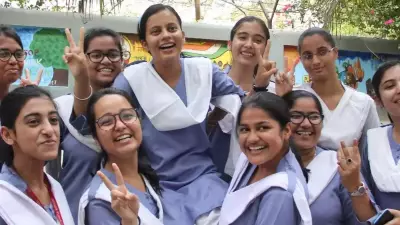
A clear shift is underway in the global education landscape, with Indian students increasingly viewing Germany as a more stable and welcoming destination compared to the United States. This trend gains prominence as German Chancellor Friedrich Merz visits India, signalling deeper bilateral ties. The visit, marked as his first major bilateral trip outside the NATO-EU bloc, underscores India's elevated strategic importance for Berlin.
From Dice Roll to Open Door: Contrasting Visa Philosophies
The contrasting approaches of the two nations have become starkly evident. In early January 2026, the US embassy in India issued a stern warning to student visa holders, stating that breaking US laws could lead to visa revocation, deportation, and future ineligibility. It emphasized that "a visa is a privilege, not a right." This message, coupled with reports of longer waits, rescheduling disruptions for H-1B applicants, and tighter social media scrutiny, has created a palpable sense of uncertainty for Indian aspirants.
In sharp contrast, Germany's Ambassador to India, Philipp Ackermann, offered a different assurance. He explicitly stated, "we don't check your social media," framing education as a public good rather than a political tool. This fundamental difference in posture is resonating with students. According to the German embassy, applications from Indian students to German universities surged by 35 per cent in June 2025, even as numbers for the US show a decline.

Germany's Strategic Pitch: From Classroom to Career
Chancellor Merz's delegation, which includes 25 CEOs, is focused on strengthening economic and technological links, with visits planned to Ahmedabad and Bengaluru. Beneath the high-level diplomacy lies a pressing German need: to address a structural shortage of skilled workers. Germany is actively seeking outcomes in business confidence, supply-chain alignment, and a tighter labour partnership with India.
Ambassador Ackermann has highlighted legal Indian migration as a success story, pointing to critical shortages in sectors like caregiving, nursing, and skilled crafts where Indian professionals are increasingly essential. The German Academic Exchange Service (DAAD) adds credibility by clarifying that most public universities do not work through agents, offering students free counselling—a rarity in the often-opaque study-abroad market.
For Indian students and researchers, Germany is becoming more than just an academic destination; it is being perceived as a pathway to a stable livelihood.
The Real Test: Delivery on Promises
While the policy signals are positive, the ultimate challenge lies in implementation. The growing Indian cohort in Germany now seeks concrete delivery on several fronts:
- Faster recognition of academic and professional qualifications.
- Stronger and more accessible German language training pathways.
- Availability of affordable student housing.
- Cleaner, direct information channels free from middlemen.
The true measure of success will be felt at the immigration office counter and in the daily lives of students, not just on the diplomatic podium. If Germany can efficiently translate its welcoming rhetoric into a smooth administrative reality, it stands to attract a generation of Indian talent for reasons no advertising campaign can replicate. As one observer noted, the hope is that Indian ambitions in Germany will have no speed limit—much like the country's famous Autobahns.