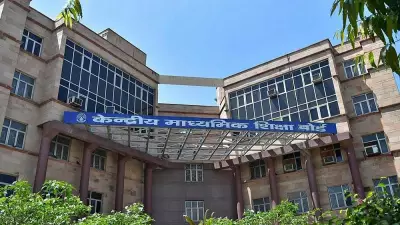
In a landmark achievement for Indian academia, Banaras Hindu University (BHU) in Varanasi has secured a prestigious and substantial grant from the European Union. The university's tourism management section within the faculty of arts has been awarded the Erasmus+ Capacity Building in Higher Education (CBHE) Grant.
A Historic First for BHU's Faculty of Arts
This grant marks a significant milestone as it is the first Erasmus grant ever awarded to BHU's faculty of arts. Furthermore, with a total value of €780,000 (approximately ₹8 crore), it represents the largest Erasmus funding received by the university to date. The project is scheduled to run for three years, from November 2025 to October 2028.
BHU Vice-Chancellor Prof Ajit Kumar Chaturvedi expressed great delight at this international recognition from esteemed scholars in the humanities. The European Union project agreement was officially signed by Registrar Prof Arun Kumar Singh. Prof Sushma Ghildyal, dean of the faculty of arts, pointed out that this success heralds a new phase of international collaborations and Memoranda of Understanding (MoUs) for the faculty, promising fresh perspectives and substantial growth.

SacredTravels4Growth: A Global Consortium
The project, titled "SacredTravels4Growth: Higher Education and Sustainable Growth through Religious Tourism," is led by Dr Pravin Rana from the tourism management section. It aims to build higher education capacity in the niche fields of religious tourism, cultural heritage preservation, and sustainable regional development.
This ambitious initiative creates an international consortium of 16 partner institutions across 8 countries: Albania, India, Spain, Greece, Slovenia, Moldova, Malta, and South Africa. From India, BHU and Karnataka University are the representing institutions. The consortium will focus on sharing best practices from Europe and partner nations to enhance academic and professional standards.
Expanding Horizons: Workshops, Trips, and Collaborations
Dr Rana explained that the project will offer enhanced learning opportunities for faculty, students, and stakeholders. The planned activities include:
- Four international training workshops and study trips in Albania, Moldova, South Africa, and India (at BHU).
- Study visits to Slovenia, Spain, Malta, and Greece.
These global engagements are designed to expand BHU's academic networks and facilitate shared teaching and research experiences. The project will also lead to several tangible outcomes:
- Establishment of new international collaborations and MoUs.
- Launch of SWAYAM-based online courses.
- Organisation of global workshops, conferences, and expos in partnership with the Ministry of Tourism, Indian Institution of Architects (IIA), and ASSOCHAM.
Dr Rana provided background on the Erasmus+ programme, noting that the idea for a European student-exchange programme originated in the 1970s. The European Community officially launched ERASMUS in 1987. In 2014, the EU merged several initiatives into one integrated programme called Erasmus+, which now encompasses higher education mobility, vocational training, youth exchanges, and capacity-building projects like the one awarded to BHU.
This grant positions BHU, and Varanasi as a city of profound cultural and religious significance, at the heart of a global dialogue on managing religious tourism sustainably for economic and educational growth.