Delhi University Issues Strong Rebuttal to Rahul Gandhi's Caste Allegations
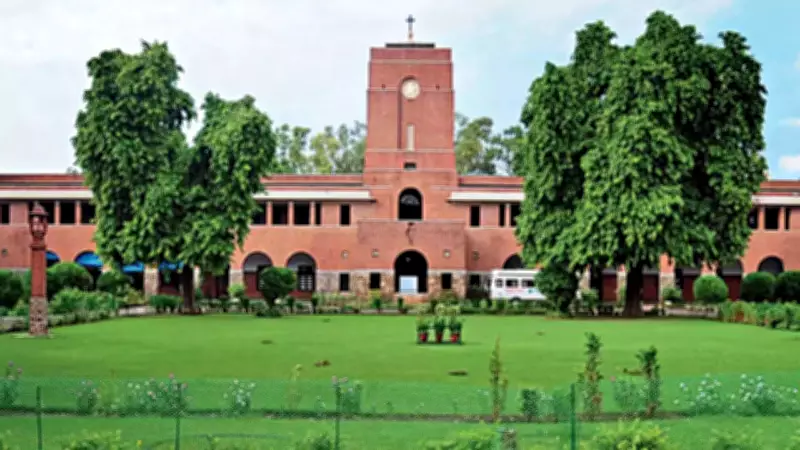
The University of Delhi has issued a forceful and detailed response to remarks made by Congress leader Rahul Gandhi suggesting that students were being failed on the basis of caste during admission processes. The university administration has categorically stated that these claims are not supported by factual evidence and fundamentally misrepresent how the institution's admission system operates.
CUET-Based Admissions Leave No Room for Subjective Decisions
In its clarification, Delhi University emphasized that student admissions are conducted primarily through the Common University Entrance Test (CUET), a standardized national examination. The university explained that this process is structured in a way that leaves minimal room for subjective decision-making, with admissions largely determined by CUET scores alone.
University officials highlighted a crucial detail that makes the allegation particularly problematic: interviews are not part of the standard admission process for most undergraduate and postgraduate programmes. This structural aspect of the admission system directly contradicts suggestions that students could be failed during interview stages based on caste considerations.

The CUET-based admission system ensures that the selection process remains transparent and merit-driven, according to the university's official statement. This standardized approach has been implemented specifically to maintain fairness and objectivity in student selection across all categories.
Detailed Admission Data Released for 2025-26 Academic Session
To substantiate its position with concrete evidence, Delhi University released comprehensive admission figures for the 2025-26 academic session, showing the category-wise distribution of students admitted through CUET. The data reveals significant representation from reserved and economically weaker sections across both undergraduate and postgraduate programmes.
Postgraduate Admissions Breakdown
A total of 10,422 students were admitted to postgraduate programmes with the following distribution:
- Unreserved (UR): 4,022 students (38.59%)
- Other Backward Classes (OBC): 3,115 students (29.88%)
- Scheduled Castes (SC): 1,488 students (14.27%)
- Scheduled Tribes (ST): 614 students (5.89%)
- Economically Weaker Sections (EWS): 1,203 students (11.54%)
Undergraduate Admissions Statistics
At the undergraduate level, the university admitted 70,395 students with the following category distribution:
- Unreserved (UR): 32,777 students (46.56%)
- Other Backward Classes (OBC): 17,971 students (25.52%)
- Scheduled Castes (SC): 10,517 students (14.93%)
- Scheduled Tribes (ST): 3,251 students (4.62%)
- Economically Weaker Sections (EWS): 5,879 students (8.35%)
The figures clearly indicate that a substantial number of seats across programmes are occupied by students belonging to reserved and economically weaker categories, demonstrating the university's commitment to inclusive admission policies.
University Addresses Possible Faculty Recruitment Confusion
The university administration also addressed the possibility that Rahul Gandhi's remarks may have inadvertently referred to faculty recruitment rather than student admissions. According to officials, thousands of teachers have been recruited across categories in recent years, all in strict accordance with statutory reservation norms.
University representatives expressed concern that comments questioning the integrity of these processes could potentially harm the academic environment and create unnecessary tension within the institution.
Official Statement on Social Media Platform
In its statement posted on X (formerly Twitter), Delhi University provided a comprehensive response:

"The University of Delhi admits students primarily based on the CUET scores, and the standard admission process does not mandate interviews for most undergraduate and postgraduate programmes. If the Leader of Opposition was referring to recruitments (such as faculty positions), the University in the recent past has recruited thousands of teachers across all categories. We strongly object to such comments, as they create a non-conducive environment in the University. The Leader of Opposition should have verified the facts before making such a statement."
Data-Driven Response to Political Allegations
Delhi University's decision to release detailed admission data appears strategically aimed at countering the allegations with official, verifiable figures. As one of India's largest and most prestigious public universities, the institution admits tens of thousands of students annually through the CUET system.
This makes Delhi University's admission policies a closely watched issue in the broader national debate about access, reservation policies, and fairness in higher education. The university's transparent approach in releasing category-wise data represents a significant effort to demonstrate accountability and maintain public trust in its admission processes.
The controversy highlights the ongoing tension between political narratives and institutional processes in India's higher education landscape, with Delhi University taking a firm stand to protect its reputation and the integrity of its admission systems.