

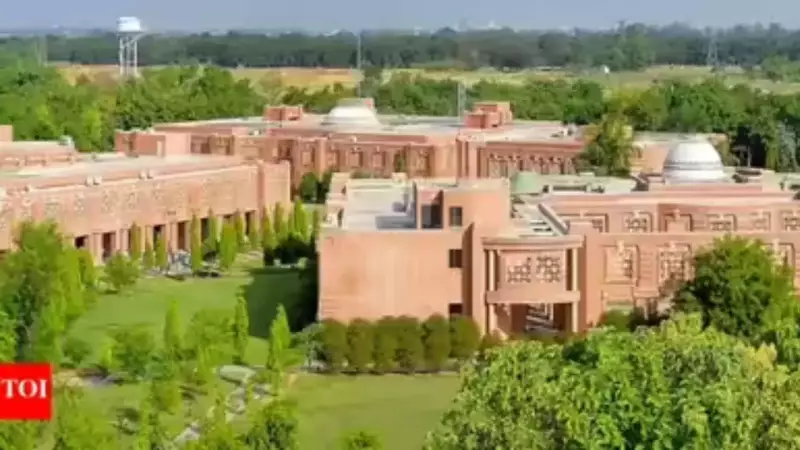
In a significant move to bridge the gap between tradition and technology, the Indian Institute of Management Lucknow (IIM Lucknow) has become the site for a pioneering postal experiment. On Thursday, the prestigious campus inaugurated Uttar Pradesh's first Gen-Z post office, a modern facility designed to resonate with a generation more accustomed to smartphone screens than postage stamps.
A New Chapter for India Post
The inauguration ceremony marked a unique collaboration between academia and public administration. The event was presided over by Prof. M. P. Gupta, Director of IIM Lucknow, alongside Shri Pranav Kumar, Chief Postmaster General, U.P. Circle, and Shri Sunil Kumar Rai, Postmaster General, HQ Region, Lucknow. Together, they unveiled a space that moves beyond the traditional image of a post office, aiming to integrate seamlessly into the dynamic lifestyle of students and young professionals.
This initiative represents a conscious effort by India Post to stay relevant and attract a demographic that rarely interacts with conventional postal services. By setting up this facility on a premier management campus, the postal department is directly engaging with the youth to understand and cater to their evolving needs.

Features Tailored for the Digital Native
Gone are the long queues and imposing counters. The Gen-Z post office is designed as a convenient, user-friendly hub. Its services and amenities are tailored for tech-savvy users:
- QR Code-Based Banking: Indian Post Payment Bank services are accessible through quick QR code transactions.
- Automated Parcel Services: Self-service units for packaging and booking parcels streamline the shipping process.
- End-to-End Tracking: Integrated systems provide real-time updates on consignments, ensuring transparency.
- Aadhaar Services: Facilities for Aadhaar enrolment and updates are available on-site.
- Student-Centric Amenities: The space includes free high-speed Wi-Fi and cafeteria-style seating, resembling a co-working lounge more than a government office.
One of the most practical innovations for the IIM Lucknow community is the packers and movers facility. This service allows graduating students to ship their belongings directly from their hostel rooms to their homes at approximately half the cost charged by private operators, solving a recurring logistical challenge.
Vision for a Modern Postal System
Speaking at the inauguration, the dignitaries highlighted the transformative vision behind this project. Prof. M. P. Gupta reflected on the evolution of communication, noting that while letters were once the primary means, today's technology can make postal services far more efficient. He expressed confidence that this new facility would greatly benefit the campus community.
Shri Pranav Kumar emphasized the goal of bringing youth back into the postal ecosystem. "This post office is the first-of-its-kind in Lucknow," he said. "We aim to engage with the young generation and make them experience modern postal services. We are also involving youth in the design process at different locations to ensure their perspectives shape our future."
Linking the project to a national agenda, Shri Sunil Kumar Rai stated that under the guidance of Union Minister for Communications, Jyotiraditya Scindia, such innovations aim to make the postal system smarter and more approachable. Trackable consignments and streamlined processes are key to providing transparent, youth-friendly services.
Part of a Broader National Push
The IIM Lucknow launch is not an isolated event. It is part of a wider strategy to create interactive, technology-driven postal spaces across India while honouring the legacy of the network. In Uttar Pradesh, which currently has 125 post offices, facilities at Lucknow University, Sainik School, Sarojini Nagar, and Babasaheb Bhimrao Ambedkar University have also been designated as Gen-Z post offices.

This new model transforms the post office from a symbol of routine reliability into an aspirational public service—one that listens, adapts, and meets the next generation on its own terms. It signifies a bold step in reimagining a venerable institution for the digital age, ensuring it remains an integral part of India's socio-economic fabric.





