

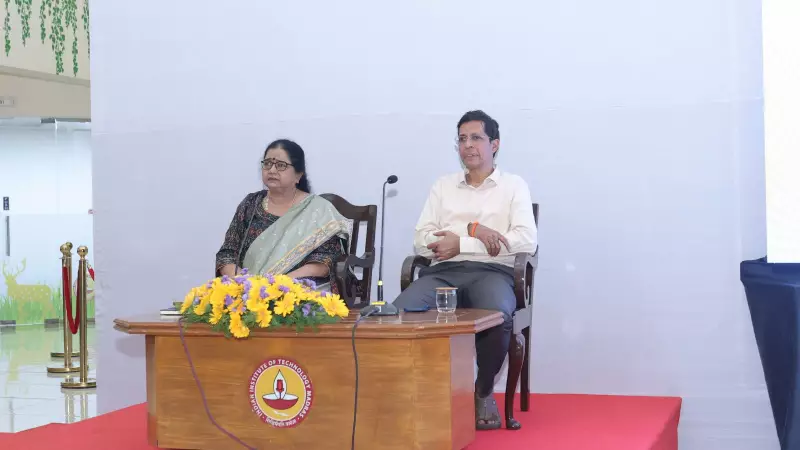
IIT Madras Director Advocates for 'Zero Suicide Batch' in Campus Safety Drive
The Indian Institute of Technology Madras (IIT Madras) has launched a comprehensive initiative aimed at fostering a happier, safer, and more secure campus environment for all students. During a recent institute-wide event titled 'Towards a Happy, Safe and Secure Campus', key administrators outlined multiple student-centric measures designed to enhance wellbeing, safety, and inclusivity across the campus.
Institutional Commitment to Student Wellbeing
Prof. V. Kamakoti, Director of IIT Madras, emphasized that building a positive campus atmosphere is a continuous endeavor that demands active participation from every stakeholder. "Creating a happy, safe and secure campus is an ongoing process that requires collaboration among students, faculty, staff and the administration," he stated. Prof. Kamakoti detailed the institute's multi-faceted approach, which encompasses several critical areas:
- Student grievance redressal mechanisms to address concerns promptly
- Counselling and wellness services to support mental health
- Safety and security protocols to ensure physical protection
- Sensitisation programmes to promote awareness and empathy
- Robust institutional frameworks that encourage transparency and accountability
He acknowledged the significant contributions of the Student Ombuds, noting that under her guidance, the campus is progressively becoming more supportive and secure for all members of the community.

Zero Suicide Initiative and Legal Protections
G. Thilakavathi, IPS (Retd.), who serves as the Student Ombuds at IIT Madras, reinforced the Director's message on suicide prevention with a powerful statement. "As the Director said, it should be a 'zero suicide batch'," she declared, urging students to maintain perspective during challenging times. Thilakavathi encouraged students to look beyond immediate stressors, assuring them that solutions are always available. "Whatever stress that you are going through, whatever problem you are facing, all that can be solved. The best is yet to come and nothing is lost. You should march forward," she advised.
Beyond suicide prevention, Thilakavathi extensively discussed legal reforms and protections, particularly those concerning sexual harassment and women's safety on campus. She highlighted recent changes in criminal law that clearly define unwelcome advances as punishable offenses, now tried in Sessions Courts for more stringent adjudication. Furthermore, she explained the provisions of the Sexual Harassment of Women at Workplace Act, which applies to educational institutions and mandates the formation of Internal Complaints Committees with women-led representation to ensure proper handling of complaints.
Comprehensive Campus Safety Framework
The event served as a platform for IIT Madras to reaffirm its commitment to developing an environment where students can excel both academically and personally while feeling safe, heard, and supported. The institute's strategy integrates multiple dimensions of student life, creating a holistic framework that addresses both immediate concerns and long-term wellbeing. This approach includes:
- Establishing trust-based systems that encourage open communication
- Implementing proactive engagement initiatives to identify and address issues early
- Promoting institutional responsibility across all levels of administration
- Ensuring that safety protocols are regularly reviewed and updated
The event was streamed live and remains available for online viewing, demonstrating the institute's commitment to transparency and accessibility. Through these concerted efforts, IIT Madras aims to set a benchmark for campus safety and student support in higher education institutions across India, creating a model environment where every student can thrive without fear or undue stress.






