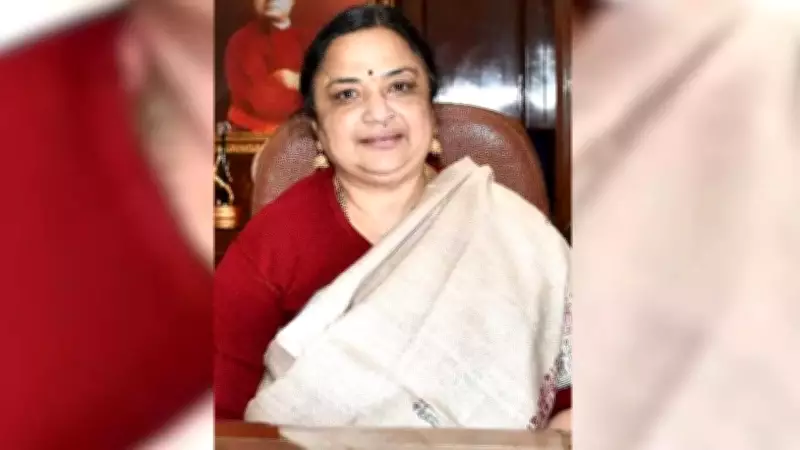
JNU Vice Chancellor Defends Controversial Remarks on Dalits and Blacks
Jawaharlal Nehru University (JNU) Vice Chancellor Santishree D Pandit has defended her recent comments concerning Dalits and Blacks, asserting that her statements were taken out of context and misrepresented for political purposes by certain groups. This clarification comes amid escalating protests by student organizations, including the JNU Students' Union (JNUSU), which have demanded her resignation over remarks made in a podcast published on February 16.
Context of the Controversy
The controversy stems from comments Pandit made during a podcast discussion on the University Grants Commission's (UGC) proposed 2026 Equity (Anti-Discrimination) Regulations, which aim to address caste-based discrimination in higher educational institutions. In a clip circulating online, Pandit was heard saying that Dalits and Blacks cannot progress by being permanently a victim or playing the victim card, sparking sharp reactions from student groups.
Pandit's Clarification and Position
In a written statement shared with ANI, Pandit clarified her position, stating she had not made any statement against Dalits. Instead, she claimed she was referring to what she termed wokes who use such identities politically. I am against anybody being made into a permanent victim or a permanent oppressor. That is my position, she said in a phone conversation.

Alleging political motives behind the backlash, Pandit added, These student organisations do not want to deal with the question of vandalism, violence, rustication and the slogans raised against the Prime Minister and the Home Minister, which were totally unacceptable in any civilised society. Instead, they have chosen to take my remarks out of context.
Support from Faculty and Academic Community
Pandit cited support from a large number of faculty members who extended their unwavering support to her, alleging that JNUSU and the JNU Teachers' Association (JNUTA) were eroding deliberative discourse on campus through selective framing. In an unsigned statement, faculty members described the controversy as a malicious attempt to destabilise the university and discredit Pandit's leadership.
The statement alleged that a 33-second clip from the 52-minute podcast had been selectively circulated and accused Leftist fringe groups of instrumentalising the issue through JNUSU and JNUTA. We extend our unwavering support to Ma'am in advancing the true JNU culture rooted in inclusivity, equity, humanism, rationality and collective progress and strongly condemn the ongoing acts of false and divisive narrative building, the statement said.
Pandit's Views on Equity and Identity
On the equity regulations, Pandit emphasized she was not opposed to equity, noting, In fact, I am a double beneficiary -- I was among the first batches when OBC reservation was introduced, and I am also a woman. But I do not want an inequitable society where someone is judged or punished purely because of their birth identity. You do not choose your caste, religion or where you are born. It is a primordial identity. Why should anyone be punished for that?
Invoking Dr. B.R. Ambedkar, she said, Babasaheb Bhimrao Ambedkar would not have agreed to an inequitable law. I greatly admire him. I was speaking in line with his philosophy. How can I be anti-Dalit? She further alleged that only a small portion of the podcast was being circulated, stating, If you see the entire podcast -- it is about 55 minutes long -- this portion comes towards the end. It has been totally misrepresented.
Student Union's Response and Demands
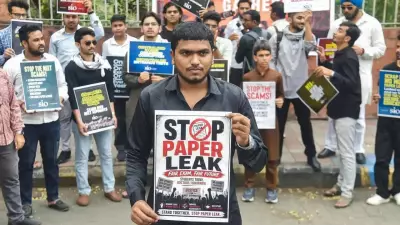
Meanwhile, in a statement issued on Friday, JNUSU condemned what it termed blatantly casteist statements and demanded Pandit's resignation. The union alleged that her remarks reflected a chronology of injustice, caste supremacy and perpetual systemic exclusion in universities and public spaces and called upon student organisations across campuses to join the protest.

The union also objected to her highlighting her association with the RSS. In the podcast, Pandit had said, I am proud of my affiliations with RSS. It gave me a worldview which is universal and unique. RSS taught me appreciation of difference and diversity.
Broader Implications and Ongoing Protests
The controversy has ignited a broader debate on campus discourse, equity policies, and political motivations in academic institutions. Pandit's defense and the student protests highlight the ongoing tensions surrounding caste discrimination and identity politics in Indian higher education.
As the situation unfolds, the university community remains divided, with faculty support for Pandit contrasting sharply with student-led demands for accountability and systemic change.