Nagpur University Launches Landmark Tribal History Museum Project
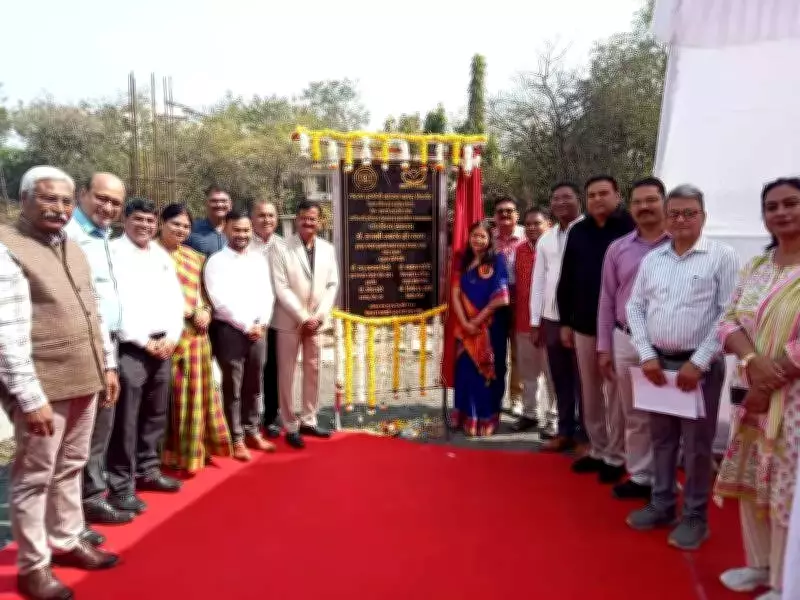
In a significant cultural and academic initiative, Nagpur University (NU) officially commenced the construction of its proposed Tribal History Museum on Saturday. The foundation stone ceremony marks a pivotal step toward preserving and promoting the rich tribal heritage of the Vidarbha region for future generations.
Foundation Stone Laid at Academic Campus
The foundation stone was ceremoniously laid by Vice-Chancellor Manali Khirsagar at the Mahatma Jyotiba Phule Academic Campus located on Amravati Road. This event was attended by several senior university officials and dignitaries, including Finance and Accounts Officer Harish Paliwal, Deans Shyamrao Koreti, Medha Kanetkar, and Umesh Palikundwar, along with senate members, department heads, faculty members, and engineers.
Project Details and Funding
The museum is being constructed near the Department of Ancient Indian History, Culture, and Archaeology at an estimated cost of ₹4.43 crore. This project is being funded under the PM-USHA scheme, with financial support provided by the Maharashtra government. The funding was sanctioned during the university's centenary year, in which Nagpur University received ₹100 crore for various development works, highlighting the government's commitment to educational and cultural advancement.

Preserving Vidarbha's Tribal Heritage
Vidarbha is home to a significant tribal population, constituting nearly 23% of the region's total population. Key communities include the Gond, Kolam, Madia, and Korku of Melghat. Once completed, the museum will function as a major academic and cultural repository, meticulously documenting the history, traditions, cultural practices, and everyday lifestyles of these tribal communities. The primary aim is to ensure that this invaluable tribal history is preserved and made accessible to a wider audience, including researchers, students, and the general public.
Committee and Research Behind the Project
The project received approval following a detailed proposal submitted by the Postgraduate History Department under the PM-USHA initiative. A three-member committee, comprising Dr. Shyamrao Koreti, Waman Turke, and Dr. Prabash Sahu, was constituted by the university to study and plan the museum. This committee conducted extensive research by examining successful tribal museums in Madhya Pradesh, including prominent institutions like the Bhopal Tribal Museum and the Indira Gandhi Rashtriya Manav Sangrahalaya, both under the Union Ministry of Culture.
Modern Exhibition Methods and Recommendations
Based on their findings, the committee submitted a comprehensive report that emphasizes the use of modern exhibition techniques to enhance visitor engagement. Recommendations include:
- Interactive and technology-driven displays to effectively present tribal life, belief systems, and cultural diversity.
- Implementation of replicas, thematic lighting, and audio-visual installations for an immersive experience.
- QR code-based information systems to provide detailed insights and educational content.
These methods are designed to make the museum not only a repository of artifacts but also a dynamic educational hub.
Vice-Chancellor's Involvement and Site Review
Vice-Chancellor Manali Khirsagar played an active role in the project's launch. Following the foundation stone ceremony, she reviewed the construction site and sought detailed updates on the progress of the museum project. Her involvement underscores the university's dedication to ensuring the successful completion of this landmark initiative.
Visit to Archaeology Museum
Earlier, Vice-Chancellor Khirsagar visited the university's existing Archaeology Museum, which is housed in the Department of Ancient Indian History, Culture, and Archaeology. During her visit, she appreciated the department's efforts in conserving significant historical and archaeological artifacts from Vidarbha. Department Head Prabash Sahu provided a briefing on the exhibits and their historical importance, highlighting the continuity of cultural preservation efforts at the university.

Significance and Future Impact
The Tribal History Museum project represents a crucial step in acknowledging and celebrating the diverse tribal heritage of Vidarbha. By integrating academic research with public engagement through modern museum practices, Nagpur University aims to foster a deeper understanding and appreciation of tribal cultures. This initiative is expected to serve as a model for similar projects across India, promoting cultural preservation and education on a broader scale.