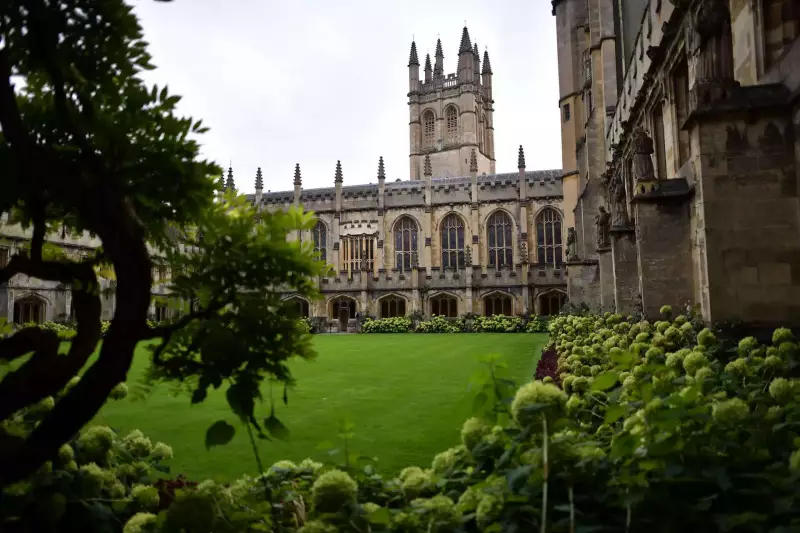
Oxford University Announces Major Admissions Overhaul: Farewell to Bespoke Entrance Exams
In a landmark decision set to reshape undergraduate admissions, Oxford University has revealed plans to abandon its long-standing bespoke entrance examinations. Starting from 2027, prospective students applying for subjects including sciences, mathematics, history, and the prestigious PPE (Politics, Philosophy and Economics) program will no longer face Oxford-specific tests. Instead, the university will transition to standardized exams developed collaboratively by Imperial College London and Cambridge University, administered through Pearson.
Driving Inclusivity and Simplifying Applications
This strategic shift represents a significant step in Oxford's broader mission to foster greater inclusivity within its admissions framework. For decades, the university's unique entrance exams have faced criticism for allegedly favoring applicants from well-resourced schools or families with access to private tutoring and extensive preparatory support. By adopting tests that are already recognized by other leading institutions such as Durham University, Warwick University, University College London, and the London School of Economics, Oxford aims to create a more equitable playing field while upholding its rigorous academic standards.
Simplifying the Application Process

Under the new system, Oxford will leverage standardized examinations developed by Imperial and Cambridge, which are widely accepted across multiple top-tier universities. This approach allows candidates to take a single test that can be submitted to various institutions, thereby reducing the stress, logistical complexity, and financial burden associated with preparing for and sitting different exams for each application.
Addressing Historical Barriers and Ensuring Fairness
Oxford's bespoke exams have frequently been perceived as obstacles for students from state schools or those lacking access to specialized tutoring resources. David Gibbon, director of Oxford and Cambridge Tutors, commented to The Daily Mail, "Removing some of the perceived mystique and individuality away from an application will benefit candidates who might be less familiar with the Oxford admissions process." However, he also highlighted a potential drawback in an interview with Times Higher Education, noting, "It may also mean the loss of some highly regarded, subject-specific assessments which have provided a level of challenge above and beyond other tests."
A Test with a Complex History
Oxford's entrance examinations have undergone substantial transformations over the decades. Originally abolished in the 1990s to level the playing field between state-educated and privately-schooled candidates, many tests were later reintroduced when high A-level grades alone proved insufficient to distinguish exceptional applicants from strong ones. The forthcoming computerized exams will be managed by University Admissions Tests UK (UAT UK), a joint initiative by Imperial and Cambridge. Applicants will now select from one of three standardized tests rather than taking unique Oxford assessments for each subject.
Practical and Financial Considerations
Beyond equity concerns, practical and financial factors have influenced this decision. Gareth Davies, an adviser at William Clarence Education, explained to the Daily Mail that administering the old exams had become increasingly costly for Oxford. Public reaction to the announcement has been mixed yet generally supportive. On the parenting forum Mumsnet, one user remarked, "As a move towards equity this is good. The Oxford-specific entrance exam surely gave advantage to pupils from schools with strong Oxford links and the ability meaningfully to support Oxford applications. We all know this need not correlate with merit." Conversely, another user expressed disappointment, calling it a "sad loss" and speculating, "I can't imagine that the Oxford maths department are very happy."

Maintaining Rigorous Academic Standards
Oxford has emphasized that its admissions process will continue to be demanding and thorough. A university spokesperson stated to the Daily Mail, "Oxford's undergraduate admissions process is rigorous and designed to identify academic potential. The university is continually reviewing its admissions processes and practices to ensure they best meet the needs of the university, schools, and applicants. Our approach varies according to subject and considers a range of information as evidence of a candidate's ability to thrive here. All those offered a place to study at Oxford have been interviewed and every year more than 20,000 interviews for approximately 10,000 applicants are conducted, allowing tutors to assess directly a candidate's ability to think independently and engage with new ideas – qualities that underpin learning at Oxford."
This reform represents a delicate balancing act: enhancing fairness and inclusivity without compromising the high standards synonymous with an Oxford education. By leveling the competitive landscape, students from diverse backgrounds can now contend on more equal terms, all while preserving the intellectual challenge that defines the Oxford experience.