

Rajasthan Governor Sounds Alarm on University Financial Crisis
In a significant development from Jaipur, Rajasthan Governor Haribhau Bagde has expressed serious concerns regarding the worsening financial and academic conditions of state-funded universities. During a crucial meeting with vice-chancellors on January 21, the governor highlighted multiple systemic issues that threaten the long-term sustainability of these educational institutions.
Decade-Long Fee Stagnation Cripples University Finances
The governor revealed that tuition fees in Rajasthan's state-funded universities have remained unchanged for an astonishing 10 to 12 years. This prolonged stagnation has severely weakened their financial position, making it increasingly difficult for these institutions to cover rising operational costs. According to meeting minutes released on January 28, Bagde emphasized that such extended periods without fee adjustments naturally undermine university finances and compromise their ability to function effectively.
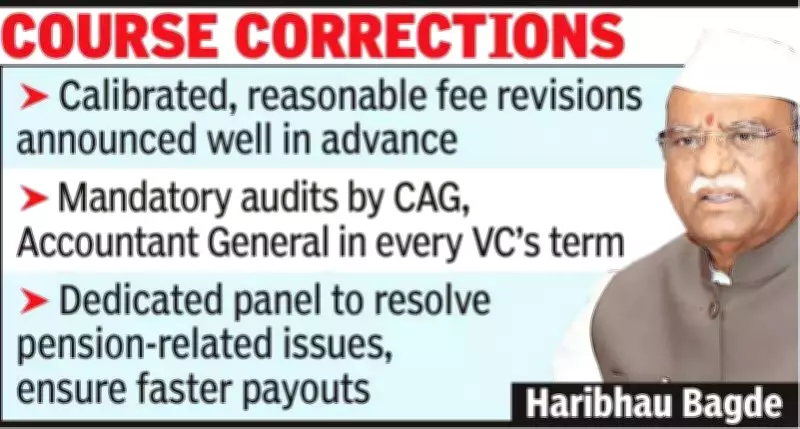
"When fees are not revised for a decade or more, it naturally weakens the financial position of universities and hampers their sustainability," the governor stated in the official minutes. He advocated for a calibrated and reasonable fee revision approach, stressing that any increases should be planned well in advance and communicated transparently to avoid last-minute implementation during admission periods.

Sensitive Nature of Fee Revisions in Rajasthan
The governor cautioned against abrupt fee hikes, noting that sudden increases could trigger widespread dissatisfaction and student protests. Fee revision remains an exceptionally sensitive issue in Rajasthan, where universities have previously been forced to abandon proposed increases following strong resistance from student organizations. This delicate balance between financial necessity and student affordability presents a significant challenge for university administrators.
Questionable State Lending Practices Exposed
Bagde drew attention to what he termed a financial inconsistency in state policy. He pointed out that while nationalized banks typically offer loans at 8% to 10% interest rates, the Rajasthan state government charges state-funded universities between 10% and 12% interest on loans. The governor questioned the appropriateness of charging higher interest rates to government-funded institutions and urged the state administration to review these lending terms to provide much-needed relief.
Strengthening Financial Oversight and Transparency
In light of recent corruption cases involving vice-chancellors that led to suspensions, Governor Bagde proposed mandatory financial audits to enhance accountability. He recommended that every vice-chancellor undergo a compulsory Comptroller and Auditor General (CAG) audit during their third year of tenure. Additionally, he suggested that an Accountant General audit should be required during each vice-chancellor's term to strengthen financial transparency across all state universities.
Addressing Critical Staffing Shortages
The governor also addressed pressing staffing issues, noting that universities not receiving state funding for salaries should face no obstacles in obtaining approval for recruitment against vacant positions. "Approvals should be granted without delay to address the acute shortage of teachers," Bagde emphasized, warning that prolonged faculty vacancies were directly harming academic quality and student learning outcomes.
Pension Reforms and Ancient Knowledge Integration
Bagde revealed that he had separately discussed pension payment issues in state-financed universities with Chief Minister Bhajan Lal Sharma, presenting detailed information about overall pension expenditures. He proposed forming a dedicated committee to resolve pension-related challenges and ensure timely payments to retired university employees. However, the minutes indicated that no progress on this matter had yet been communicated by the state government, prompting the governor to commit to raising the issue again.

Beyond financial matters, the governor advocated for greater inclusion of ancient Indian knowledge systems in higher education curricula. He specifically suggested introducing texts authored by Vedic saint Rishi Parashar and Bhakti movement leader Vallabhacharya into university programs, emphasizing the importance of preserving and promoting India's rich intellectual heritage.
Governor Bagde concluded by underlining the urgency of implementing comprehensive structural reforms in Rajasthan's higher education system. His recommendations represent a holistic approach to addressing both immediate financial challenges and long-term academic sustainability for the state's universities.





