Supreme Court Agrees to Hear PIL Challenging UGC's Caste Discrimination Regulations
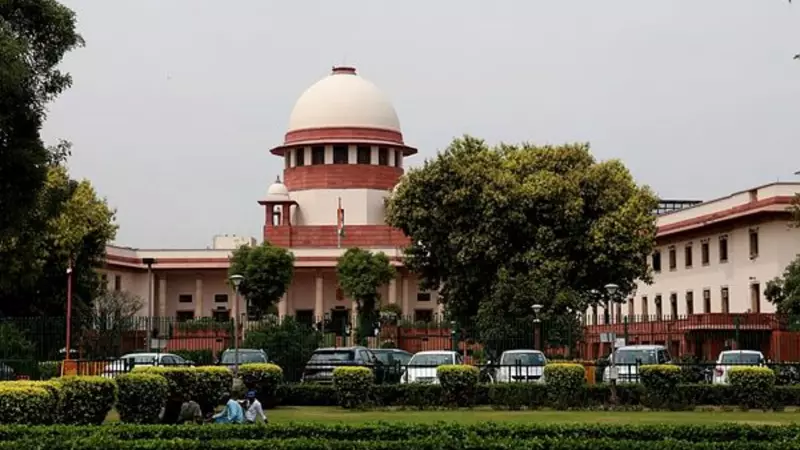
The Supreme Court of India has agreed to take up a significant Public Interest Litigation (PIL) that challenges the University Grants Commission's (UGC) recently notified regulations concerning caste-based discrimination in higher education institutions. This development comes amid growing controversy over what petitioners have termed a "draconian" and "exclusionary" definition within these rules.
Constitutional Violations Alleged in UGC Regulations
The PIL, filed by businessman and philanthropist Rahul Dewan, retired IAS officer Sanjay Dixit, and others, contends that specific sections of the UGC (Promotion of Equity in Higher Education Institutions) Regulations, 2026, notified on January 13, violate fundamental constitutional rights. The petitioners argue that Regulations 3(1)(c), 8(b), and 8(c) infringe upon Articles 14, 15, and 21 of the Constitution of India, which guarantee equality before the law, prohibition of discrimination, and protection of life and personal liberty.
During an urgent hearing request, advocate Parth Yadav, representing the petitioners, informed a bench presided over by Chief Justice of India Surya Kant that certain provisions in the regulations effectively "promote discrimination against people belonging to the general classes." In response, CJI Kant acknowledged the concerns, stating, "We are also aware of what is happening," and directed the counsel to rectify any defects in the petition and provide the case number for listing.

'Narrow and Exclusionary' Definition Sparks Debate
At the heart of the controversy is Regulation 3(1)(c), which defines "caste-based discrimination" as discrimination solely on the basis of caste or tribe against members of scheduled castes, scheduled tribes, and other backward classes. The petitioners have labeled this definition as "draconian" and argue that it "institutionalises a narrow and exclusionary definition" of caste-based discrimination.
According to the plea, this definition "provides selective protection, leaving a major chunk of students coming from diverse regions and classes" without adequate safeguards. The petitioners emphasize that they are not opposing protection for SC/ST and OBC communities but assert that the general category must not be subjected to discrimination, injustice, or actions against their dignity and self-respect.
Allegations of Hostile Discrimination and Constitutional Breaches
The petitioners further contend that the regulatory framework creates a "unilateral system" where mechanisms like Equal Opportunity Centres and dedicated helplines are designed exclusively for reserved categories, offering no equivalent institutional recourse for general category students facing caste-based harassment. This approach, they argue, amounts to "hostile discrimination against the general category" and denies them equal protection under the law.
In their submission, the petitioners reference the Supreme Court's judgment in Indra Sawhney v Union of India (1992), which upheld affirmative action but cautioned against measures that perpetuate reverse discrimination without adequate safeguards for all citizens. They assert that the impugned definition contravenes Article 14 by establishing an arbitrary classification based on caste that lacks a rational nexus to the objective of promoting educational equity.
Broader Implications for Social Fabric and Individual Dignity
The plea underscores that every citizen, regardless of category, has the fundamental right to lead a life with dignity, as enshrined in Article 21 of the Constitution. It warns that the current regulations could foster "class war between different communities" and weaken the social fabric of Indian society. The petitioners argue that prejudices and exploitation can affect any socio-economic group, not just those based on caste, and the regulations fail to address this broader reality.

As the Supreme Court prepares to hear this PIL, the outcome could have significant implications for equity policies in higher education across India. The case highlights ongoing tensions between affirmative action measures and the principles of universal equality, setting the stage for a landmark legal examination of caste-based protections in the educational sphere.