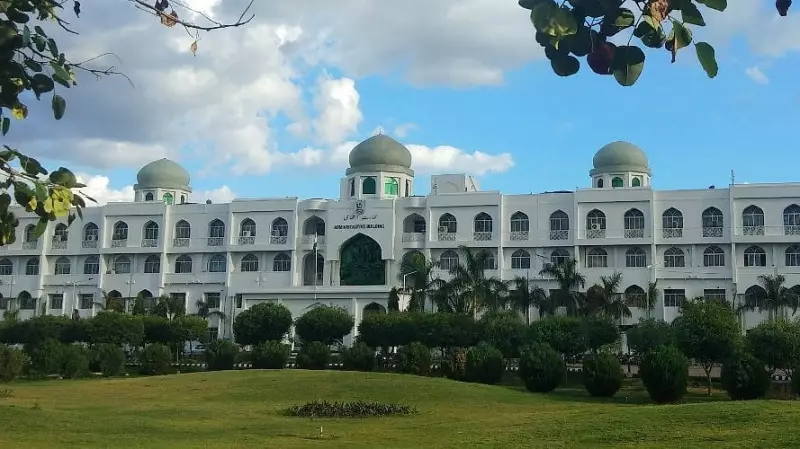
The Telangana government has escalated a simmering land dispute by issuing a formal notice to Maulana Azad National Urdu University (MANUU). The notice demands the university explain why approximately 30 acres of prime land allotted to it by the state should not be taken back due to prolonged non-utilization. This move has ignited a fresh political firestorm in Hyderabad, with the opposition Bharatiya Janata Party (BJP) and the Bharat Rashtra Samithi (BRS) launching sharp criticisms against the ruling Congress administration.
The Core of the Dispute: Land Allotment and Alleged Neglect
At the heart of the controversy is a significant parcel of land in the Gachibowli area, a major IT corridor in Hyderabad. The state government's notice, served under the relevant land revenue laws, points to the fact that the land was originally allocated to MANUU for the development of academic and infrastructure facilities. However, authorities claim the land has remained largely vacant and undeveloped for years, failing to serve its intended public purpose.
The notice grants the university a specific period to present its case or face potential repossession of the property. This action is framed by the government as an audit of land resources and an effort to ensure that valuable public assets are used effectively for educational and social development, rather than lying idle.

Political Reactions and Accusations of Vendetta
The government's decision has not been met quietly. The opposition has been quick to condemn the move, labeling it as politically motivated. The Bharatiya Janata Party (BJP) has accused the Congress government of pursuing a vendetta against central institutions. BJP leaders argue that targeting a prestigious central university like MANUU, named after a prominent freedom fighter, reflects poorly on the state's commitment to education, particularly minority education which the university is dedicated to promoting.
Similarly, the Bharat Rashtra Samithi (BRS), the previous ruling party in the state, has also criticized the Congress administration. BRS leaders have questioned the timing and intent behind the notice, suggesting it is a diversionary tactic. They have urged the government to focus on more pressing public issues instead of engaging in what they call "land wars" with educational institutions.
Broader Implications and the Road Ahead
This dispute places Maulana Azad National Urdu University in a challenging position. The university administration must now prepare a detailed response to the state government, likely outlining any development plans, budgetary constraints, or procedural delays that have hindered construction on the allotted land.
The situation also raises broader questions about land management and the relationship between state and central institutions. The outcome of this case could set a precedent for how unused government-allotted land to other universities or public bodies in Telangana is handled in the future. Observers are watching closely to see if the issue will be resolved through dialogue or if it will morph into a prolonged legal battle.
As the deadline for the university's response approaches, the political rhetoric is expected to intensify. The Congress government, led by Chief Minister Revanth Reddy, will need to balance its stated goal of efficient land use against accusations of undermining a central educational institution. The controversy underscores the complex interplay between urban development, educational policy, and political strategy in one of India's most dynamic states.