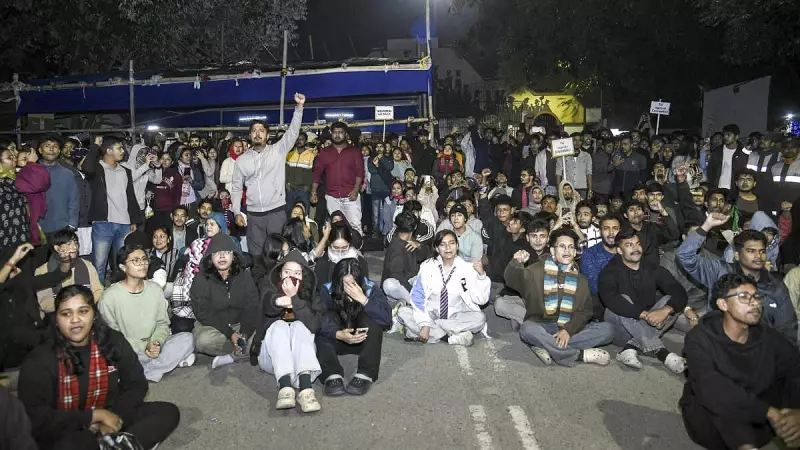
Student protests at Tezpur University in Assam have escalated, with participants adopting a firm stance of "complete non-compliance and non-cooperation" despite official assurances of an inquiry. The simmering tensions on campus reached a new phase as the university administration made a key leadership change over the weekend.
New Leadership Amidst Unrest
In a significant development, the university issued a formal statement on Sunday, December 7, 2025. The statement confirmed the appointment of Professor Dhruba Kumar Bhattacharyya, a senior faculty member, as the acting Vice-Chancellor. This move is seen as an attempt to stabilize the administration following the ongoing student-led agitation. The announcement, reported by journalist Sumir Karmakar, was made public at 16:17 IST.
Protesters' Stance Remains Unyielding
However, the change in leadership has done little to placate the protesting students. Their declaration of non-cooperation signals a deep-seated distrust in the institution's processes. The core grievance prompting the protests, while not detailed in the initial report, is severe enough to warrant such a definitive and public rejection of the administration's inquiry assurance.

This hardline position suggests that students are demanding more than just an investigation; they are likely calling for immediate, tangible action or systemic changes. The phrase "complete non-compliance" indicates a potential boycott of academic activities, administrative directives, and possibly the inquiry process itself.
Implications for Campus Life and Governance
The situation presents a major challenge for the newly appointed acting VC, Professor Bhattacharyya. His immediate task will be to bridge the widening gap between the student body and the university authorities. A prolonged period of non-cooperation can disrupt the academic calendar, damage the university's reputation, and create a tense atmosphere on campus.
The protests at Tezpur University highlight recurring issues in higher education institutions in India, where student demands for accountability often clash with administrative protocols. The outcome here will be closely watched as a case study in conflict resolution within the Assam education sector.
As of now, the path to dialogue appears blocked by the students' vow of non-cooperation. The university administration's next steps, beyond the inquiry assurance, will be crucial in determining whether the campus can return to normalcy or if the standoff will intensify further.