A nationwide controversy has erupted across India following the University Grants Commission's notification of the Promotion of Equity in Higher Education Institutions Regulations, 2026. The regulations, intended to combat caste-based discrimination and foster inclusivity on university campuses, have instead triggered a multifaceted backlash involving legal challenges, political resignations, and widespread student protests.
Supreme Court PIL Challenges Constitutionality of UGC Rules
A significant public interest litigation has been filed before the Supreme Court of India, directly challenging Rule 3(c) of the 2026 regulations. The petitioner contends that this provision, while framed as an equity measure, is arbitrary, discriminatory, and unconstitutional. The legal challenge argues that the rule violates multiple fundamental rights enshrined in the Constitution, specifically Articles 14 (right to equality), 19 (freedom of expression), and 21 (personal liberty).
The petition further asserts that the regulation contradicts the UGC Act of 1956 and undermines the core objective of equal opportunity in higher education. Critics maintain that the provision could paradoxically lead to exclusion rather than inclusion, particularly affecting general category students.

What the UGC's 2026 Equity Regulations Actually Mandate
Under the newly notified framework, all universities and colleges across India are required to establish comprehensive institutional mechanisms. These include Equal Opportunity Centres, dedicated Equity Committees, formal grievance redressal systems, monitoring teams, and 24×7 helplines. These bodies are specifically tasked with addressing complaints from students belonging to Scheduled Castes (SC), Scheduled Tribes (ST), and Other Backward Classes (OBC).
The UGC states that these measures are essential to create safer, more equitable learning environments and to uphold constitutional principles of social justice. Notably, the regulations expand the legal definition of discrimination to include not only caste but also religion, gender, place of birth, and disability.
Critics Flag Ambiguity and Lack of Procedural Safeguards
Despite the stated noble intentions, the regulations have triggered intense criticism from diverse quarters including students, teachers, academics, and civil society organizations. Opponents argue that the definition of "discrimination" within the rules is excessively broad and lacks clear procedural safeguards or verification mechanisms.
A major point of contention is the conspicuous absence of provisions penalizing false or malicious complaints. Critics note that such safeguards were reportedly included in earlier drafts but were omitted from the final notification. This omission has raised alarms about potential misuse, reputational damage, and the fostering of mistrust within academic communities.
Additional concerns have been raised regarding the composition of the mandated Equity Committees. While these committees require representation for SC, ST, OBC, women, and persons with disabilities, they do not explicitly mandate representation from the general category. This has prompted allegations of structural imbalance in grievance handling processes.
Protests Spread Nationwide as Resignations Add Political Edge
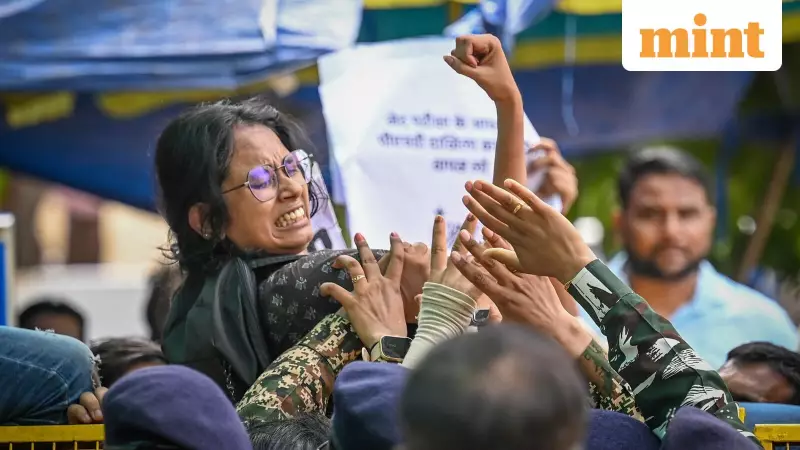
The backlash has transcended legal and academic circles, spilling onto the streets with protests reported in multiple regions including New Delhi, Meerut, Hapur, Saharanpur, Alwar, and Madhubani. Social media platforms have seen hashtags like #RollbackUGC trending, with critics labeling the regulations a "black law."
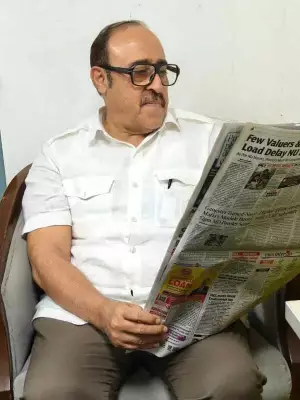
The controversy has taken a distinct political turn in Uttar Pradesh. In Bareilly, City Magistrate Alankar Agnihotri resigned in protest, citing what he described as the unfair impact of the regulations on upper-caste students. Similarly, in Noida, BJP Yuva Morcha vice-president Raju Pandit stepped down, calling the rules fundamentally discriminatory.

Campus Voices Warn of Emerging 'Surveillance Culture'
Student groups across various universities have expressed deep concerns that the regulations could create an atmosphere of constant scrutiny and surveillance. Alokit Tripathi, a PhD student from Delhi University, told PTI: "The new regulations are draconian. The definition of victim is predetermined, and anyone on campus can be considered a victim."
He elaborated further, stating: "With the proposed Equity squads, it will feel like living under constant surveillance on campus." This sentiment reflects broader anxieties about academic freedom and the psychological environment on university campuses.
Government Seeks to Clarify Amid Mounting Backlash
In response to the escalating controversy, the Ministry of Education has announced plans to issue official clarifications to address widespread concerns. Government officials have noted that significant misinformation about the regulations is circulating online and have stressed that the rules are designed solely to prevent discrimination, not to target any particular student group.
Officials have repeatedly insisted that the regulations will not be misused in practice. Meanwhile, supporters of the framework argue that, if implemented carefully and with proper safeguards, it could strengthen institutional accountability, provide formal protection to marginalized students, and serve as a progressive model for inclusive higher education globally.
A Complex Debate Far From Settled
UGC data reveals a troubling context: complaints of caste discrimination in Indian universities have risen by 118 percent over the past five years. Proponents of the regulations cite this statistic to justify the need for stronger institutional safeguards and mechanisms.
However, critics maintain that equity cannot come at the cost of due process, procedural fairness, and institutional autonomy. The debate encapsulates a fundamental tension in Indian higher education policy: balancing the urgent need to address systemic discrimination with protecting individual rights and maintaining academic integrity. As legal proceedings advance and protests continue, the future implementation of these regulations remains uncertain and hotly contested.