

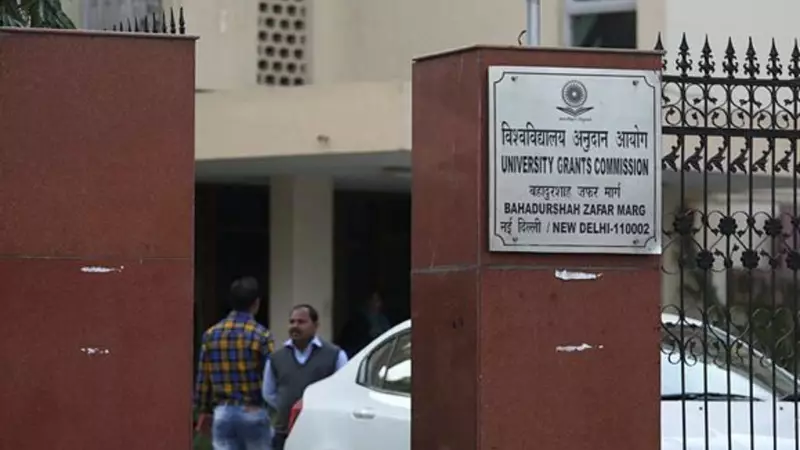
UGC Issues New Rules to Promote Equity on College Campuses
The Indian government has officially notified fresh regulations from the University Grants Commission. These rules make it mandatory for every college and university across the country to establish dedicated "equity committees." The primary goal is to tackle discrimination complaints head-on and actively foster a more equitable environment within higher education institutions.
Broad Representation Mandated for Committees
The newly notified University Grants Commission (Promotion of Equity in Higher Education Institutions) Regulations, 2026 specify clear membership requirements. Each equity committee must include representatives from several key groups. These groups are the Other Backward Classes (OBCs), the Scheduled Castes (SCs), the Scheduled Tribes (STs), persons with disabilities (PwDs), and women.
This move follows a public consultation process. A draft of these regulations was released for feedback in February of the previous year.

Supreme Court Direction and Tragic Backdrop
The issuance of this document comes after a significant judicial push. The Supreme Court directed the UGC to submit the new regulations while hearing a specific plea. The plea was filed by the mothers of Rohith Vemula and Payal Tadvi. They had questioned the implementation of earlier UGC regulations from 2012.
The cases of Vemula and Tadvi highlight the urgent need for such measures. Rohith Vemula, a PhD scholar at the University of Hyderabad, died by suicide in 2016. He allegedly faced severe caste-based harassment. Payal Tadvi, a resident doctor in Mumbai, also died by suicide in 2019 after reportedly enduring casteist slurs from seniors.
Structure and Function of the New System
Under the regulations, every Higher Education Institution (HEI) must establish an Equal Opportunity Centre. This centre will oversee the implementation of policies for disadvantaged groups. It will provide guidance on academic, financial, and social matters. A key function is to enhance diversity on campus.
A practical provision exists for smaller colleges. If a college has fewer than five faculty members, the functions of its centre will be handled by the Equal Opportunity Centre of its affiliated university.
Coordinated Efforts and Legal Support
The regulations envision a wide-ranging collaborative approach. The Centre will coordinate with multiple stakeholders to achieve the objectives. These stakeholders include civil society, local media, police, district administration, NGOs, faculty, staff, and parents.
Furthermore, the Equal Opportunity Centre must coordinate with legal authorities. It will work with the District Legal Services Authority and the State Legal Services Authority. This coordination aims to provide legal aid in deserving cases and generally support the regulations' goals.
Leadership and Vigilance Mechanisms
The head of each institution will appoint a coordinator for the centre. This coordinator must be a regular professor or senior faculty member with a genuine interest in the welfare of disadvantaged social groups.
The Equity Committee itself will be constituted by the institution's head. This committee will manage the centre's functioning and inquire into discrimination complaints. Committee members will serve a two-year term.
Additionally, every HEI must form smaller "Equity Squads." These squads will maintain vigil on campus and work to prevent any form of discrimination. Their representation will be determined as necessary by the institution.






