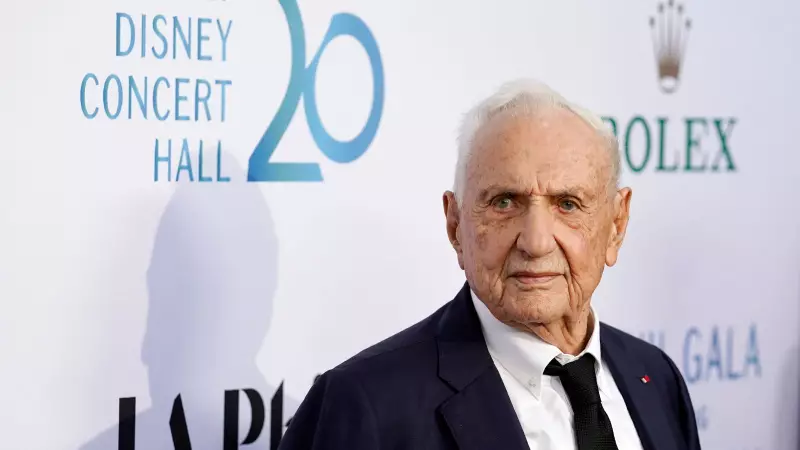
The world of architecture has lost one of its most revolutionary and celebrated figures. Frank Gehry, the visionary architect whose sculptural buildings redefined city skylines, died on Friday at his home in Santa Monica. He was 96 years old. The cause was a brief respiratory illness, confirmed by his firm, Gehry Partners LLP.
From Humble Beginnings to Global Acclaim
Born Ephraim Owen Goldberg in Toronto on February 28, 1929, Gehry moved to Los Angeles with his family in 1947. His journey to architectural stardom was not immediate. After serving in the army and earning a degree from the University of Southern California in 1954, he faced early struggles. Gehry worked on public housing projects, designed shopping centres, and even drove a delivery truck to make ends meet.
A pivotal moment came when a developer saw Gehry's own home—a modest bungalow transformed with chain-link fencing and corrugated metal. When asked why he didn't propose such bold ideas for commercial projects, Gehry famously replied, "Because I have to make a living." Encouraged to follow his creative vision, he did just that, founding Gehry Partners in 1962 and embarking on a path that would make him the most famous architect of his era.

Masterpieces That Shaped Modern Architecture
Frank Gehry's portfolio is a global tour of architectural innovation. His fascination with modern art led to buildings that were themselves stunning works of sculpture. His most iconic creation is arguably the Guggenheim Museum in Bilbao, Spain, a shimmering titanium-clad structure that transformed the city's economy and cemented the "Bilbao Effect."
Other landmark projects include the soaring, stainless-steel sails of The Walt Disney Concert Hall in Los Angeles, the dynamic DZ Bank Building in Berlin, and the shimmering IAC Building in New York City. He also designed an expansion for Facebook's headquarters at the personal request of CEO Mark Zuckerberg. In his 90s, he was still overseeing projects, including the forthcoming Guggenheim Museum in Abu Dhabi, set to be the world's largest.
Criticism, Humour, and a Lasting Legacy
Gehry's bold, deconstructivist style was not without its detractors. Some critics dismissed his work as looking like "cardboard boxes left out in the rain" or mere tourist attractions. He faced public criticism from the family of President Dwight D. Eisenhower over his design for a memorial. Yet, Gehry rarely showed annoyance, often meeting critique with wit.
He famously lampooned himself in a 2005 episode of "The Simpsons," where he designed a concert hall after crumpling a letter. "Frank Gehry, you've done it again!" he exclaimed in the cartoon, a line he later acknowledged with humour in real life.
His accolades are a testament to his impact: the prestigious Pritzker Prize, the Royal Institute of British Architects gold medal, and the Companion of the Order of Canada. Despite the fame, he remained characteristically humble, once stating, "I'm totally flabbergasted that I got to where I've gotten."
Frank Gehry is survived by his wife, Berta, his children, and the monumental, awe-inspiring buildings that will continue to define skylines and inspire generations to come. His death marks the end of an era, but his structures ensure his genius remains etched in steel, titanium, and stone across the globe.