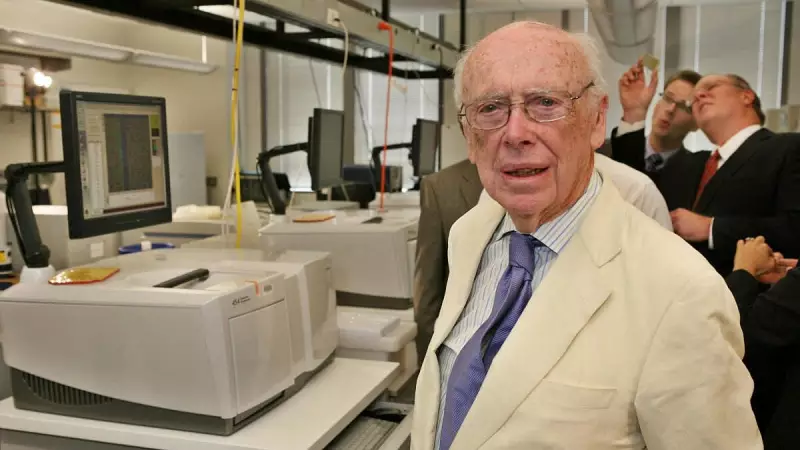
The End of an Era in Molecular Biology
The scientific world mourns the passing of James Watson, the brilliant yet controversial Nobel laureate who helped unlock one of biology's greatest mysteries. Watson, who co-discovered the double-helix structure of DNA, died at the age of 97, according to reports confirmed on November 8, 2025.
Revolutionizing Our Understanding of Life
Watson's groundbreaking work in decoding DNA fundamentally transformed biological science and medicine. His collaboration with Francis Crick at Cambridge University in 1953 revealed the elegant double-helix structure of deoxyribonucleic acid, the molecule that carries the genetic instructions for all known life forms.
This monumental discovery earned Watson, Crick, and Maurice Wilkins the 1962 Nobel Prize in Physiology or Medicine. The identification of DNA's structure provided the essential framework for understanding how genetic information is stored and transmitted, opening entirely new fields of research including genetic engineering, biotechnology, and personalized medicine.

A Complex Scientific Legacy
While Watson's scientific achievements would have secured his place among the most important scientists of the 20th century, his career was marked by both extraordinary accomplishment and significant controversy. His work at the Cold Spring Harbor Laboratory and his leadership in the Human Genome Project further cemented his status as a pioneering figure in genetics.
However, Watson's later years were overshadowed by controversial statements about race and intelligence that led to his removal from speaking engagements and the loss of honorary positions. Despite these controversies, his fundamental contribution to understanding the genetic blueprint for life remains an undeniable pillar of modern biology.
The passing of James Watson marks the end of an era, leaving behind a complex legacy that continues to shape both scientific progress and ethical discussions in genetics research worldwide.