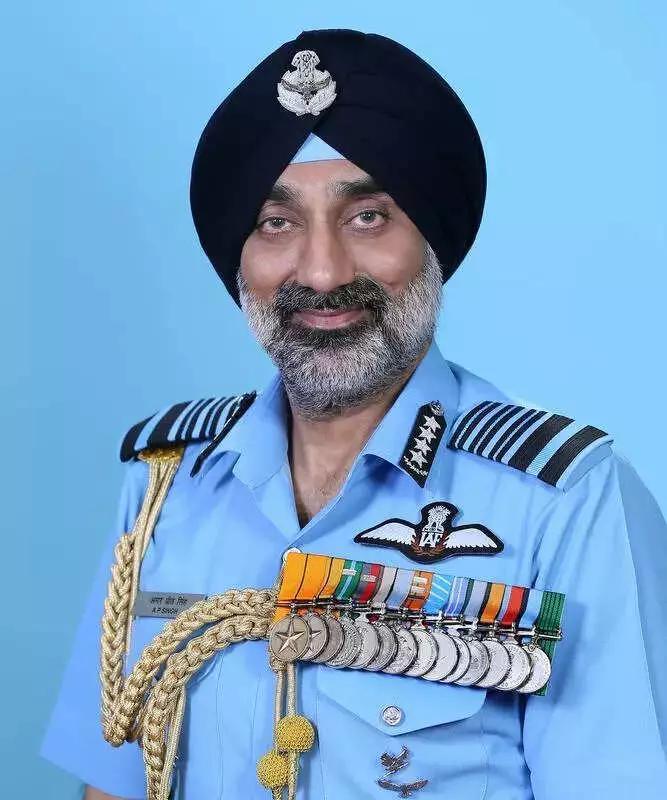
The Indian Air Force is set to honour one of its most celebrated wartime heroes with a special memorial lecture in Chandigarh. Air Chief Marshal A P Singh, the current Chief of the Air Staff, will deliver the keynote address for the inaugural Air Commodore Mehar Singh, Mahavir Chakra (MVC) Memorial Talk. The event is scheduled for January 9 at the Arjan Singh Auditorium, located within the 12 Wing of Air Force Station Chandigarh.
Distinguished Gathering for a Legendary Aviator
The talk is being organized by the Air Force Association (North Zone). The audience will include several high-ranking veterans and serving officers. Notable attendees will be Air Chief Marshal S Krishnaswamy (Retd), a former Chief of Air Staff; Air Marshal Jagjeet Singh (Retd), senior vice president of the Air Force Association; and Air Marshal Sukhchain Singh (Retd), president of the AFA's North Zone. The presence of these dignitaries underscores the profound respect held for the memory of Air Commodore Mehar Singh across generations of air warriors.
The Legacy of "Baba" Mehar Singh: A Life of Extraordinary Valour
Air Commodore Mehar Singh, affectionately known as "Baba," remains a towering figure in IAF history despite a tragically short career. Born on March 20, 1915, in Lyallpur district (now Faisalabad, Pakistan), he was commissioned into the Royal Indian Air Force in August 1936 after training at Cranwell. He quickly distinguished himself as an exceptional pilot.

His early bravery was displayed in operations in the North-West Frontier Province and during World War II. While commanding No. 6 Squadron in Burma, his leadership earned him the Distinguished Service Order (DSO) in 1944, a rare honour for an Indian officer at the time, praised by Field Marshal Slim.
War Heroics That Saved a Region
Mehar Singh's most legendary contributions came during the 1947-48 Indo-Pakistani War. As the Air Officer Commanding No. 1 Group, he was pivotal in defending Jammu and Kashmir.
In November 1947, he became the first pilot to land at the hastily built airstrip in Poonch, establishing a critical air bridge that saved the besieged town and its refugees. His most audacious feat followed in May 1948. Defying all odds, he flew a Dakota aircraft over the treacherous Himalayas without navigational aids and landed on a makeshift airstrip in Leh, at an altitude of 11,540 feet—a mission deemed impossible. This daring landing ensured the reinforcement and supply of Leh, a strategic triumph that helped India retain control of the region.
For his exceptional gallantry and leadership, he was awarded the Maha Vir Chakra (MVC) in 1950, India's second-highest military decoration. His pioneering spirit and courage continue to inspire the IAF, cementing his status as a true legend of the skies and a saviour of a strategically vital part of India.