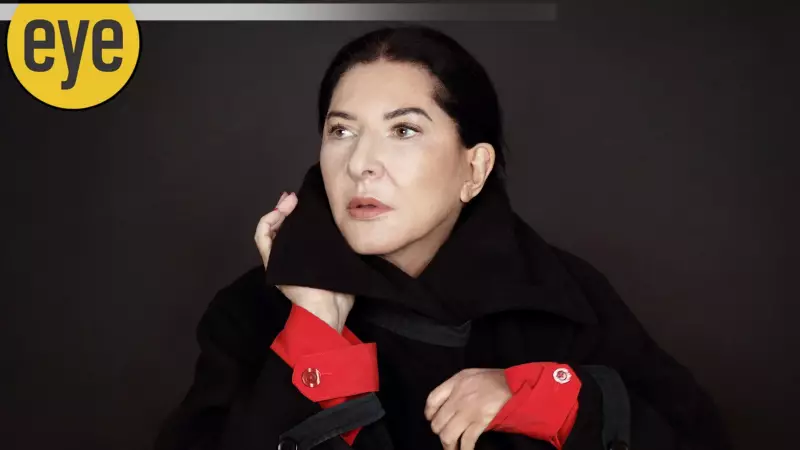
Legendary Serbian performance artist Marina Abramović, a global pioneer of the medium, is set to bring her profound and physically demanding artistry to Indian shores. The 79-year-old artist, renowned for works that test the limits of body and mind, will be a highlight of the upcoming Kochi-Muziris Biennale (KMB) in February.
The Power of Presence: Abramović's Defining Moments
Abramović's reputation was cemented globally in 2010 with her monumental performance, 'The Artist is Present' at New York's Museum of Modern Art (MoMA). For over 700 hours across three months, she sat silently in a chair, inviting visitors to sit opposite her and share a wordless, mutual gaze. This simple yet powerful act created an electric emotional field, moving many to tears and transforming the relationship between artist and audience.
Reflecting on such durational works, Abramović dismisses focusing on the hardship. "It's just a question of making the decision to create a specific time and space and do the performance in front of the public. In that moment you're concentrated on the message and you enter a different state of mind," she explained in an email interview.

Kochi Biennale Showcase: Meditation and Archive
At KMB, her presence will be felt in multiple ways. She will deliver a performance lecture, aiming to demystify the art form for new audiences. "After my lecture, people in the audience who had never heard about performance art will have much more clarity on what performance is. It is time-based, emotional and immaterial," she stated.
Visitors will also experience her immersive video work, 'Waterfall'. This meditative piece features 108 Tibetan monks and nuns chanting the Heart Sutra in unison. Abramović revealed the work's deep Indian connection: "I travelled to different Tibetan monasteries all over India and asked different nuns and monks to sing Heart Sutra and filmed them. When I put them all together, the effect was a sound like a waterfall." The piece, which took five years to complete, invites viewers to sit in deck chairs and be enveloped by this "ocean of human voices."
Additionally, the Marina Abramović Institute (MAI) Archive will present a collection documenting her long-duration works, preserving the history of this ephemeral medium.
A Life Forged in Extremes: From Yugoslavia to Tibetan Buddhism
Abramović's radical artistic language stems from a childhood of contrasts. Born in post-war Yugoslavia to communist Partisan heroes, she was also deeply influenced by the Orthodox Christian spirituality of her grandmother. "In my work there's a mixture between radicalism, heroism, communism and the spirituality of my grandmother," she noted. Her later travels led her to become a Tibetan Buddhist, further shaping her worldview.
Her early works in the 1970s were shockingly daring, using her body as both subject and object. In 'Rhythm 0' (1974), she offered 72 objects (including a knife, scissors, and a loaded gun) to the audience, allowing them to use anything on her for six hours—a dangerous experiment in human behavior that turned violent.
Her famed twelve-year collaboration and relationship with German artist Ulay produced seminal works like 'Rest Energy' (1980), where they held a bow and arrow aimed at her heart, and their poetic farewell, 'The Lovers: The Great Wall Walk' (1988), where they walked from opposite ends of the Great Wall of China, met in the middle, and parted ways.
Preserving Legacy and Distinguishing Art from Social Media
In recent years, Abramović has focused on preserving performance art's history. In '7 Easy Pieces' (2005), she re-performed classic works by other artists to ensure they were not lost. She is open to others reperforming her works, with a crucial caveat: "It's also very important who is performing this... We need people with the right charisma to perform these pieces." The only exception is the perilous 'Rhythm 0'.

In an age of constant digital performance via social media, Abramović draws a firm line. "From my point of view, social media is social media and it has nothing to do with performance art. Performance art has nothing to do with social media," she asserted, distinguishing between curated online personas and the raw, present, and time-based reality of her art form.
As she prepares for Kochi, the 2025 Praemium Imperiale award winner continues to be a formidable force, proving that the power of silent presence and enduring spirit can create some of the most memorable moments in contemporary art.