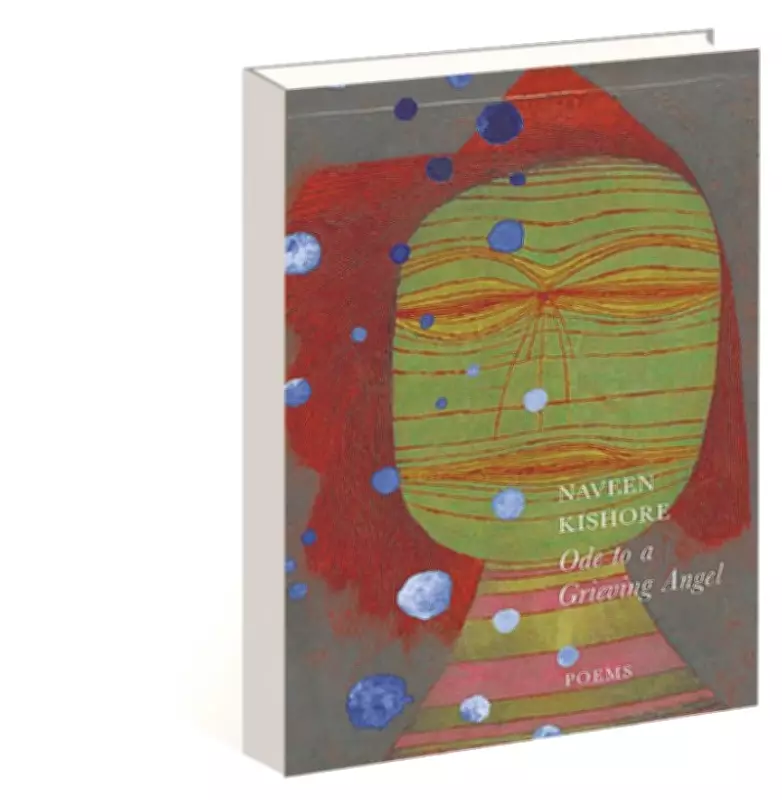
Naveen Kishore's 'Ode to a Grieving Angel' (Speaking Tiger, Rs 399, 100 pages) is a collection of poems that draws heavily on William Shakespeare's tragic heroes—Hamlet, King Lear, and Macbeth—while employing intense imagery with theatrical measure. Divided into four parts, the book transforms the reader into an audience member viewing a proscenium stage with dim-lit images of bleeding angels dragging wings across the stage.
Inspiration from Modernists and the Bard
The first part of the book appears heavily inspired by British modernists, particularly T.S. Eliot's 'The Love Song of J. Alfred Prufrock' (1915), with its use of visuals and mingling of physical theatre in poetry. However, unlike Eliot's consistent and plausible narrative, Kishore's work lacks coherence, presenting fractured and disconnected sentences. The collection raises the question of whether poetry must make sense to the reader, a dilemma relevant to modernist works.
Kishore, a theatre practitioner-turned-publisher, uses the poems to create an amalgamation of fleeting thoughts, moving from Hamlet's melancholy to wounded angels of the psyche. The words are strewn across pages as ephemeral as the young generation's attention span, requiring patience from the reader.

Disconnectedness and Its Challenges
The disconnectedness in 'Ode to a Grieving Angel' deprives the collection of a narrative or coherence, which may be viewed as a homage to Shakespeare through physical theatre in poetry. However, its deviation from traditional poetic structure to an almost stream-of-consciousness form fails to come close to coherence. The book's inability to garner constant interest till the concluding chapter may be attributed to its arbitrariness.
While the primary origins of most contemporary poems allude to the Modernists, Kishore's collection does not provide an empathetic perspective of the depth of Shakespearean tragedies or the beauty of arbitrary thoughts of identity and desolation with the same intensity as previous century works. It poses an important question of the inspiration that present-day poetry owes to predecessors yet fails to encompass its intricacies.
Suitability for Modern Readers
The book may be befitted for transitions and suitable for readers browsing airport bookshops, where reading poetry does not require a bookmark for previous context. The resurgence of poetry on Instagram, with photogenic teenagers using captions on posts of dark silhouettes, aligns with the structure of disconnectedness in Kishore's work. The collection may appeal to those seeking ephemeral, fragmented expressions rather than sustained narrative depth.