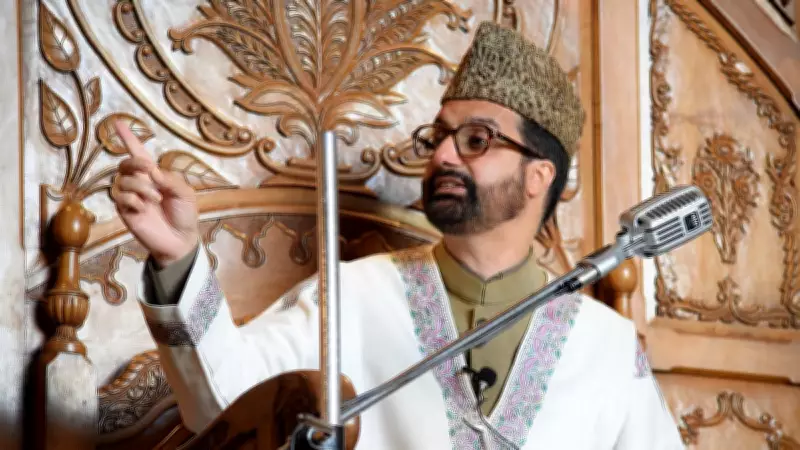
Hurriyat Conference Chairman Mirwaiz Umar Farooq on Monday stated that Kashmir’s history did not start in 2019, emphasizing the need for dialogue to resolve the region’s longstanding issues. He made the remarks while addressing reporters after inaugurating an educational consultancy initiative at Lal Chowk in Srinagar.
Kashmir’s Historical Continuity
“Kashmir’s history did not start in 2019, nor will it end tomorrow,” Mirwaiz said, referring to the abrogation of Article 370 in August 2019 that revoked the region’s special status. He stressed that the people of Kashmir have a deep-rooted history and identity that predates recent political changes.
The religious leader called for a comprehensive political dialogue involving all stakeholders, including India, Pakistan, and the people of Kashmir, to find a lasting solution. He reiterated that peace and stability can only be achieved through meaningful engagement.

Concerns Over Book Bans
Mirwaiz also expressed concern over the recent banning of books in Jammu and Kashmir, calling it an attack on intellectual freedom. “Banning books will not erase history or truth,” he said, urging authorities to reconsider such actions. He did not specify which books were banned but noted that suppressing literature undermines democratic values.
Amarnath Yatra and Security
On the ongoing Amarnath Yatra, Mirwaiz welcomed the pilgrimage as a religious event but urged the administration to ensure the safety and rights of local residents. He emphasized that the yatra should not be used for political propaganda and that the region’s unique cultural fabric must be preserved.
Call for Dialogue
The Hurriyat leader reiterated his call for dialogue between India and Pakistan, as well as with Kashmiri representatives. “The only way forward is through talks,” he said, adding that violence and unilateral decisions have only deepened the crisis. He urged the Indian government to initiate a sincere dialogue process to address the aspirations of the Kashmiri people.
Mirwaiz’s statements come amid heightened tensions in the region, with sporadic protests and ongoing security operations. He maintained that non-violent political struggle remains the path to achieving the rights of the Kashmiri people.