A Calm Novel That Quietly Unsettles
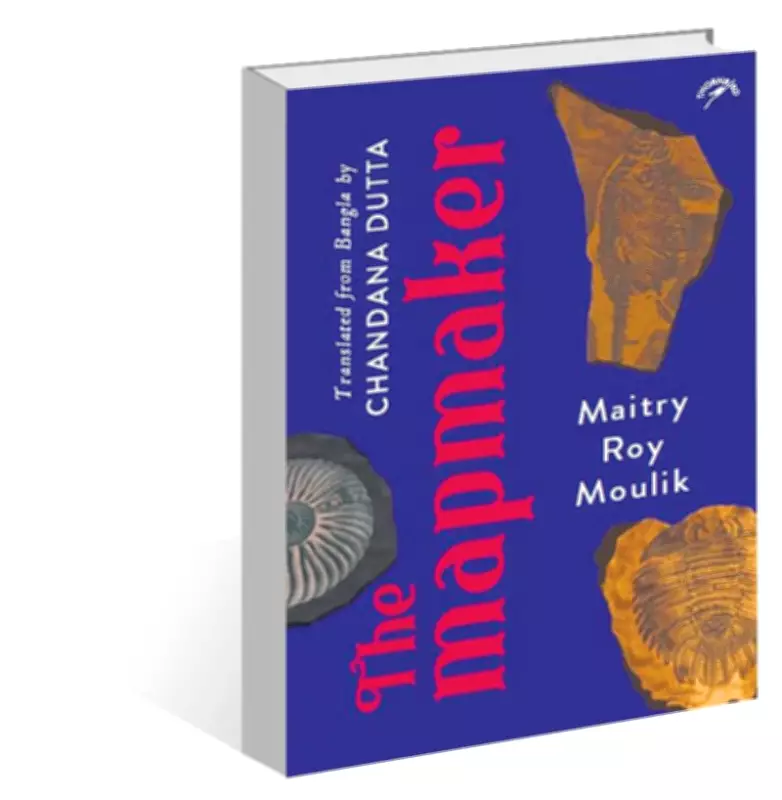
Maitry Roy Moulik's 'The Mapmaker', translated from Bangla by Chandana Dutta and published by Niyogi Books (376 pages, Rs 595), is a novel that promises order with its title but delivers something far more complex. The story begins in Enlightenment-era England, where a mapmaker charts canals, coal mines, and gentlemen's estates. But soon, the narrative shifts to deeper questions: Who decides what is official? Who lives with those decisions? And how many cups of tea does it take to make a doubtful boundary look respectable?
A Mapmaker's Quiet Rebellion
The protagonist, loosely based on William "Strata" Smith—the self-taught surveyor who created the first geological map of England, Wales, and Scotland—is brilliant, stubborn, and deeply alone. He scratches at the earth while others lay railway tracks over his work. Roy Moulik presents not a glamorous genius adored by peers, but a man whose labor is often buried under someone else's name. The novel's great trick is its gentle tone: it feels like a well-mannered conversation in a drawing room until you realize your ideas about maps, truth, and authority have quietly shifted.
Scenes of Civilized Disagreement
Roy Moulik's England is filled with small, revealing scenes. Learned men argue over strata and property lines in coffeehouses and meetings. Vicars, landowners, and clerks gather to decide where boundaries should fall, each insisting their preferred line is both obvious and negotiable. Everyone agrees a boundary must exist; nobody agrees on where. Tea is served, minutes are recorded, and someone's future is quietly nudged to the wrong side of a map. For anyone who has dealt with land records or municipal approvals, this is instantly recognizable. Authority performs itself through seals, signatures, and files that never quite match the world outside the office door.

Translation as Mapmaking
Chandana Dutta's translation is crucial. Like mapmaking, translation is interpretation disguised as accuracy. She keeps the prose simple and smooth, allowing readers to forget they are reading a work crossing languages. Her English captures both the rhythm of the Bangla original and the feel of 19th-century Britain without becoming stiff. The sentences do not perform; they carry. Readers are free to engage with the ideas rather than admire the language.
Political Undercurrents
Underneath its polite surface, 'The Mapmaker' is deeply political. It asks: Who has the power to draw a line and call it truth? What happens to those placed on the wrong side of that line? How often do we treat a map or certificate as unquestionable simply because it has been signed and stamped? In Roy Moulik's world, these questions decide who gets land, credit, and recognition. For South Asian readers, the echoes are hard to miss. The story is set in England just as Britain perfects the tools of measurement and classification it will later export to its colonies. The novel does not sermonize about empire; it lets readers make the connections themselves.
Restrained Emotion, Lasting Impact
Emotionally, the book remains restrained. It does not push outrage; it suggests it. Humiliation, exclusion, and quiet cruelty are described in a measured voice. This may disappoint readers who want immediate emotional fireworks, but it gives the novel a longer afterlife. By the end, maps no longer look neutral. Boundaries feel less natural and more negotiated. Any line on a page carries a whisper: "Someone chose this."
A Quiet Argument for Slowness
In a time that loves speed, certainty, and clear answers, 'The Mapmaker' quietly argues for slowness, doubt, and attentiveness. It reminds us that every border has a backstory and every map has fingerprints. The earth may be made of rock and clay, but the lines we draw across it are made of politics, memory, and habit. You close the book, step back into your own landscape, and realize the world you move through is far less fixed than it appears—especially when seen from the comforting, but deeply unreliable, safety of a map.
Sonali Gupta is founder-director of the Himalayan Institute of Cultural & Heritage Studies.