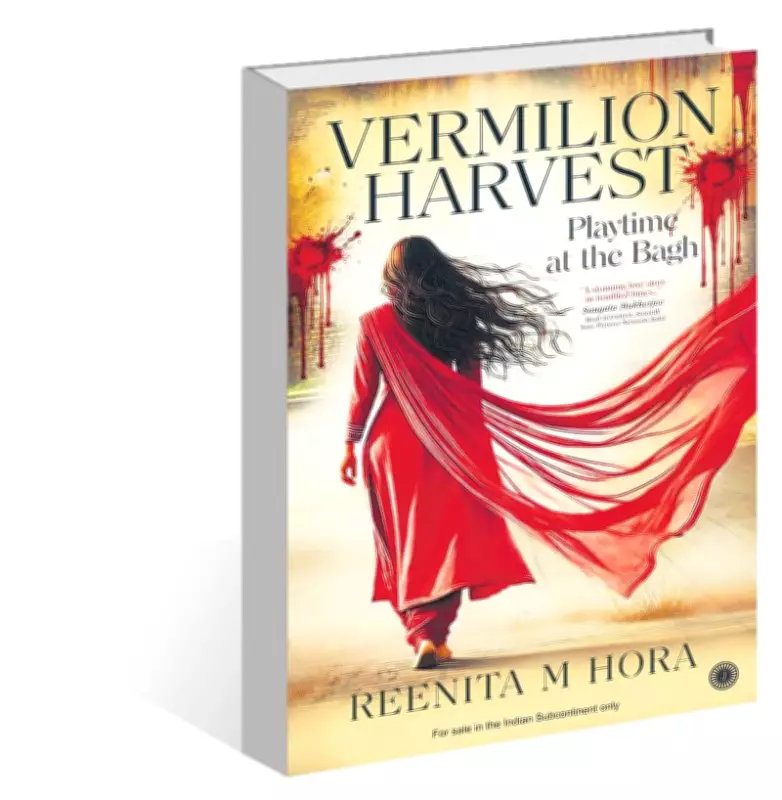
Reenita M. Hora's latest novel, Vermilion Harvest, transports readers to the heart of Amritsar in 1919, weaving a tale of love, loss, and resilience against the backdrop of one of India's most tragic historical events. The book, a blend of historical fiction and romance, captures the essence of a bygone era while exploring timeless human emotions.
A Love Story Set in Turbulent Times
The narrative revolves around two central characters whose lives intersect in the bustling city of Amritsar. The protagonist, a young woman named Meher, finds herself drawn to a charismatic man named Arjan, a local activist involved in the freedom struggle. Their love story unfolds amidst the growing political unrest, leading up to the fateful day of April 13, 1919, when British troops under General Dyer opened fire on unarmed civilians in Jallianwala Bagh.
Hora skillfully interweaves historical facts with fictional elements, creating a vivid picture of life in pre-independence India. The author's meticulous research is evident in her detailed descriptions of the era, from the bustling markets of Amritsar to the serene gardens of the Bagh. The novel does not shy away from the brutality of the massacre, yet it maintains a sense of hope and resilience through its characters.

Character Depth and Emotional Resonance
Meher is portrayed as a strong, independent woman ahead of her time, challenging societal norms. Her relationship with Arjan is both tender and tumultuous, reflecting the chaos of the period. Supporting characters, including Meher's family and friends, add depth to the story, each representing different facets of Indian society under colonial rule.
Hora's writing style is lyrical and evocative, drawing readers into the sights, sounds, and smells of Amritsar. The novel's pacing is well-balanced, with moments of quiet intimacy juxtaposed against scenes of intense drama. The climax, set during the Jallianwala Bagh massacre, is both harrowing and poignant, leaving a lasting impact on the reader.
Themes of Identity and Resistance
Beyond the love story, Vermilion Harvest delves into themes of identity, resistance, and the cost of freedom. The characters grapple with questions of loyalty, duty, and personal sacrifice. The novel also highlights the role of women in the freedom movement, often overlooked in historical narratives.
Hora's portrayal of the British Raj is nuanced, avoiding simplistic villainy. Instead, she presents a complex picture of colonial power and its impact on ordinary lives. The book serves as a reminder of the human cost of political upheaval, making it relevant to contemporary readers.
Conclusion
Vermilion Harvest is a compelling read for fans of historical fiction and romance. Reenita M. Hora has crafted a story that is both entertaining and thought-provoking, shedding light on a pivotal moment in Indian history. The novel's rich character development and vivid setting make it a standout addition to the genre. Whether you are a history buff or simply looking for a captivating love story, this book is sure to leave a lasting impression.