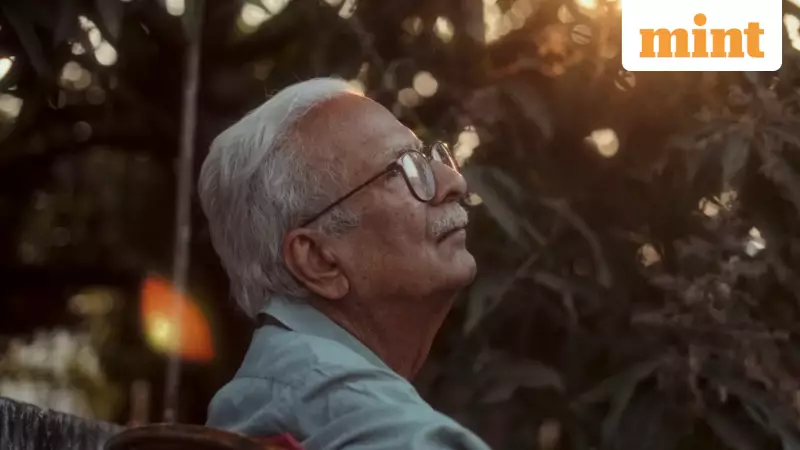
The world of Hindi literature has lost one of its most distinctive voices. Vinod Kumar Shukla, the acclaimed poet and novelist, passed away on Tuesday in his hometown of Raipur. He was 88 years old. The writer had been battling interstitial lung disease for an extended period.
A Legacy of Prestigious Awards and Acclaimed Works
Shukla's career, which spanned more than five decades, was marked by the highest literary honours. He was a recipient of the Sahitya Akademi Award, the Jnanpith Award, and the international PEN/Nabokov Award for Achievement in International Literature. His body of work is a treasure trove for readers, encompassing celebrated poetry collections and groundbreaking novels.
His notable poetry volumes include Lagbhag Jai Hind (1971), Sab Kuch Honaa Bachaa Rahegaa (1992), and Kabhi Ke Baad Abhi (2012). In fiction, he gifted readers iconic novels like Naukar Ki Kameez (1979), which was later adapted into a film by Mani Kaul in 1999. Other seminal novels are Khilega Toh Dekhenge (1996) and Deewar Mein Ek Khidki Rehti Thi (1996).

His work found a global audience through translations. Satti Khanna translated his later novels into English as Once It Flowers (2014) and A Window Lived in the Wall (2019). A collection of his finest short stories, translated by Arvind Krishna Mehrotra and Sara Rai, was published as Blue Is Like Blue in 2019.
The Inimitable Shukla Style: Ordinary Life, Extraordinary Vision
Vinod Kumar Shukla's writing style remains truly unique, with no direct predecessors or successors in Hindi literature. Notably, he did not read Western writers, which contributed to his singular voice. His characters were often middle-class individuals navigating simple yet emotionally rich lives, their inner worlds clashing with societal harshness.
A prime example is Santu, the protagonist of Naukar Ki Kameez. A clerk given a runaway servant's shirt, Santu finds this simple act spiraling into a Kafkaesque nightmare where his entire identity is questioned by society. Shukla masterfully used such everyday scenarios to probe deep social and psychological truths.
His poetry similarly sought the sublime within the ordinary. He could capture a child picking up the morning "as though it were a doll" or describe approaching a stranger because he recognized the "hopelessness" they embodied. This gentle philosophizing could suddenly erupt into a berserk lyricism, leading some to loosely label his work as 'magical realism.'
Anthropomorphism and Ecological Consciousness
Shukla's unique brand of anthropomorphism set him apart. Unlike the satirical magic realism of Western authors, Shukla's approach was empathetic and philosophical. In his story 'Mahavidyalaya,' a heron politely leaves a classroom upon realizing a lecture is in session. His short novel Chuppi Jagah (A Silent Place) features children trying to help a grief-stricken forest regain its voice—a powerful metaphor for ecological loss.
He was fascinated by the pause in a giggle or the personality of a crumbling house, exploring consciousness in all things. This was not a device for farce but a genuine inquiry into the interconnectedness of life.
The Personal Man and His Enduring Impact
In person, Shukla was known as a quiet, generous man. He taught at an agricultural college in Raipur until his retirement in 1996 and was deeply revered in Hindi literary circles. His early meeting with the legendary writer Gajanan Madhav Muktibodh in Rajnandgaon was immortalized in his story 'Old Veranda.'
In his final years, he expressed concern that his physical decline was outpacing his writing. Yet, his work was inherently about slowness—the slowness of thought, of small-town life, and of a literary style that accumulated meaning through gentle metaphor rather than dramatic punches. The $50,000 PEN/Nabokov award in 2023 was a fitting, if belated, international recognition of his genius.

With his passing, Hindi literature has lost a true original. Vinod Kumar Shukla's world, where the mundane constantly brushes against the magical, and deep humanism guides every word, leaves an irreplaceable void. His legacy, however, lives on in his timeless words.