Akanksha Gade's Artistic Evolution: From Introversion to Stage Brilliance
From a reserved and introverted childhood to discovering her powerful voice under the luminous lights of Mumbai's iconic Prithvi Theatre, Akanksha Gade's artistic journey is profoundly anchored in continuous learning, rigorous discipline, and an unwavering commitment to authentic performance. Raised in an academically oriented household that cherished literature and the arts, Akanksha was immersed early in cultural environments—attending poetry recitals, dance performances, and theatre workshops that subtly yet firmly established the groundwork for her future in the arts.
Early Influences and Foundation in Performing Arts
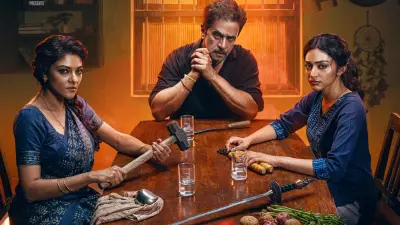
Over the years, Akanksha has not only graced the stage with her presence but has also made notable appearances in popular television shows and digital projects. She was last seen in the television series 'Pinga Ga Pori Pinga', with other recognized works including films like 'Dear Zindagi' and 'Aamhi Butterfly', alongside OTT ventures such as 'The Broken News' and 'Black Home'. In an exclusive conversation, she opened up about how the entertainment field naturally unfolded for her, her deep affection for the craft, and her aspirations for the future.
What initially attracted you to theatre as a performance medium, and how did your association with Ansh Theatre Group commence?

As a child who lacked confidence and was not particularly outgoing in school, theatre appealed to me primarily as a means to build self-assurance. Standing before an audience on stage demands a level of confidence that can only be cultivated through dedicated study and hard work. My mother is a school teacher, and my father is a retired BMC officer with a legal education, providing me with a strong academic background. My parents regularly took us to various cultural events in our town, so my journey began inadvertently by observing theatre activities, poetry readings, and dance shows, eventually leading to participation in theatre workshops and performances at society functions.
I strongly believe that my introverted and shy nature drew me toward art, especially performing arts like dance and acting, as they became powerful outlets for expression. During college, while watching rehearsals for one-act plays, I was offered a replacement role directly, marking my entry into theatre. Pramod Shelar became my first director. My parents emphasized the importance of structured learning, so while acting in college plays, I also enrolled in Bharatanatyam classes under Dr. Gauri Joshi Ponkshe. This decision proved transformative. As both a student and an artist, I began to take performing arts seriously due to her guidance. My development as an actor owes much to my guru Gauri Tai and the discipline of Bharatanatyam.
The Role of Classical Dance and Mentorship
Through classical dance training, I learned patience and the significance of repeatedly practicing with sincerity, skills that have immensely benefited my theatre acting. Classical dance and my guru instilled in me the fundamental approach to art, which remains a permanent part of my ethos. I was selected for the youth zonal national competition, where I met Mrs. Save Sir, the Mumbai University Head of Youth Competitions. I participated in all theatre events—acting, dancing, folk orchestra, Hindi and Marathi skits, and mime acts. This comprehensive involvement enhanced my artistic abilities, boosting both mental and physical stamina.
Mrs. Save Sir sent my mime team, along with director Tejas Malap, to a reality show on Zee TV Marathi, 'Marathi Paul Padate Pudhe'. The judge, Makarand Deshpande Sir, selected three artists from our group and offered us an opportunity to perform a mime act directed by him at Prithvi Theatre. This experience marked the beginning of my formal theatre journey. Prithvi Theatre and Mak Sir's plays have profoundly influenced all my subsequent career choices. In 2011, I performed in my first play with Mak Sir, and from then until 2025, I have engaged in new projects under his direction annually—starting with children's plays, skit platforms, and performances, progressing to full-length Marathi and Hindi plays.

Stage Experience Versus Screen Acting
How did performing on stage at a young age shape your approach to acting compared to your later work in film and television?
Learning classical dance and attending workshops taught me the value of consistent practice. Any performance requires extensive brainstorming and physical rehearsal. Developing skill and craft necessitates unwavering commitment.
What aspects of live theatre, such as rehearsal, audience interaction, and stage presence, do you find most fulfilling?
When I attended the Ansh Festival in 2011–12, I observed Mak Sir conducting 16 shows of eight different plays within a single week. It was a magical experience that highlighted the necessity of rigorous riyaz (practice), inspiring me to pursue experimental theatre while avoiding more commercial productions. To this day, I experience stage fear, but I cherish the sensation of standing in the wings with a racing heartbeat just before stepping onto the stage. I adore the process of performing under lights, hitting precise cues and marks.
Within the boundaries of performance, when I feel mentally liberated, it transforms into a spiritual journey. Stage performances, whether in Bharatanatyam or theatre, have provided me with such spiritual experiences. I appreciate the live aspect of theatre; every moment on stage is unique, even in the same play, which is inherently magical. Particularly at Prithvi Theatre, where proximity to the audience allows them to sense your breath, authenticity and honesty become paramount.
Key Mentors and Influential Plays
Prithvi Theatre and Makarand Deshpande Sir taught me the importance of silence. While applause overwhelms me, so does the silence on stage. Concurrently, I participated in Marathi plays and Hindi experimental works, such as 'Rishtonka Live Telecast' by Prasad Khandekar, featuring Himani Shivpuri and Anjan Shrivastav. I deliberately selected projects that permitted me to continue my theatre practice and Bharatanatyam training under Guru Gauri Tai, never intending to take a break from either. I structured my commercial work around theatre and classical dance.
How do you prepare differently for a stage role versus a screen role?
Yes, screen and theatre are distinct mediums, requiring artists to adapt their craft and execution accordingly. However, the foundation remains consistent—honesty, riyaz, brainstorming, and truthful acting.
Are there any theatre mentors or directors who significantly influenced your understanding of performance?
Absolutely, gurus are crucial. For me, Makarand Deshpande Sir and Dr. Gauri Ponkshe have been instrumental. Whatever excellence I possess as an artist is attributable to them.
Which theatre plays have had the most profound impact on you, either as an actor or audience member, and why?
- 'Sir Sir Sarla' and 'Karodon Mein Ek'—written and directed by Mak Sir.
- 'Devbabhali' by Prajakta Deshmukh.
- 'Ranangan' by Vaman Kendre—which I saw at age 14–15. After viewing this play, I aspired to be on stage, solidifying my decision to become a theatre artist.
Performances by Bharat Jadhav in 'Sahi Re Sahi' and 'Locha Zala Re', both directed by Kedar Shinde, deeply affected me as a young actor. My younger brother Ashish Gade, also a theatre artist who acted as a child artist in renowned Marathi plays, positively influenced me during my adolescence.
Future Aspirations in Theatre
Are there any classic or contemporary plays you would love to perform in the future?
To be candid, I watched 'Sir Sir Sarla' 16 years ago and always desired to be part of that production. Today, I am performing in its Marathi adaptation. I consistently aimed to work at Prithvi Theatre, and now I am fulfilling that goal. I certainly hope to collaborate with theatre directors like Prajakta Deshmukh in the coming years.