Instagram Skit Triggers Copyright Controversy for Mastiii 4 Filmmakers
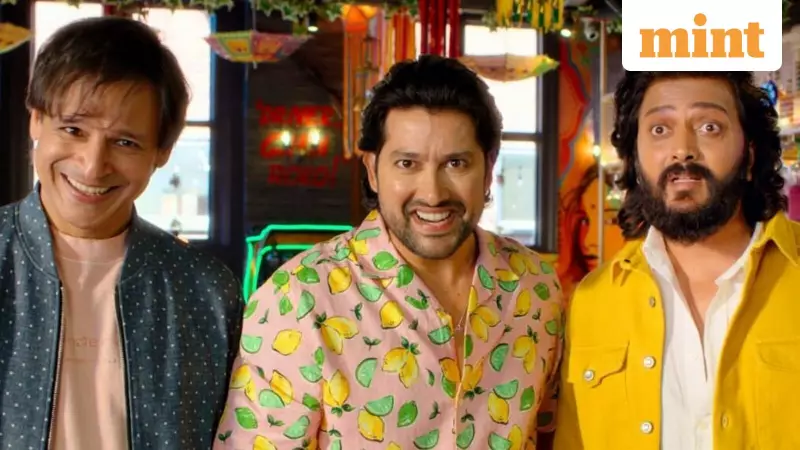
In a significant development for India's entertainment industry, the producers of the adult comedy film Mastiii 4 have found themselves embroiled in a copyright dispute. Radio jockey and content creator Ashish Sharma has alleged that a scene in the movie was lifted directly from his viral Instagram skit titled "Shaq Karne Ka Nateeja" without obtaining proper permission.
Delhi High Court Issues Notice in Landmark Case
The Delhi High Court has issued a formal notice to the producers of Mastiii 4 following Sharma's allegations. This case represents a rare intellectual property dispute where a short-form content creator has taken legal action against mainstream Hindi filmmakers. Legal experts suggest this could signal a new flashpoint in India's entertainment sector as competition for audience attention intensifies across digital and traditional platforms.
While filmmakers have historically faced lawsuits from authors and playwrights, this appears to be the first instance in India where a social media content creator has accused film producers of copyright infringement. The case highlights the evolving landscape of content creation and protection in the digital age.

Legal Framework for Content Protection
According to Ishita Vats, intellectual property associate at Kochhar & Co., Indian copyright law provides robust protection for creators. "Under the Copyright Act, 1957, content creators enjoy copyright protection from the moment an original work is created and fixed in any tangible form," Vats explained. "The Act grants creators exclusive rights over reproduction, adaptation, communication, and commercial exploitation of their work."
Vats emphasized that copying protected expression without permission constitutes copyright infringement, regardless of whether the content originates from organized or informal sectors. Creators can pursue various legal remedies including:
- Cease-and-desist notices
- Injunctions to prevent further use
- Claims for damages or profit-sharing
- Protection of moral rights including proper attribution
Protection Strategies for Filmmakers
Bharadwaj Jaishankar, partner at CMS INDUSLAW, outlined several measures filmmakers can implement to safeguard against copyright claims:
- Maintain clear documentation throughout the creative process
- Keep dated drafts and development notes
- Secure written agreements for all acquired content
- Consider copyright registration for stronger legal standing
"While filmmakers are free to draw inspiration from general ideas or themes, care must be taken to avoid reproducing the copyright in another creator's work," Jaishankar cautioned. "Copyright registration, though not mandatory, provides prima facie proof of ownership and can be crucial in legal proceedings."
Industry Perspectives on Content Usage
A senior content studio executive revealed that incorporating viral online elements into film scripts has become increasingly common. "A lot of it is done to build familiarity and for easy laughs," the executive noted. "But clearly, this isn't a joke anymore. It shouldn't be difficult to acquire proper licenses to use such content legally and safely."
On the music licensing front, Miket Kanakia, director of Novex Communications, highlighted that licensing companies regularly educate commercial entities about proper procedures for using copyrighted material and the consequences of unauthorized usage.
Legal Enforcement Mechanisms
Vishal Gehrana, partner designate at Karanjawala & Co., explained that litigation typically follows initial legal notices to producers, broadcasters, or OTT platforms. "Takedown requests under the IT Intermediary Rules, 2021 can be particularly effective in the digital space," Gehrana stated. "In cases of deliberate copying, criminal remedies under the Copyright Act are also available."

Gehrana emphasized the importance of maintaining thorough records: "Creators who keep good records—drafts, raw files, emails, timestamps, analytics—are in a much stronger position. Courts respond far better when there's a clear paper trail."
Fair Dealing Considerations
Kalindhi Bhatia, partner at BTG Advaya, pointed out that establishing plagiarism requires case-specific analysis. "There are certain exempted activities under the Indian Copyright Act that constitute fair dealing," Bhatia explained. "When evaluating potential infringement, courts consider factors such as the purpose of using the copyrighted work, likelihood of competition between works, and effect on market share."
While litigation involving social media content creators remains relatively new in India, courts have previously adjudicated similar disputes involving adaptation of books into films and copying of plots from dramatic works.
Industry Implications and Future Outlook
The Mastiii 4 case represents a watershed moment for India's entertainment industry. Industry experts recommend that filmmakers conduct thorough due diligence before incorporating third-party content and obtain appropriate licenses or assignments when using others' creative work.
As the boundaries between traditional filmmaking and digital content creation continue to blur, this case underscores the growing importance of respecting intellectual property rights across all creative formats. The outcome could establish important precedents for how India's entertainment industry navigates copyright issues in the digital era.