Akshay Kumar Champions the Evolution of Indian Cinema
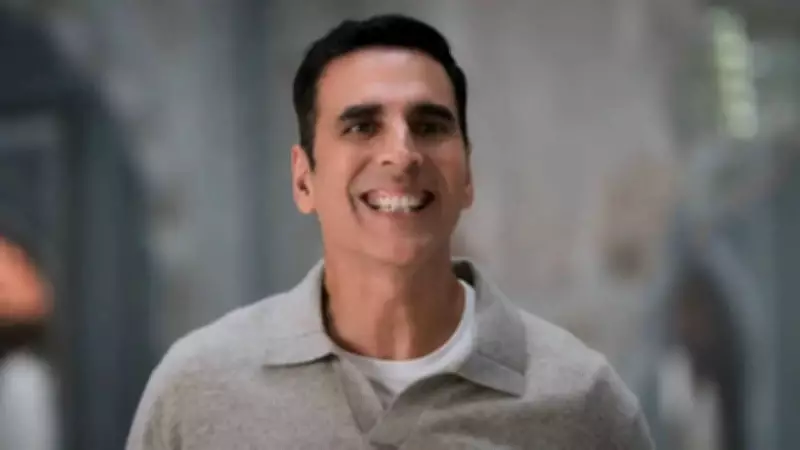
Veteran actor Akshay Kumar, with a career spanning over three decades in the film industry, has voiced his enthusiastic support for the transformative shifts currently reshaping Indian cinema. In a candid conversation with Shubhankar Mishra, Kumar articulated his readiness to embrace these changes and collaborate with the new generation of filmmakers driving this revolution.
Openness to Collaboration with New-Age Directors
Akshay Kumar made it explicitly clear that he is open to working with contemporary directors such as Aditya Dhar and Sandeep Reddy Vanga, provided the roles are suitable. "If any of these directors believe I deserve a place in their films, they are welcome to approach me," Kumar stated. "However, the most crucial aspect is that they must find something that fits me perfectly, and I must feel comfortable with it. Personally, I am keen on doing an action film." This statement underscores his willingness to adapt while maintaining selective criteria for projects.
Praising SS Rajamouli's Grand Vision
Reflecting on the evolution of storytelling in Indian cinema, Akshay Kumar highlighted the monumental impact of films like RRR and Baahubali. He praised director SS Rajamouli for his boundary-pushing approach and unique filmmaking style. "RRR and Baahubali showcased a very distinct kind of making—they were larger than life," Kumar explained. "Imagine a scene where a man single-handedly controls ten elephants, with the director focusing intensely on the man's forearms. That level of conviction is remarkable, and it was executed beautifully. These are exceptionally well-made films that revealed a different, grander aspect of filmmaking."

Animal and the Resurgence of the Angry Young Man
Akshay Kumar also delved into the cultural impact of films like Animal and Kabir Singh, crediting Sandeep Reddy Vanga for redefining on-screen rage and intensity. "Then came Animal featuring Ranbir Kapoor and Bobby Deol. I can never forget Bobby Deol's character," Kumar remarked. "In Animal, the anger transcended all limits. The film effectively revived the 'angry young man' era, but with ten times more power than what Amitabh Bachchan embodied in the past. That earlier portrayal had its constraints, but Animal broke free from them. Sandeep Reddy Vanga reintroduced this archetype in a profoundly different and impactful manner."
Kumar emphasized that these films represent a new cinematic language and a fresh perspective on heroism. "It was a new cinema and a new way of looking at a hero," he noted. "Audiences witnessed a hero who doesn't merely bite but can stab ten times over. Similarly, Kabir Singh portrayed the most intensely angry lover, further illustrating this shift."
Applauding the Realism of Dhurandhar
Shifting focus to Dhurandhar, starring Ranveer Singh, Akshay Kumar commended the film for its exceptional writing and depth. "The manner in which it explores the country was masterfully written," he said. "Every question was addressed comprehensively. It was evident that the creators possessed extensive knowledge, having gathered information from multiple sources to craft a film deeply rooted in reality. The execution was nuanced and beautiful—taking authentic elements and expanding them into a larger-than-life cinematic experience."
Embracing Cinema's Continuous Evolution
In summarizing his views on the changing landscape of Indian cinema, Akshay Kumar expressed a keen desire to participate in such innovative storytelling if opportunities arise. "Cinema is evolving dynamically," he concluded. "If I ever get the chance to work in films of this caliber, I would be more than happy to do so." This sentiment highlights his commitment to staying relevant and engaged with the industry's forward momentum.

The insights from Akshay Kumar not only reflect his personal adaptability but also signal a broader acceptance of diverse narratives and directorial visions within Bollywood. As Indian cinema continues to expand its horizons, veterans like Kumar are poised to play a pivotal role in bridging traditional and contemporary filmmaking.