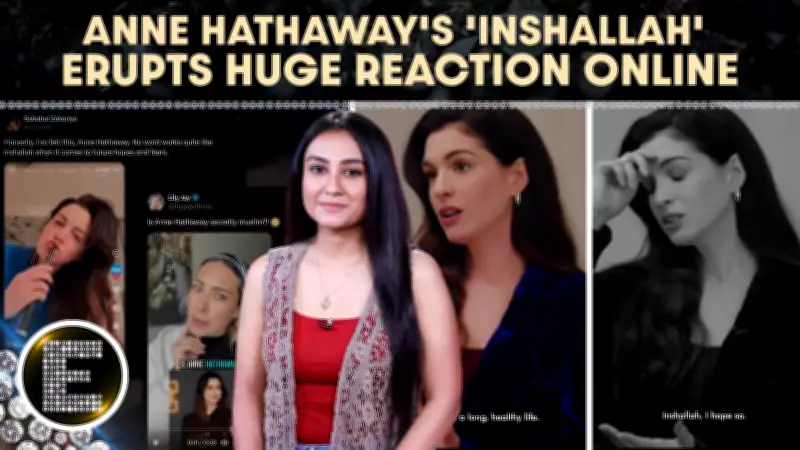
Anne Hathaway's 'Inshallah' Remark Ignites Widespread Online Discussion
In a recent interview, acclaimed actress Anne Hathaway has become the center of a viral sensation after uttering the Arabic phrase "Inshallah," which translates to "God willing." This brief moment, captured in a clip that has rapidly circulated across social media platforms, has sparked a multifaceted debate among netizens, dividing opinions and prompting a deeper examination of language, cultural appropriation, and global interconnectedness.
Mixed Reactions Flood the Internet Following Hathaway's Comment
The online response to Hathaway's use of "Inshallah" has been notably polarized. On one side, many users have commended the actress for her natural and respectful delivery, viewing it as a positive example of cultural appreciation and linguistic inclusivity. They argue that her casual incorporation of the term reflects a growing trend of cross-cultural exchange in an increasingly globalized society.
Conversely, a segment of the audience has raised questions about the context and appropriateness of her remark. Critics have expressed concerns over potential cultural insensitivity or misunderstanding, fueling discussions about when and how non-native speakers should engage with foreign expressions. This controversy has amplified the clip's visibility, making it a hot topic on platforms like Twitter, Instagram, and TikTok.

Broader Implications for Language and Cultural Sensitivity
Beyond the immediate reactions, Hathaway's viral moment has catalyzed a broader conversation about the role of language in today's digitally connected world. Experts and commentators are weighing in on issues such as cultural appropriation versus appreciation, the impact of celebrity influence on linguistic trends, and the nuances of intercultural communication. This incident underscores how a single phrase can resonate globally, highlighting both the opportunities and challenges of cultural exchange in the internet age.
As debates continue to unfold, the episode serves as a reminder of the power of words to unite or divide, emphasizing the importance of context and intent in cross-cultural interactions. It also reflects a societal shift towards greater awareness and discussion of diversity and inclusion in public discourse.
Connection to Hathaway's Upcoming Film Adds to the Buzz
Adding another layer to the viral phenomenon, fans are eagerly anticipating Hathaway's return in the highly awaited sequel, The Devil Wears Prada 2. The timing of this interview clip has synergistically boosted excitement for the film, with many viewers linking the actress's current cultural relevance to her upcoming role. This connection has further fueled online engagement, making the "Inshallah" moment not just a cultural talking point but also a promotional catalyst for her cinematic projects.
In summary, Anne Hathaway's use of "Inshallah" has transcended a mere interview snippet to become a significant cultural event. It has ignited diverse reactions, spurred meaningful dialogues on language and culture, and intersected with her professional endeavors, showcasing the complex interplay between celebrity, media, and societal values in the modern era.