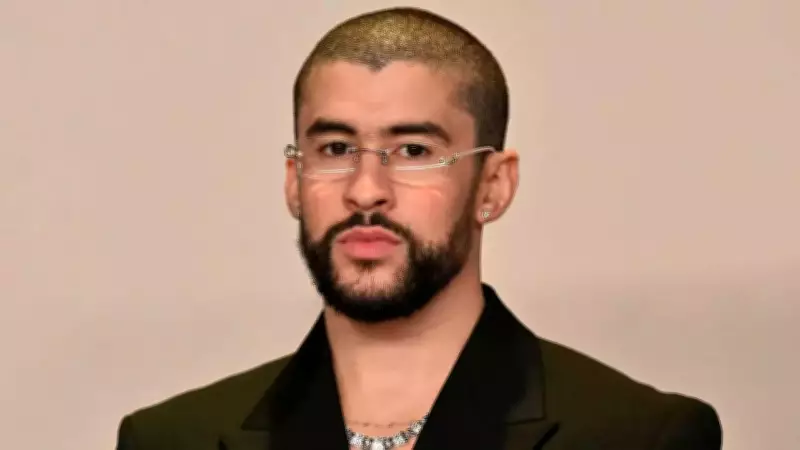
Bad Bunny's Super Bowl Halftime Performance Ignites Cultural Debate
The upcoming Super Bowl LX halftime show featuring Puerto Rican superstar Bad Bunny has become one of the most intensely debated entertainment decisions in recent NFL history. Scheduled for Sunday in Santa Clara, the league's choice to spotlight the global Latin music icon has generated a powerful mix of excitement, anger, and political commentary weeks before the performance even begins.
Cultural Expectations and Political Backlash
Bad Bunny, born Benito Antonio Martínez Ocasio, will take center stage as the Seattle Seahawks face the New England Patriots, carrying not just musical expectations but significant cultural weight. Much of the controversy surrounding his selection revolves around language and politics, with critics questioning why the NFL chose an artist who performs primarily in Spanish for America's biggest sporting event.
The resistance has been particularly vocal from some high-profile figures. Former President Donald Trump has been among the most outspoken critics, while Hall of Fame running back Eric Dickerson publicly questioned the NFL's decision to look beyond American artists. "Why can't we get somebody from right here, from home?" Dickerson asked. "I don't see why they chose that." He expressed doubts about how a Spanish-language performance would resonate with a national audience.

J Balvin's Defense of Musical Universality
Global hitmaker and close friend J Balvin has fired back at critics questioning Bad Bunny's all-Spanish Super Bowl show, arguing that the controversy fundamentally misunderstands music's purpose. Speaking to TMZ, the Colombian singer framed the issue through his personal experience as a young listener discovering hip-hop without understanding the lyrics.
"I learned and grew up listening to hip-hop," Balvin explained. "I didn't know what they were saying. I would just vibe with it." For Balvin, rhythm and emotional connection transcend language barriers. "They just gotta jump on the flavor, that's all they gotta do," he added, suggesting that critics should focus on the music's energy rather than its linguistic content.
Bad Bunny's Unwavering Stance and Preparation
Despite mounting criticism, Bad Bunny has not softened his artistic or political stance. He recently renewed his condemnation of Immigration and Customs Enforcement (ICE) during his Grammy acceptance speech, continuing his pattern of speaking openly about social issues that matter to him and his community.
The pressure leading up to the performance has been intense. Days before the show, Bad Bunny admitted the emotional buildup has been exhausting. "Thinking about the Super Bowl at 4am, that's what I've been doing," he confessed. "Last night I couldn't sleep, I was thinking about it." Still, his focus remains firmly on the performance itself. "I want to think it's 13 minutes of doing what I love," Bad Bunny said. "I know I'm gonna have fun."
The NFL's Global Vision
J Balvin's comments highlight a broader cultural shift the NFL appears to be embracing: the Super Bowl is no longer just an American event but a global phenomenon shaped by sounds and cultures that transcend national borders. By selecting Bad Bunny—whose music has dominated global charts and streaming platforms—the league is acknowledging the internationalization of both sports entertainment and popular music.
This decision represents a significant departure from traditional halftime show selections and reflects changing demographics and musical tastes across the United States and worldwide. The debate surrounding Bad Bunny's performance ultimately raises fundamental questions about:
- The role of language in musical appreciation
- The globalization of American cultural events
- The intersection of sports, music, and politics
- Evolving audience expectations for major entertainment spectacles
As Sunday approaches, all eyes will be on Santa Clara to see how this historic performance unfolds and whether Bad Bunny's music can bridge cultural divides during one of the world's most-watched television events.