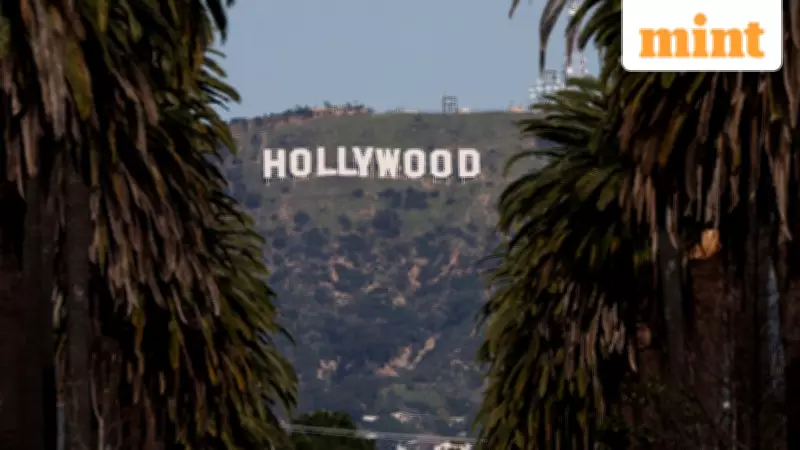
Hollywood's Mega-Merger Faces a New Antitrust Hurdle: State Power
In a dramatic shift from traditional federal oversight, state attorneys-general are increasingly taking the lead in challenging corporate mergers, setting the stage for a potential showdown over Hollywood's next blockbuster deal. The cautionary tale of Kroger's failed $25 billion acquisition of Albertsons in 2022, torpedoed by litigation from Washington and Colorado, serves as a stark warning to the entertainment industry.
The Battle for Warner Bros Discovery
Netflix and Paramount are locked in a heated competition to acquire Warner Bros Discovery, one of Hollywood's most prized assets. David Ellison, CEO of Paramount, has mounted a hostile $108 billion takeover bid, despite the Warner Bros board urging shareholders to reject it. Paramount argues that a merger with Netflix would raise red flags with federal antitrust enforcers, while a Paramount-Warner combination might pass muster. Both bidders are focused on winning over the Department of Justice, the Federal Trade Commission, and former President Donald Trump, who has hinted at influencing the outcome.
California's Wildcard: Rob Bonta
However, state attorneys-general pose a significant threat that could derail any deal, even if federal authorities approve it. Rob Bonta, California's attorney-general, is a particular wildcard. His office has already signaled skepticism, stating that "further consolidation in markets central to American economic life does not serve the economy, consumers, or competition well." This suggests he may not defer to Washington, DC, and could independently challenge the merger.

The Rise of State Antitrust Enforcement
States have a long history of antitrust action, predating the federal Sherman Act of 1890. Recently, consolidation across industries and anti-monopolist sentiments from both left-wing and MAGA populists have brought the issue to the forefront. States are responding by:
- Passing laws to strengthen their antitrust powers, such as Colorado and Washington's measures requiring big firms to notify attorneys-general before mergers.
- Bringing independent cases, regardless of federal actions, as seen in the Kroger-Albertsons litigation.
Phil Weiser, Colorado's attorney-general, emphasizes this autonomy: "Just because the FTC or the DoJ goes one way doesn't mean I might not go another way."
Political Ambitions and Enforcement Priorities
Antitrust enforcement is also becoming a tool for ambitious attorneys-general to raise their political profiles. Bob Ferguson, who sued Kroger and Albertsons in Washington, is now the state's governor. Phil Weiser is running for governor in Colorado, touting his actions against "irresponsible companies that ripped off Coloradans." Rob Bonta, considering a gubernatorial run in 2026, has already sued the Trump administration multiple times and might use a Warner Bros merger challenge to appeal to Hollywood unions, like the Writers Guild of America, which fears reduced job opportunities.
Implications for the Entertainment Industry
As the California Law Review Commission mulls strengthening state antitrust laws, big firms face a balkanized regulatory landscape. Democratic attorneys-general, in particular, are prioritizing antitrust enforcement, with initiatives like a new consumer-protection working group led by Rohit Chopra. The Warner Bros merger, whether won by Netflix or Paramount, will unfold slowly, with state-level challenges likely to play a critical role in its outcome.
This evolving dynamic underscores that in today's antitrust arena, state power is no longer a sidelined player but a central force capable of shaping Hollywood's future.