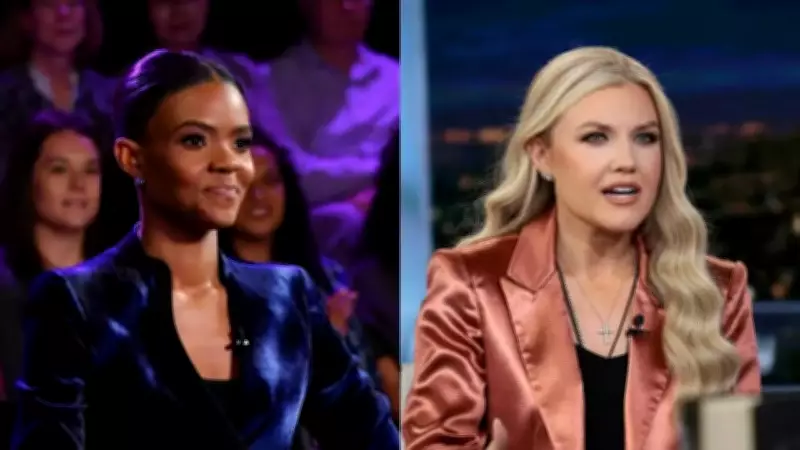
Candace Owens Wedding Photo Ignites Heated Online Debate
A seemingly innocent wedding photograph has rapidly escalated into a major viral controversy, drawing thousands of social media users into a deeply polarized and emotionally charged discussion. What started as a simple post quickly transformed into a digital flashpoint, highlighting how online narratives can reshape public perception in an instant.
The Spark That Lit the Fire
The controversy erupted when social media account Cinema Shogun shared a wedding photo of conservative commentator Candace Owens with a provocative caption. "Candace Owens got all dolled up for her Wedding Day only to be effortlessly outshined by Erika Kirk," the post declared, adding, "This is where Candace's villain arc began." The image itself captured a celebratory moment, but the accompanying text injected a completely different narrative that social media users couldn't ignore.
Within minutes, reactions began flooding in from all corners of the internet. Some users dismissed the comparison as harmless entertainment, while others took it as a personal affront. Many questioned the underlying motives behind the narrative being pushed, transforming what began as a simple visual comparison into a broader debate about:

- How perception shapes online discourse
- The role of bias in social media storytelling
- The ethics of public figure commentary
- The rapid spread of divisive narratives
Escalation and Intensification
The original poster further fueled the controversy with additional inflammatory comments. "You can see the hate forming behind her lifeless eyes lol," they wrote in one follow-up, a statement that struck a nerve and pushed the conversation into more hostile territory.
When one user directly challenged the initial claim by asking "Outshined? says who?" the response came with unwavering confidence: "Everyone with eyes." This exchange marked a turning point in the discussion's tone and intensity.
The debate took an even more controversial turn when another user commented, "Naw I'm sorry but she looks like every other blonde, the eyes are too creepy." The original poster responded with, "Candace looks like every other black, the eyes are lifeless," a statement that generated significant backlash and drew more participants into the fray.
The Broader Conversation Emerges
As the discussion evolved, it moved beyond superficial comparisons to touch on deeper personal and emotional themes. Users stepped in to either defend or criticize the increasingly personal nature of the comments, creating a complex web of reactions that revealed how quickly social media conversations can escalate.
Amid the chaos, one user offered a detailed counter-narrative attempting to push back against the prevailing discussion: "Wrong again fatso. Candace married a wealthy, intelligent, educated, aristocrat and married 2 yrs before Charlie. Stop with the bs that Candace was into Charlie. She also encouraged Charlie's relationship with Erika. Once Erika showed her TRUE evil self - it was game on."
This response highlighted how the conversation had expanded from a simple photo comparison to include:
- Personal relationships and histories
- Character assessments of public figures
- Competing narratives about motivations and intentions
- Broader cultural and social implications
The Bigger Picture
This viral thread serves as a powerful case study in how social media can rapidly amplify and distort personal moments. A single caption transformed a calm wedding celebration into a heated battleground of strong opinions and emotional reactions. The controversy demonstrates several key aspects of modern online discourse:
Speed of Spread: The discussion gained momentum within minutes, showing how quickly content can go viral in today's digital landscape.
Emotional Investment: What began as casual commentary evolved into deeply personal and emotionally charged exchanges.
Narrative Control: The original caption set the tone for the entire discussion, demonstrating how framing can dictate public perception.

Community Division: The debate created clear camps of supporters and critics, highlighting how social media often reinforces polarization.
Ultimately, this controversy reveals that it's not really about the photograph itself, but rather about how people choose to interpret and frame visual content. The wedding photo became a canvas upon which users projected their own biases, opinions, and narratives, creating a microcosm of larger social media dynamics where perception often outweighs reality.