Chinmayi Sripada Condemns Male Solidarity with Molesters Over Victims at Hyderabad Panel
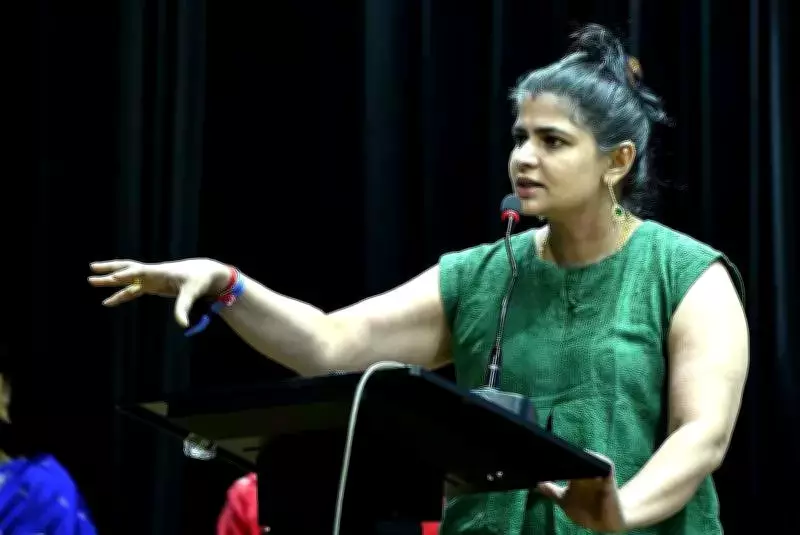
Singer Chinmayi Sripada delivered a powerful critique on Saturday, stating that male solidarity often aligns with molesters rather than victims. She made these remarks during a panel discussion in Hyderabad, part of the launch event for the 'Stand With Her' campaign. This initiative is organized by the Telangana police's Women Safety Wing, with The Times of India serving as the official media partner.
Campaign Aims to Encourage Men to Support Women
The year-long 'Stand With Her' campaign is designed to motivate men to stand up for women in various situations. During the session, Chinmayi highlighted a troubling reality: victims frequently find themselves isolated, surrounded by bystanders and onlookers who offer no assistance.
Recalling her own #MeToo experience from 2018, Chinmayi revealed, "Hardly two or three people stood by me when I and several others accused a Tamil lyricist of misconduct and sexual harassment. The man wielded such immense power that he received support from all directions. In less than a week, I was banned from the Tamil film industry."

Lack of Support Extends to Male Victims as Well
Chinmayi pointed out that this issue is not exclusive to women. "Incidentally, not just women, but men also generally do not stand by their fellow men when they are victims of harassment," she explained. She shared that many men who were abused as children confided in her after she spoke up in 2018. "It's unfortunate that they don't even have anyone to talk to," added the 41-year-old singer.
Social Media Backlash Against Women Who Speak Out
Chinmayi also addressed the severe online harassment faced by women who voice social issues. "All the profanity I know is only because of social media. I was called a prostitute. They said that a woman like me should never have children, and they even wished death upon my children," she stated, underscoring the toxic environment that often silences victims.
Panelists Emphasize Listening and Changing Mindsets
The panel, which included police officials and individuals from the film industry, stressed several key points:
- Listening to women when they express discomfort.
- Supporting them in uncomfortable situations.
- Speaking out against cheap or demeaning jokes instead of ignoring or laughing at them.
Tejaswini Madabhushi, CEO of Yugantar and a feminist activist, shared a personal reflection: "I was guilty of this. During my university days, I laughed at a comment from a senior who offered to buy a saree for a woman wearing shorts. I later realized that while a man is respected by default, a woman is only respected if she fits a certain mold. A woman in a sari or churidar is respected, but one in shorts is not. This must change."
Respecting Women Should Start at Home
The panelists emphasized the importance of shifting mindsets and narratives rather than blaming women. They advocated that respect for women should begin within the household. Playback singer Vedala Hemachandra advised, "When a woman in distress approaches you, you can often tell from her voice that she is in an uncomfortable situation. The best response is to listen and support her." He also encouraged women to trust their instincts and avoid potential dangers.
This discussion in Hyderabad marks a significant step in the ongoing effort to foster a more supportive environment for victims of harassment, urging collective action and empathy from all members of society.