Chiranjeevi's 'Strict & Professional' Comment Reignites Tollywood Casting Couch Debate
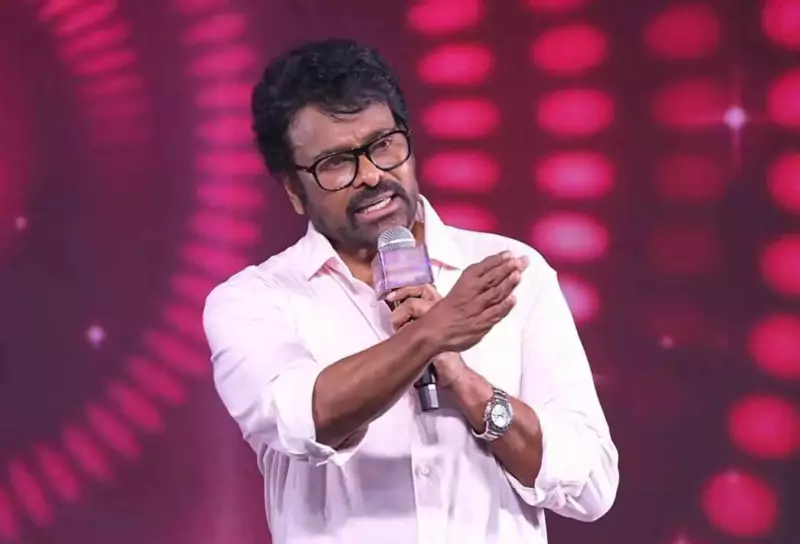
The Telugu film industry, popularly known as Tollywood, finds itself embroiled in a heated debate about the pervasive issue of the casting couch. This controversy was reignited following recent comments made by Megastar Chiranjeevi, who suggested that such exploitative practices disappear when individuals remain "strict and professional."
While encouraging new talent to enter the industry, Chiranjeevi stated, "There's no such thing as a 'casting couch' or anything like that. It depends on your behaviour. You shouldn't have any insecurity about how things might be. Be professional, and others will be professional too." He further described the industry as a mirror, reflecting what one gives. However, these remarks drew swift and critical responses from women across the industry, shifting the spotlight to issues of power, privilege, and the forced silence endured by survivors.
Voices of Dissent: Challenging the Narrative
Prominent social activist Sunitha Krishnan took to social media platform X to express her disagreement. "Annaiya, with all due respect, I beg to differ on your opinion about sexual harassment in Tollywood," she wrote. Krishnan emphasized that power dynamics often compel young female aspirants, especially those from non-filmy backgrounds, into unpleasant situations where they feel forced to either comply or remain silent. She argued that placing the entire blame on women and suggesting that strictness prevents harassment is an oversimplification of a complex systemic problem.

Singer and voice actress Chinmayi Sripaada provided a stark counterpoint, stating unequivocally that the casting couch is rampant. "Men remain in positions where they believe they are entitled to, and WILL demand and expect sexual favours from women," she asserted. Sripaada shared her personal experience, noting that abuse is not a reflection of the victim's behavior but a consequence of predatory entitlement. "I didn't get molested because I was asking for it," she clarified, highlighting the core issue as men believing they are owed sexual favors in exchange for professional opportunities.
Industry Insiders Highlight Persistent Challenges
Gayathri Gupta, an actor-director with over two decades of experience in the Telugu film industry, offered a poignant perspective. She revealed that even today, she continues to face casting couch-related issues. "To make a statement like this, from a position of such stature, requires a great deal of privilege and, frankly, a lack of empathy," Gupta remarked. She described the constant need to protect herself from exploitation, which distracts from her creative pursuits. Gupta stressed that the experience is vastly different for those without backing or privilege, a nuance often overlooked by those in powerful positions.
Unpacking the Criticism: Key Concerns Raised
The backlash against Chiranjeevi's comments centers on several critical points that many believe his statement ignored:
- Victim-Blaming: Suggesting harassment can be avoided if women are "strict and professional" implicitly places responsibility on potential victims rather than addressing the perpetrators and systemic abuse.
- Ignoring Power Dynamics: The industry's hierarchical structure allows men in positions of power to exploit vulnerable newcomers. Professionalism alone cannot shield individuals from such abuse.
- Overgeneralization: Describing the industry as a "mirror" oversimplifies the complex and varied experiences of aspirants, particularly those without family connections or mentorship.
- Systemic Issues: The comments failed to acknowledge widespread patterns of sexual harassment, abuse of authority, and the existence of repeat offenders within the industry.
- Privilege Blind Spot: Speaking from a position of immense influence and respect may create a disconnect from the harsh realities faced by many women and newcomers.
Personal Testimonies: A Glimpse into the Reality
Several actresses have previously shared their encounters with the casting couch, providing real-world context to this ongoing issue:

Saiyami Kher recalled an incident from when she was 19 or 20, where a female agent hinted at the need for "compromises" for a Telugu film role. Kher firmly declined, stating her personal limits.
Suchitra Pillai narrated a 2024 experience where a caller, discussing a South film, mentioned that a "little compromise is needed" because the producer was new. Pillai, misunderstanding initially, thought it was about fee negotiation before realizing the implied demand.
Radhika Apte shared two instances: one where a South actor called her room phone flirtatiously, and another where a caller explicitly asked if she would be okay sleeping with someone for a Bollywood meeting. She responded with defiance.
Anushka Shetty, during a 2020 promotion, acknowledged the existence of the casting couch in Telugu movies. She spoke about the choice actresses face between an easier, compromising path and a tougher, principled road to a sustained career.
This resurgence of the casting couch debate underscores a deep-seated conflict within Tollywood. On one side are statements from established figures focusing on individual professionalism. On the other are powerful testimonies and analyses highlighting entrenched power imbalances, systemic exploitation, and the urgent need for a more empathetic and accountable industry culture that protects all aspirants, regardless of their background or connections.