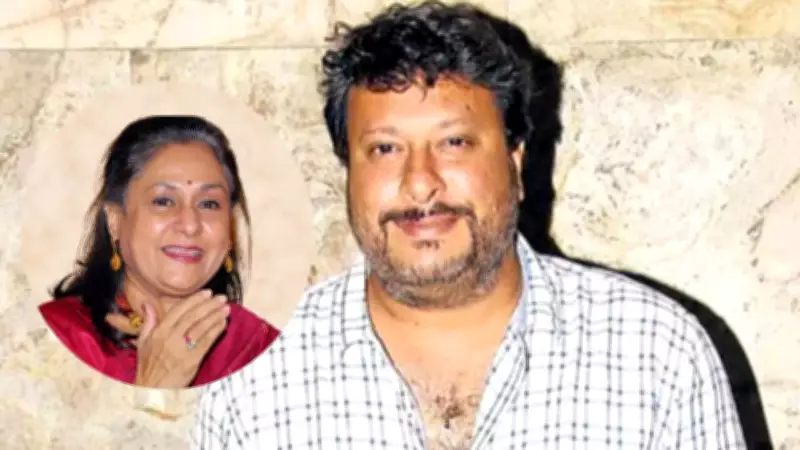
Tigmanshu Dhulia's Harrowing Experience Filming 'Haasil' in Prayagraj
Renowned filmmaker Tigmanshu Dhulia has recently shared distressing details about the significant challenges he faced while shooting his debut directorial venture, 'Haasil', in his hometown of Allahabad, now officially renamed Prayagraj. The director revealed that the film's unflinching portrayal of campus politics ignited severe backlash from local political figures, ultimately compelling him to seek assistance from veteran actress and politician Jaya Bachchan to resolve the escalating conflict.
Controversy Erupts Over Campus Politics Depiction
Released in 2003 to widespread critical acclaim, 'Haasil' is celebrated for its raw and realistic depiction of student politics in Uttar Pradesh, featuring standout performances by Irrfan Khan, Ashutosh Rana, and Jimmy Shergill. However, Dhulia recounted that trouble began almost immediately after filming commenced with the opening sequence introducing Ashutosh Rana's character.
"When I was shooting 'Haasil' in Allahabad, the very first scene we shot was Ashutosh Rana's entry. In the film, he plays the university president," Dhulia explained. "In a story, if there is Ram there must also be Ravan. Since I shot the 'Ravan' scene first, people felt I was portraying the university in a bad light."

The situation worsened when locals began speculating that the characters were based on actual student leaders. Dhulia noted, "There used to be a student leader named Lakshmi Shankar Ojha. In the film, Ashutosh's character was initially named Lakshmi Shankar Pandey, which we later changed to Gauri Shankar Pandey. Soon I received a call saying, 'You are making a film about us.'"
Intimidation and Threats from Former University Presidents
The tension rapidly intensified, leading to Dhulia being summoned to the district magistrate's office. "It was the first time a film shoot was happening in the city. I hadn't yet become 'Tigmanshu Dhulia'; it was my first film. I had gone to my hometown very excited, thinking I would shoot there," he recalled.
However, the meeting quickly turned hostile. "Around 20–25 former presidents of Allahabad University were present. They surrounded me and began threatening me," Dhulia stated. The threats were particularly alarming: "They said they would break the windows of Yatri Hotel, set it on fire, blacken my face, make me sit on a donkey, and parade me around the city."
Emotional Turmoil and Jaya Bachchan's Crucial Intervention
The filmmaker admitted that the ordeal deeply affected him. "This was in 2001. I got scared and started crying. All my emotions came out. I had come to my own city, and I felt humiliated there," he confessed.
In desperation, Dhulia reached out to Jaya Bachchan for help. "I had to call Jaya Bachchan ji. If she hadn't helped, it would have been a big problem. She got Amar Singh ji to intervene, and the matter was settled," he revealed, highlighting how her intervention was pivotal in resolving the crisis.
Legacy and Impact of 'Haasil'
Following the controversy, the filmmakers made a strategic decision to remove all direct references to the city's name in the film. "That's why you won't find the name Allahabad anywhere in 'Haasil'," Dhulia explained.
Despite these early hurdles, 'Haasil' went on to become a defining moment in Dhulia's career, earning critical praise for its authentic narrative and powerful performances. The film remains a significant work in Indian cinema, illustrating the complex interplay between politics, education, and society in Uttar Pradesh.
Dhulia's candid revelations shed light on the often-unseen challenges filmmakers face when tackling sensitive subjects, emphasizing the importance of support networks within the industry. This episode underscores how artistic expression can sometimes clash with local sentiments, requiring delicate navigation and influential mediation to ensure creative projects reach completion.