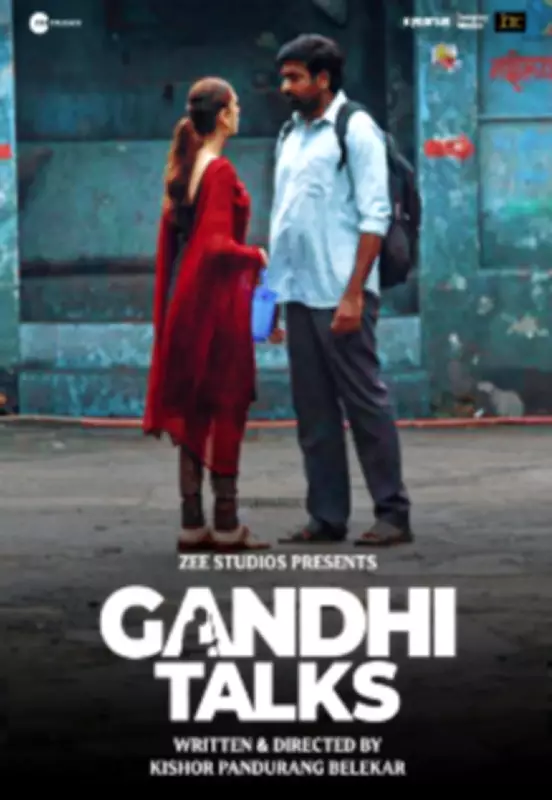
Gandhi Talks Movie Review: A Silent Ode to Mumbai's Heartbeat
Gandhi Talks, released on January 30, 2026, stands as a remarkable cinematic experiment in the era of noise and constant stimulation. This 2-hour-13-minute silent film, available in Hindi, Malayalam, Telugu, and Tamil, blends comedy and drama to create an unforgettable viewing experience that has earned both critics and users a rating of 3.5 stars.
A Cinematic Achievement in Silence
Creating a compelling silent film represents one of cinema's greatest challenges, and director Kishor Pandurang Belekar has accomplished this with remarkable finesse. Gandhi Talks manages to maintain engagement throughout its runtime without a single spoken word, a testament to its strong visual storytelling and emotional depth.
The Story of Two Mumbai Lives
The film follows Mahadev, portrayed with exceptional sensitivity by Vijay Sethupathi, a chawl dweller struggling to provide a better life for his ailing mother in Mumbai's crowded landscape. His journey intersects with that of Boseman, played by Arvind Swamy, a celebrated builder facing personal and professional crises that threaten to overwhelm him.

Both characters, though from vastly different socioeconomic backgrounds, find themselves victims of corruption and circumstance. Their eventual convergence reveals profound truths about privilege, poverty, and shared human suffering.
Mumbai as a Character
The city of Mumbai emerges as a central character in this narrative. The camera captures the metropolis with genuine affection, embracing its chaotic energy, architectural flaws, and undeniable beauty. Through Belekar's direction, viewers experience Mumbai's dual nature—a place that simultaneously demands hustle and offers healing, that appears cluttered yet provides unexpected peace.
The Power of Visual Storytelling
AR Rahman's soulful musical score serves as the narrative guide, replacing dialogue with emotional resonance. This approach creates a meditative viewing experience that stands in stark contrast to today's information-saturated world. The absence of spoken words heightens visual attention, making viewers more observant of subtle gestures, expressions, and environmental details.
Notably, the film maintains such compelling engagement that viewers never feel tempted to check their phones—a rare achievement in contemporary cinema.
Performances That Speak Volumes
Vijay Sethupathi delivers a career-defining performance as Mahadev, infusing the character with purity, empathy, and innocence without ever descending into self-pity. He carries the film's emotional weight with remarkable subtlety and strength.
Arvind Swamy provides poignant support as Boseman, offering a restrained yet effective portrayal of privilege under pressure. Aditi Rao Hydari adds warmth and grace to the narrative, while Siddharth Jadhav, Usha Nadkarni, and Mahesh Manjrekar deliver strong supporting performances in pivotal roles.
Social Commentary Through Silence
Gandhi Talks functions both as tragicomedy and social satire, questioning the relevance of honesty, morality, and principles in a world increasingly obsessed with material success. The film explores middle-class nuances with quiet wit, as demonstrated in a particularly memorable scene where Mahadev removes his chappals out of respect before committing a burglary.
These moments ground the narrative in authentic human experience, balancing adulting pressures with emotional vulnerability.
A Tribute to Cinematic Heritage
Director Kishor Pandurang Belekar offers a heartfelt ode to Dadasaheb Phalke through this ambitious project, demonstrating that silent cinema remains a powerful medium for contemporary storytelling. The film proves that visual language can communicate complex emotions and social commentary with equal, if not greater, effectiveness than dialogue-driven narratives.
Final Verdict
Gandhi Talks represents a gentle, simple story that offers quiet solace in an overwhelmingly noisy world. For viewers willing to embrace silence and engage with pure visual storytelling, this film provides a refreshing, emotionally resonant experience that lingers long after the credits roll.

The film's technical aspects deserve special mention, with direction scoring 3.5, story 3.0, music 4.0, and visual appeal 4.0 in the critic's assessment. These elements combine to create a cohesive artistic vision that honors cinema's silent era while speaking directly to contemporary audiences.