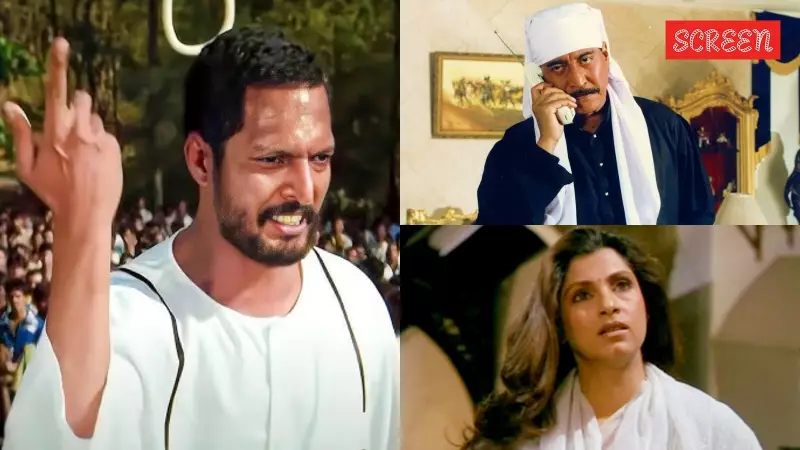
On veteran actor Nana Patekar's birthday, a journey into his filmography led a GenZ viewer to his 1994 action-thriller, Krantiveer. The film, directed by Mehul Kumar and also starring Raaj Kumar and Dimple Kapadia, was one of the highest-grossing films of that year and earned Patekar a National Award. However, watching it through a contemporary lens reveals a stark generational divide in storytelling preferences and character appreciation.
The Angry Young Man Through a Modern Lens
There is no denying that Nana Patekar's intense performance as Pratap Narayan Tilak is powerful. The character arcs from a cynical, apathetic man to a fiery crusader against social injustice. Yet, for a generation raised on complex anti-heroes like Ganesh Gaitonde from Sacred Games or the morally grey protagonist of Badlapur, Pratap's journey feels overtly simplistic.
The emotional outbursts, while initially impactful, become repetitive and lack the subtlety that today's audience often seeks. GenZ viewers tend to connect more with characters who show internal conflict and nuanced emotional shifts rather than those defined primarily by loud, external rage. Furthermore, the female characters, including Dimple Kapadia's role, are sidelined, serving a largely decorative purpose—a narrative choice that feels particularly outdated now.

A Crowded and Chaotic Narrative
Krantiveer attempts to tackle a laundry list of social issues—corruption, communalism, land mafia—all within a single narrative. This ambition, while commendable, results in a cluttered plot. The film jumps from one issue to another, such as from communal riots to land-grabbing subplots, without dedicating enough time to explore any single topic with depth or nuance.
This stands in contrast to a modern film like Shah Rukh Khan's Jawan, which also addressed multiple social problems but wove them into a cohesive, commercially successful thriller that resonated with 2023 audiences. The chaotic presentation in Krantiveer makes certain sections feel crammed and reduces the potential impact of its social commentary.
Pacing and Problematic Portrayals
From a modern cinematic standpoint, the film's pacing is uneven. The opening scene fails to create a gripping hook, and the antagonist, Chatur Singh played by Danny, lacks a formidable buildup, diminishing his threat. Several sequences, including obligatory song breaks and logic-defying hypnosis scenes, feel tedious and disrupt the narrative flow.
One of the most significant points of disconnect is the film's portrayal of journalism and activism. Krantiveer presents a black-and-white view where a dramatic courtroom monologue can single-handedly fix systemic flaws. Today's generation understands media and activism as messy, grey areas. Modern activism has shifted to digital spaces—driven by social media campaigns, reels, and viral trends—rather than relying solely on fiery speeches and slogan-shouting.
The Prophetic Climax and Final Verdict
Despite its flaws, one element remains timeless: Nana Patekar's climactic speech. The iconic "Aa gaye meri maut ka tamasha dekhne…" dialogue retains its raw power. For the GenZ reviewer, its familiarity came partly from internet memes, yet its message felt eerily prophetic, mirroring the constant outrage seen on modern social media platforms.
In conclusion, watching Krantiveer in 2025 is an exercise in understanding cinematic evolution. Nana Patekar's performance is a masterclass in intensity, but the film's weak narrative structure, simplistic characterizations, and chaotic plot make it a product of its time. While it was undoubtedly iconic in 1994, today's audience, accustomed to narrative complexity and quiet resilience, may find the film's loud anger and crowded storytelling less effective.