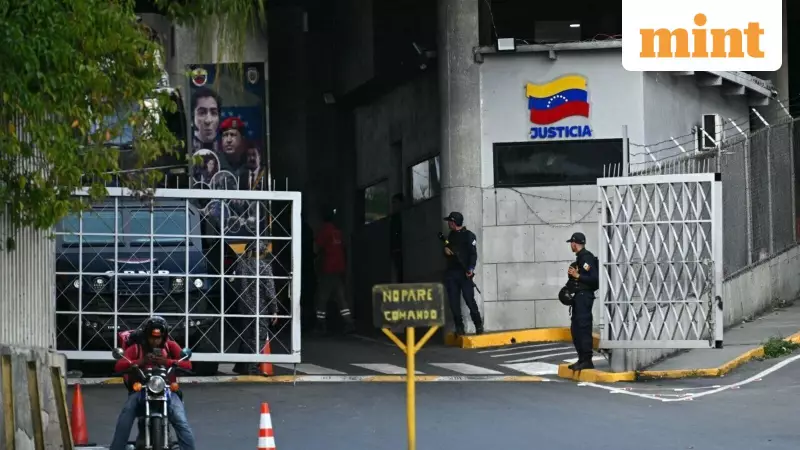
In a significant political move, Venezuela's acting government has announced it will release a substantial number of political prisoners. This decision comes less than a week after U.S. commandos captured the country's former authoritarian leader, Nicolás Maduro, and is widely viewed as an attempt to placate the Trump administration in Washington.
A Gesture for Peace and Survival
The announcement was made on Thursday, January 9, 2026, by Jorge Rodríguez, the head of Venezuela's congress and powerful brother of acting president Delcy Rodríguez. He stated that a "significant number" of both Venezuelan and foreign prisoners would be set free, describing the action as a gesture "to seek peace."
"These releases from prison are occurring at this very moment," Rodríguez declared, though he provided no specific figures on how many individuals would be liberated. The move appears strategically timed as Maduro's allies, who remain in power, scramble to reassert their authority and ensure their political survival following the dramatic capture of their former chief.

Context of Repression and a Calculated Shift
For nearly 13 years under Nicolás Maduro, the regime detained hundreds of political opponents. Human rights organizations have documented severe abuses, including beatings, torture, electric shocks, and other horrific treatments designed to instill fear and suppress dissent amid a crippling economic crisis.
Phil Gunson, an analyst with the International Crisis Group based in Caracas, said Thursday's announcement "looks clearly like an attempt to appease Washington." He cautioned, however, that the true impact would depend on the scale of the release and the identities of those freed.
According to Foro Penal, a Caracas-based rights group, there are more than 800 political prisoners in Venezuela. The group's director, Alfredo Romero, called the news "good" and stated they were verifying each release, noting some foreigners were already on their way to freedom.
Contradictory Signals: Releases Amid a Crackdown
While offering this olive branch, the regime under Acting President Delcy Rodríguez has simultaneously moved to tighten its grip. This week, authorities have arrested journalists, deployed paramilitary gangs known as colectivos to patrol streets, and set up checkpoints where armed men inspect citizens' phones.
Rodríguez also declared a state of emergency, empowering police to hunt down supporters of Maduro's ouster. In a controversial appointment, she named General Gustavo González as head of the presidential guard and the military's intelligence unit, DGCIM. González is sanctioned by the U.S. for human rights abuses and was implicated by a UN report for ordering the detention and torture of political opponents.
Analysts interpret these conflicting actions as a balancing act. Imdat Oner, a former Turkish diplomat in Venezuela, noted the prisoner release is an effort by Maduro's allies to show a moderate transition aligned with U.S. interests. "They are looking for their own survival," Oner concluded, highlighting the precarious position of the remaining regime.
The Trump administration's primary focus has been on securing Venezuela's oil resources and dictating policy, which initially disappointed local activists hoping for a swift push to restore democracy and free prisoners. Venezuela's latest move is now a critical test of whether a genuine political departure is underway or if it is merely a tactical concession by a regime fighting to endure.