Government Officially Bans Controversial Bollywood Song 'Sarke Chunariya'
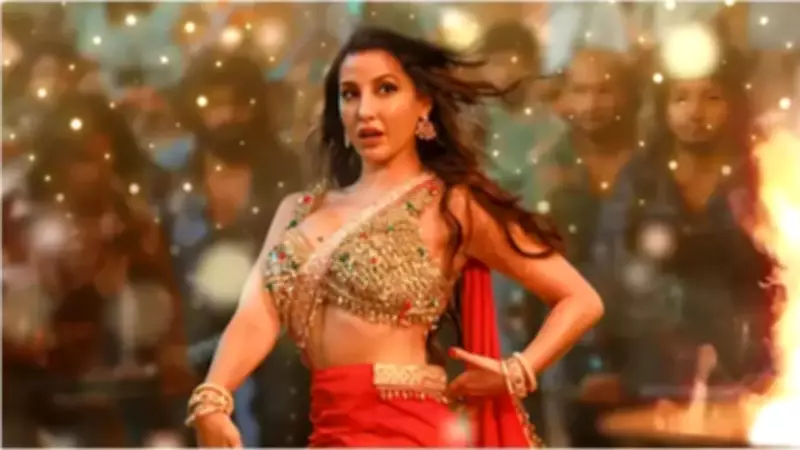
The Union government has formally announced a comprehensive ban on the Bollywood song 'Sarke Chunariya', which features actors Nora Fatehi and Sanjay Dutt. This decisive action follows intense public outrage and widespread criticism over the track's lyrics and visual content, which many deemed vulgar and demeaning to women.
Parliamentary Confirmation of the Ban
Union Minister for Information and Broadcasting, Ashwini Vaishnaw, officially confirmed the prohibition during a session in the Lok Sabha. He was responding to a specific query raised by Samajwadi Party MP Anand Bhadouria, who sought clarification on the government's stance regarding the controversial song.
"The song has already been banned," Vaishnaw stated unequivocally during the parliamentary discussion, as reported by ANI. He emphasized that the right to freedom of speech in India is not absolute and must operate within the reasonable limitations established by the Constitution.

Constitutional Framework and Government's Stance
Minister Vaishnaw explicitly referenced Article 19(2) of the Indian Constitution, which permits restrictions on free speech in matters concerning public order, decency, morality, and other vital societal interests. "Freedom of speech cannot be absolute. It has to be in the context of society and culture," he asserted.
He further elaborated on the government's commitment to protecting vulnerable segments of society in the digital age. "In the coming time, the way things are spreading rapidly today through digital means, for the protection of society, especially for the protection of children, women, and deprived groups, whatever hard actions should be taken, the government is ready to take them," Vaishnaw declared, underscoring a proactive approach to content regulation.
Escalating Controversy and Public Backlash
The controversy erupted almost immediately after the song's release, with critics accusing it of promoting vulgarity and objectifying women. This triggered a swift and powerful backlash across various platforms, rapidly gaining momentum as more voices joined the call for action.
Key developments in the controversy included:
- Formal complaints filed demanding the registration of an FIR and the immediate removal of the song from all platforms.
- Public condemnation from prominent figures and institutions, including the Haryana and Karnataka Women Commissions.
- Criticism from actor-politicians such as Ravi Kishan and Kangana Ranaut, as well as singer Armaan Malik, all of whom labeled the lyrics as highly objectionable.
- A legal petition submitted directly to the Central Board of Film Certification (CBFC), urging an immediate ban on the grounds that the content is obscene and potentially harmful to minors.
The issue intensified in the days leading up to its parliamentary discussion, highlighting the growing public demand for accountability in media content. The government's ban represents a significant response to these concerns, reinforcing the principle that artistic expression must align with constitutional values and societal norms.