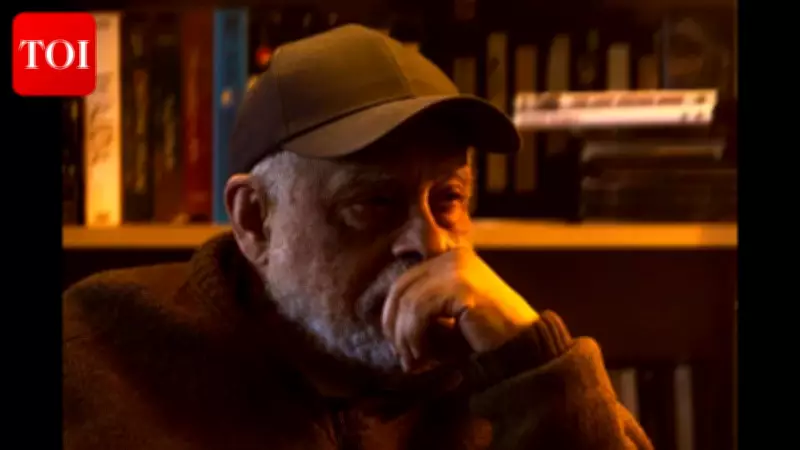
Ethiopian Filmmaking Legend Haile Gerima to Receive Prestigious Berlinale Camera Honor
The 76th Berlin International Film Festival will bestow one of its highest honors upon Ethiopian director Haile Gerima, who will be presented with the distinguished Berlinale Camera during this year's prestigious event. This recognition celebrates Gerima's profound contributions to global cinema and his unwavering commitment to telling stories of resistance and historical truth.
World Premiere of Monumental Nine-Hour Documentary
Coinciding with this honor, Gerima's latest cinematic achievement, Black Lions – Roman Wolves, will celebrate its world premiere in the Berlinale Forum section. This nearly nine-hour documentary represents a monumental exploration of Italian colonialism's history and mythology while serving as a powerful commemoration of Ethiopian resistance movements. The film has been in development for many years, making its debut particularly significant.
Ceremony Scheduled for February 2026
The formal presentation ceremony for the Berlinale Camera to Haile Gerima is scheduled to take place on February 17, 2026, during the festival's proceedings. This date marks a significant moment in the festival's history, recognizing a filmmaker whose work has consistently challenged conventional narratives and amplified marginalized voices.

Festival Director's Tribute to Gerima's Legacy
Berlinale Director Tricia Tuttle expressed the festival's deep admiration for Gerima's body of work, stating: "Haile Gerima's works bear witness to histories marked by oppression, resistance, and the unfinished work of decolonization — stories that speak with urgent force to the world today. Though he entered Competition with Sankofa in 1993, the Forum recognized Gerima's work early on, and we are very proud to welcome him back to the Forum with his long-gestating Black Lions – Roman Wolves. It is an honor to present a Berlinale Camera to a filmmaker who has transformed the way so many understand the world."
Gerima's Influential Career and Background
Haile Gerima's journey in filmmaking began with his emigration from Ethiopia to the United States in 1967, where he studied at the University of California. He subsequently became a pivotal figure in the L.A. Rebellion, a groundbreaking movement of African-American and African filmmakers who, starting in the 1970s, created an alternative, independent Black American cinema that challenged mainstream representations.
Throughout his career, Gerima has masterfully blended personal, historical, and political perspectives in his films. Despite residing in the United States for decades, he has maintained a deep connection to his Ethiopian heritage, which consistently informs his cinematic vision and thematic concerns.
Notable Works in Gerima's Distinguished Filmography
Gerima's influential filmography includes several critically acclaimed works that have left an indelible mark on international cinema:
- Harvest: 3,000 Years (1975, featured in Berlinale Forum)
- Bush Mama (1976)
- Ashes and Embers (1982, presented in Forum in 1983)
- Sankofa (1993, world premiere in Berlinale Competition)
- Teza (2008), a powerful drama reflecting on Ethiopia's complex history
The Significance of the Berlinale Camera Award
Since its establishment in 1986, the Berlinale Camera has honored individuals and institutions that have made exceptional contributions to filmmaking and with whom the festival shares a special connection. The award itself is a remarkable work of art, consisting of 128 individual components meticulously modeled after a real film camera. This distinctive trophy is crafted by Düsseldorf-based goldsmith artist Georg Hornemann, making each presentation a unique celebration of cinematic excellence.
Gerima's receipt of this honor places him among the most distinguished figures in international cinema recognized by the Berlin International Film Festival, cementing his legacy as a transformative voice in global filmmaking who continues to challenge audiences with works of profound historical and political significance.