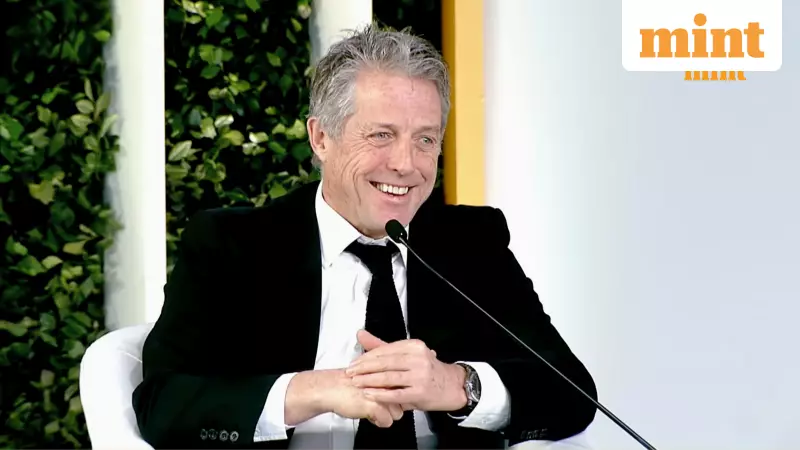
In a landmark move that is set to reshape the global entertainment landscape, streaming behemoth Netflix has announced a historic $72 billion deal to acquire Warner Bros. Discovery. The announcement, made on Friday, marks one of the largest acquisitions in media history. However, at the Hindustan Times Leadership Summit 2025, veteran British actor Hugh Grant offered a starkly different perspective, labelling the mega-deal as just "another piece of bad news" for lovers of the traditional cinematic experience.
A Historic Deal Meets Hollywood Skepticism
Netflix outmanoeuvred rivals Comcast and Paramount Skydance to secure the agreement with the legendary Hollywood studio. The cash-and-stock transaction encompasses Warner Bros.' iconic film and television production divisions, the HBO Max streaming service, and DC Studios, home to superhero franchises. The deal is projected to finalise in the third quarter of 2026, following the separation of Discovery Global into a new public company.
While Netflix co-CEO Ted Sarandos has assured that Warner Bros. will continue to release films in theatres, the acquisition has ignited significant concern within the film industry. Grant's sentiments, shared during a conversation with Rahul Khanna at the summit, echo the fears of many. "I don't know. For those of us who love theatrical experience, that's another bad news," he stated, directly addressing the implications of the streaming giant's expanding dominion.

Hugh Grant's Defence of the 'Celluloid' Experience
The actor did not mince words about his preference, drawing a clear line between cinema and digital streaming. "It's a little bit difficult. I love films in cinemas, made on celluloid. I have found it very hard to fall in love with streaming. I hate streaming," Grant confessed. He expressed sadness over the trend of audiences watching content at home on TVs or mobile phones, which he identified as a root cause for the decline of cinema.
His disillusionment extends to his professional choices as well. "A lot of offers come on streaming, and I feel tired. I can't get excited for it," the actor revealed, highlighting a personal and artistic resistance to the streaming model that now dominates viewership.
An Industry-Wide Apprehension
Grant is far from alone in his critique. His comments align with the strong opposition voiced earlier by iconic director James Cameron, who warned that Netflix's buyout of Warner Bros. "would be a disaster." A chorus of film personalities and technicians have raised alarms, fearing that the consolidation of power under Netflix could further marginalise the traditional theatre-going experience.
Despite the overwhelming shift towards digital platforms, Grant holds onto a thread of hope for a cultural reversal. "My hope in all things is that we get bored of digital experiences, and return to real life experiences," he told the audience at HTLS 2025. This yearning for a collective return to shared, physical spaces like movie theatres underpins the broader debate sparked by this unprecedented $72 billion deal.
The acquisition of Warner Bros. Discovery, responsible for timeless hits like the Harry Potter franchise and DC Universe films, undeniably cements Netflix's position as an unparalleled content empire. Yet, as highlighted at the leadership summit, its success comes at the cost of deepening the rift between the future of streaming and the cherished past of cinematic tradition.