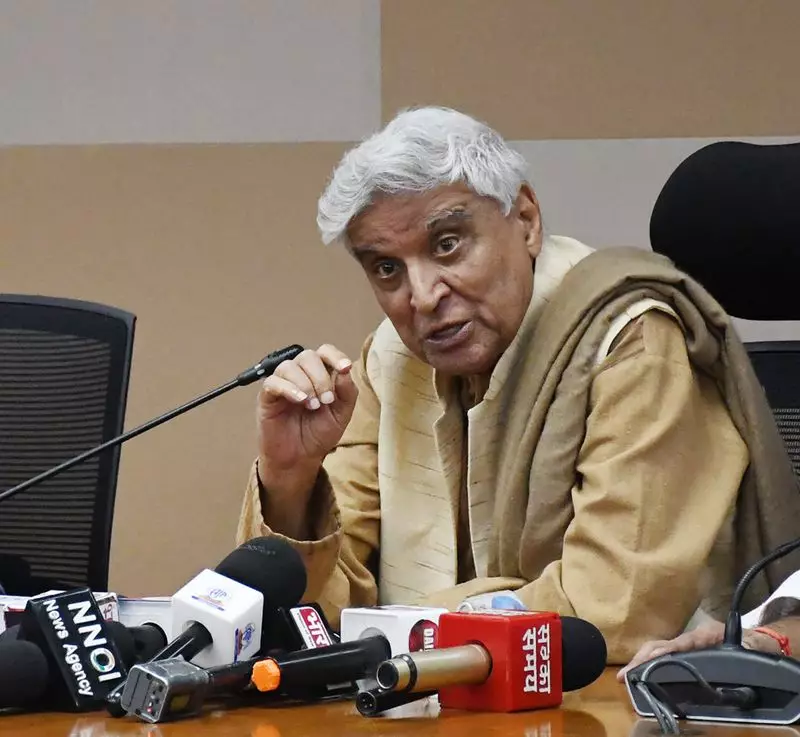
Renowned poet and lyricist Javed Akhtar has issued a stern warning and threatened legal action after a deepfake video, created using artificial intelligence (AI), surfaced online featuring his likeness. The veteran writer expressed his outrage and stated he is seriously considering filing a police report against the creators of the synthetic media.
Veteran Lyricist Calls Out AI Misuse
Javed Akhtar, the celebrated figure behind countless Bollywood classics, found himself at the center of a disturbing technological misuse. A video, synthetically generated using AI tools to mimic his appearance and voice, began circulating on social media platforms. The content of the video, which remains unclear, was significant enough to prompt a strong public response from Akhtar himself.
Addressing the issue at a public event, Akhtar did not mince his words. He labeled the creation and dissemination of such AI-generated content a "serious crime." His primary concern, as he articulated, was the potential for this technology to be used for far more dangerous purposes than mere impersonation. He highlighted the terrifying possibility of similar deepfakes being used to incite violence or spread malicious misinformation by falsely portraying public figures.

"I Am Seriously Considering to Report": Akhtar's Firm Stance
The lyricist's reaction was one of firm resolve. "I am seriously considering to report to the police," Akhtar declared, signaling his intent to pursue legal recourse. This statement underscores the growing anxiety among public personalities in India and worldwide regarding the lack of regulation around deepfake technology.
Akhtar's case is not an isolated incident in the Indian entertainment industry. It adds to a rising number of instances where AI has been used without consent to create forged content. Earlier, prominent actors like Rajinikanth, Amitabh Bachchan, and Rashmika Mandanna have also been victims of deepfake technology. Mandanna's case, where her face was morphed onto another person's body in a viral video, sparked a major national debate and calls for stricter laws.
The Urgent Need for Legal Frameworks
Javed Akhtar's threat of police action brings the legal vacuum concerning AI-generated content into sharp focus. Currently, India lacks specific legislation dedicated to tackling deepfakes and synthetic media. While provisions in the Information Technology Act and the Indian Penal Code can be invoked, they are often seen as insufficient to address the unique and rapidly evolving challenges posed by this technology.
The incident reinforces the urgent demand from citizens, celebrities, and tech experts alike for a robust legal framework. Such laws would need to clearly define the misuse of AI, establish accountability for platforms hosting such content, and create swift grievance redressal mechanisms. As AI tools become more accessible, the potential for harm increases exponentially, making regulatory intervention imperative.
Akhtar's strong stance is a powerful reminder that the conversation around AI ethics is not just theoretical. It has real-world consequences for individuals' reputations, privacy, and safety. His decision to consider a police report may set a precedent for other victims in the public eye to take similar legal steps, pushing authorities to act faster against the growing menace of deepfake technology.