In a fascinating revelation that has surprised Bollywood enthusiasts, renowned choreographer and director Farah Khan has disclosed that legendary lyricist Javed Akhtar wrote the wildly popular song 'Dard-e-Disco' for the 2007 blockbuster 'Om Shanti Om' in just five minutes. This surprising efficiency came despite Akhtar's known tendency to procrastinate on other songs for the film.
The Procrastination Pattern
During her appearance on the Take 2 podcast, Farah Khan shared intriguing details about working with the celebrated poet and songwriter. "We'd wait for days for him to write two lines and give it to us. Javed uncle can procrastinate. He can chat about anything but do his homework," Farah revealed about the generally slow creative process for other songs in the film.
The songs from Farah Khan's 2007 reincarnation saga featuring Shah Rukh Khan have become iconic in Indian cinema history. From the nostalgic dance number "Dhoom Taana" and romantic anthem "Aankhon Mein Teri" to the star-studded "Deewangi Deewangi" and dramatic "Dastaan-E-Om-Shanti-Om," each track continues to enjoy popularity years after the film's release.
The Five-Minute Miracle
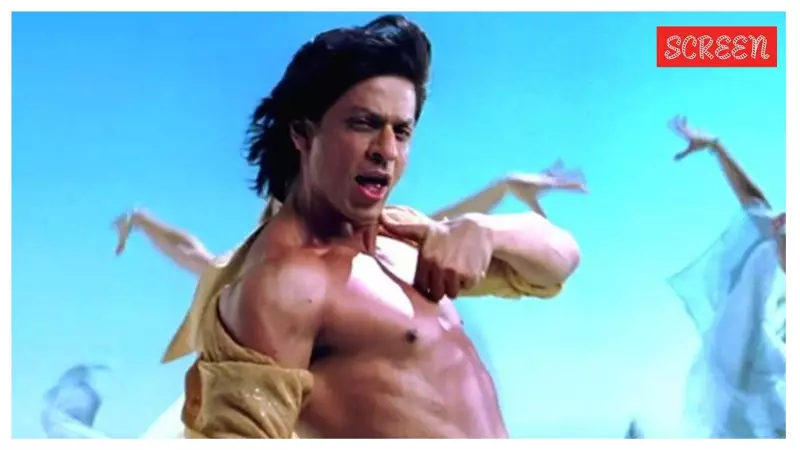
The standout track "Dard-E-Disco" - a unique fusion of qawwali, disco, and item song elements that showcased Shah Rukh Khan's famously sculpted six-pack abs - surprisingly became the quickest composition in Javed Akhtar's portfolio for the film. The secret behind this rapid creation was Farah Khan's unusual yet effective brief to the veteran lyricist.
"When we were doing 'Dard-E-Disco,' my only brief to him was: 'Just write like Gulzar sahab.' And within five minutes, he'd written 'Dard-E-Disco'," Farah recounted. She further explained Akhtar's immediate response: "Javed uncle said, 'Achha, Gulzar sahab jaisa likhna hai? Abhi likhta hu. (Oh, I've to write like Gulzar? Let me do that right away).'"
Farah pointed out that if listeners pay close attention to the lyrics of "Dard-E-Disco," they can clearly detect the Gulzar-inspired writing style that emerged from this unique creative direction.
Earlier Gulzar Connections
This wasn't the first time Farah Khan invoked Gulzar's name while working with Javed Akhtar. She recalled another instance from 1999 when she was choreographing the cult song "Satrangi Re" for Mani Ratnam's romantic drama Dil Se, which featured Shah Rukh Khan and Manisha Koirala.
"The funniest part was Gulzar sahab had written this part of the song that described the seven stages of love. Mani sir doesn't know Hindi, so he was asking us. We couldn't understand what's written, so I used to call up Javed uncle and say, 'Ye kya likha hai, mujhe explain karo' (Please explain what's written to me). 'Halka-halka uns hua. What's uns (affection)?,'" Farah remembered, highlighting the challenges of interpreting Gulzar's deeply Urdu-infused poetry.
The Absurdity Brief
In another interesting revelation from earlier this year on the podcast Cyrus Says, Javed Akhtar himself recalled a different aspect of Farah Khan's creative direction for "Dard-E-Disco."
"Farah told me that 'Javed uncle I want a song in which any line does not have meaning because the whole situation is absurd.' I realized for the first time that to write gibberish is very difficult. I'm happy that it was fairly meaningless," the legendary lyricist admitted, shedding light on the intentional absurdity that made the song so memorable.
The context of "Dard-E-Disco" within Om Shanti Om occurs when the vain, contemporary star Om Kapoor (played by Shah Rukh Khan) insists that filmmakers create a dream sequence featuring his wheelchair-bound character. He notably references having already performed a "dard bhari qawwali" (pained qawwali), alluding to the popular track "Tumse Milke Dilka Jo Haal" from Farah and Shah Rukh's previous successful collaboration, Main Hoon Na (2004).
The song, sung powerfully by Sukhwinder Singh, composed by the dynamic duo Vishal-Shekhar, and choreographed by Farah Khan herself, continues to be a beloved party anthem and remains one of the most recognizable tracks from 2000s Bollywood cinema.